
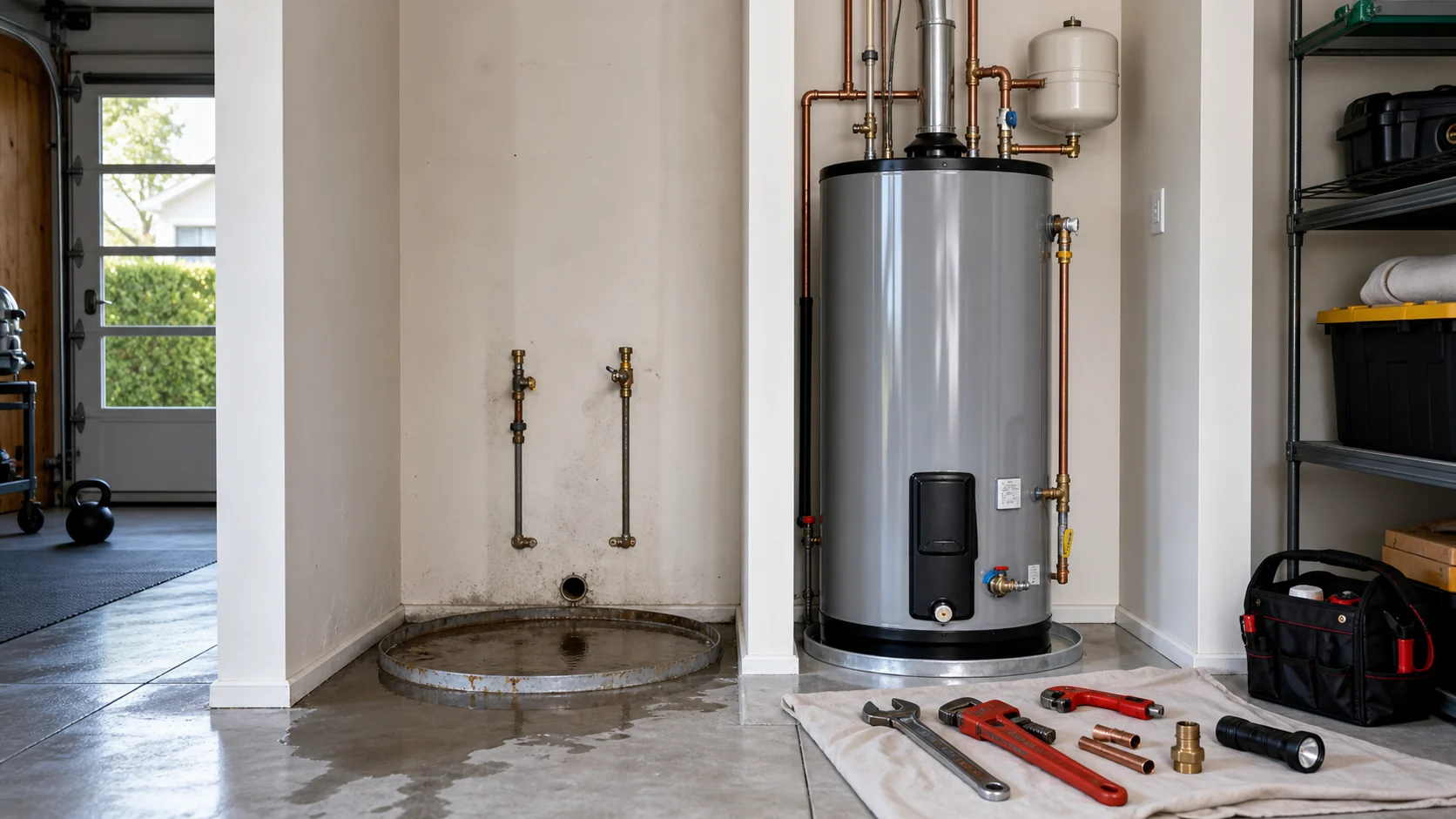
A quote that says only "50-gallon water heater installed" leaves most of the decision unanswered. Which model? What is its first hour rating? Does the price include the permit, removal, vent work, drain pan, expansion control, or a difficult basement carry? If one bidder includes those items and another does not, the lower number may not stay lower.
Do not let an active leak turn into a rushed equipment choice
If water is spreading, touching electrical parts, or entering a gas burner area, deal with the safety problem first. Leave if you smell gas or a carbon monoxide alarm sounds. Use the emergency leak steps and request urgent qualified help. Quote comparison can wait until the area is safe.
Ask for the exact model, not just the brand
Brand names do not tell you tank capacity, input, first hour rating, efficiency, vent type, warranty, or whether the heater fits the room. Ask each provider to put the manufacturer and full model number in writing. That lets you compare the equipment data instead of guessing from a sales description.
For a storage tank, compare gallon capacity and first hour rating. First hour rating estimates how much hot water a fully heated unit can supply during a busy first hour. A 40-gallon model with a strong recovery rate can behave differently from another 40-gallon model. For tankless equipment, compare rated flow under the temperature rise expected at your home, not the largest flow number on the brochure. Cold winter inlet water along the Wasatch Front gives the unit more heating work to do.
Put the scope into one table
Separate required work from optional upgrades
Ask the provider to label each added item as required for the proposed installation, needed because an existing part has failed, or optional. This is especially useful when quotes mention a new expansion tank, pressure regulator, vent rework, electrical circuit, drain pan, leak alarm, recirculation control, or water treatment.
Do not ask a provider to skip safety or code work just to match a lower number. Instead, ask what condition triggered the item and request a photo or plain explanation. Permit and inspection rules can vary by city and job type, so the quote should state who checks local requirements, who obtains any required permit, and whether the fee is included.
Compare warranties in three separate pieces
- Manufacturer equipment warranty: Ask for the written term and what parts it covers. Registration, maintenance, transfer, labor, and installation requirements can affect coverage.
- Provider labor warranty: Ask how long installation labor is covered and who handles the first call if a new connection leaks or a control fails.
- Extra protection plan: Treat a paid plan as a separate purchase. Read its exclusions, service fee, cancellation terms, and administrator before adding it.
A long tank warranty does not automatically cover the labor to diagnose, remove, or replace it. Ask for the documents rather than relying on "full warranty" in a conversation.
Check efficiency without falling for a single number
Uniform Energy Factor, or UEF, is useful when you compare models in the same water-heater category and size class. It does not tell you the full installed cost or whether a model suits the room. A heat pump water heater may use less electricity than a standard electric tank, but the quote also needs to address room volume, cool-air effects, noise, condensate drainage, electrical supply, and recovery for your household. A tankless quote needs realistic simultaneous-flow assumptions plus gas, venting, electrical, and hard-water maintenance details.
Ask for the model's official efficiency information and estimated operating-cost label. ENERGY STAR publishes product criteria, and the AHRI directory provides independently verified performance ratings for listed equipment. Utility rates and household habits still affect the bill, so treat savings estimates as comparisons, not promises.
Use this five-minute quote check
Before choosing
- • Put the exact models side by side
- • Confirm capacity or tankless flow assumptions
- • Mark every included and excluded line item
- • Identify allowances that may change later
- • Confirm permit, haul-away, and cleanup responsibility
- • Read equipment and labor warranty terms
Pause if the quote has
- • No model number or written scope
- • Pressure to decide before questions are answered
- • A large efficiency claim with no rating or assumptions
- • Required work described only as "code upgrades"
- • No answer about surprise charges or change orders
- • A warranty promise that is not in writing
What to send for a cleaner estimate
Good photos can reduce guesswork before an on-site visit. Send one photo of the full heater and room, then show the data label, top connections, drain pan and floor, gas vent or electrical connection, nearby shutoffs, doorway, stairs, and the route out of the home. Include your city, household hot-water pattern, fuel type, current tank size, known problems, and whether you are considering tankless or heat pump equipment.
Use the Utah sizing guide before accepting a simple same-size replacement. Then review the water heater replacement cost factors so labor, access, and related work do not come as a surprise.
Sources and further reading
ENERGY STAR explains the UEF criteria used for certified residential water heaters and publishes category-specific buying information. The AHRI Certification Directory is a useful place to verify listed equipment ratings. The installed model's manual and written warranty should settle model-specific questions.
- ENERGY STAR: residential water heater product criteria
- ENERGY STAR: heat pump water heaters
- AHRI Certification Directory
Planning a Utah water heater replacement?
Send the city, existing model, fuel type, room photos, and the symptoms that started the replacement search. Clear details make it easier to discuss the right equipment and installation scope.
Request water heater help