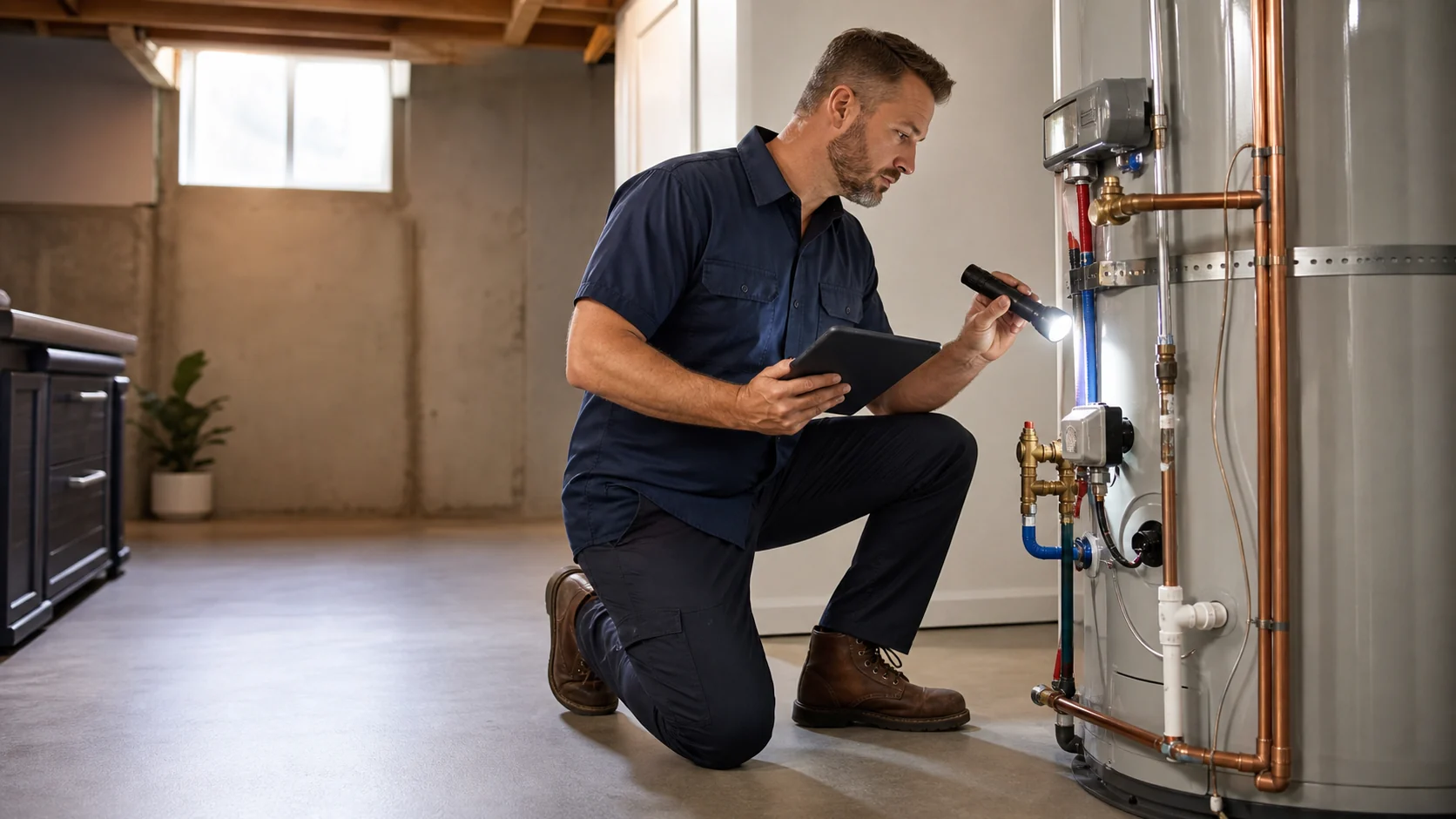
Most homeowners do not think about their water heater until the shower runs cold or water starts spreading across the utility room. A simple annual inspection can help you understand whether your system looks normal, needs maintenance, or should be checked by a qualified local provider.
Safety first
If you smell gas, see water near electrical components, notice scorching, or have an active leak, stop the inspection and contact the appropriate utility, emergency service, or qualified professional. This checklist is general homeowner education, not a substitute for professional service.
1. Look for water around the tank
Check the floor around the water heater, the drain pan if one exists, and the bottom seam of the tank. A small drip from a pipe or valve may be repairable, but water coming from the tank body or bottom seam often points toward replacement.
2. Check visible pipes, valves, and fittings
Look for corrosion, mineral buildup, green/white crust, wet insulation, or staining beneath fittings. Utah homes with hard water may show mineral deposits faster, especially near valves and connections.
3. Note the age and model information
Find the manufacturer label and write down the brand, model, serial number, tank size, and fuel type. If you request help later, this information makes it easier for a provider to understand what you have.
4. Review temperature setting
Many homes keep water heaters around 120°F to balance comfort, scald risk, and energy use. Do not change controls you do not understand, and be careful with gas control valves or electrical panels.
5. Listen for rumbling or popping
Rumbling, popping, or crackling sounds can be related to sediment in the tank. This does not automatically mean the unit is failing, but it is worth noting — especially if hot water runs out quickly or the tank is older.
6. Look at venting and air space
Gas water heaters need safe venting and combustion air. Do not modify vent pipes yourself. Watch for disconnected venting, heavy rust, scorch marks, backdrafting signs, or stored items crowding the unit.
7. Understand the pressure relief valve
The temperature and pressure relief valve is a safety component. If you see dripping, corrosion, or discharge from the relief line, document it and ask a qualified provider what is happening. Do not cap or block the line.
8. Decide whether repair or replacement is more likely
Minor part issues can sometimes be repaired. Repeated problems, a leaking tank body, an older unit, or major code/venting concerns may make replacement a better path. Use our replacement cost guide and tankless guide to compare options.
Helpful video search ideas
When using YouTube for general education, look for videos from manufacturer channels, local utility safety resources, or licensed plumbing educators. Search phrases like “how to inspect a water heater safely,” “water heater leak warning signs,” and “tankless water heater maintenance basics.” Do not follow any video that tells you to bypass safety devices or work on gas/electrical systems beyond your comfort and local code.
Quick inspection notes to save
• Tank age and size
• Gas, electric, propane, or tankless
• Leak location or staining
• Noises or hot-water changes
• City or ZIP
• Photos of label and piping
If you find a leak, no-hot-water issue, or an older system that may need replacement, send a request with your city, symptoms, and photos if available.