
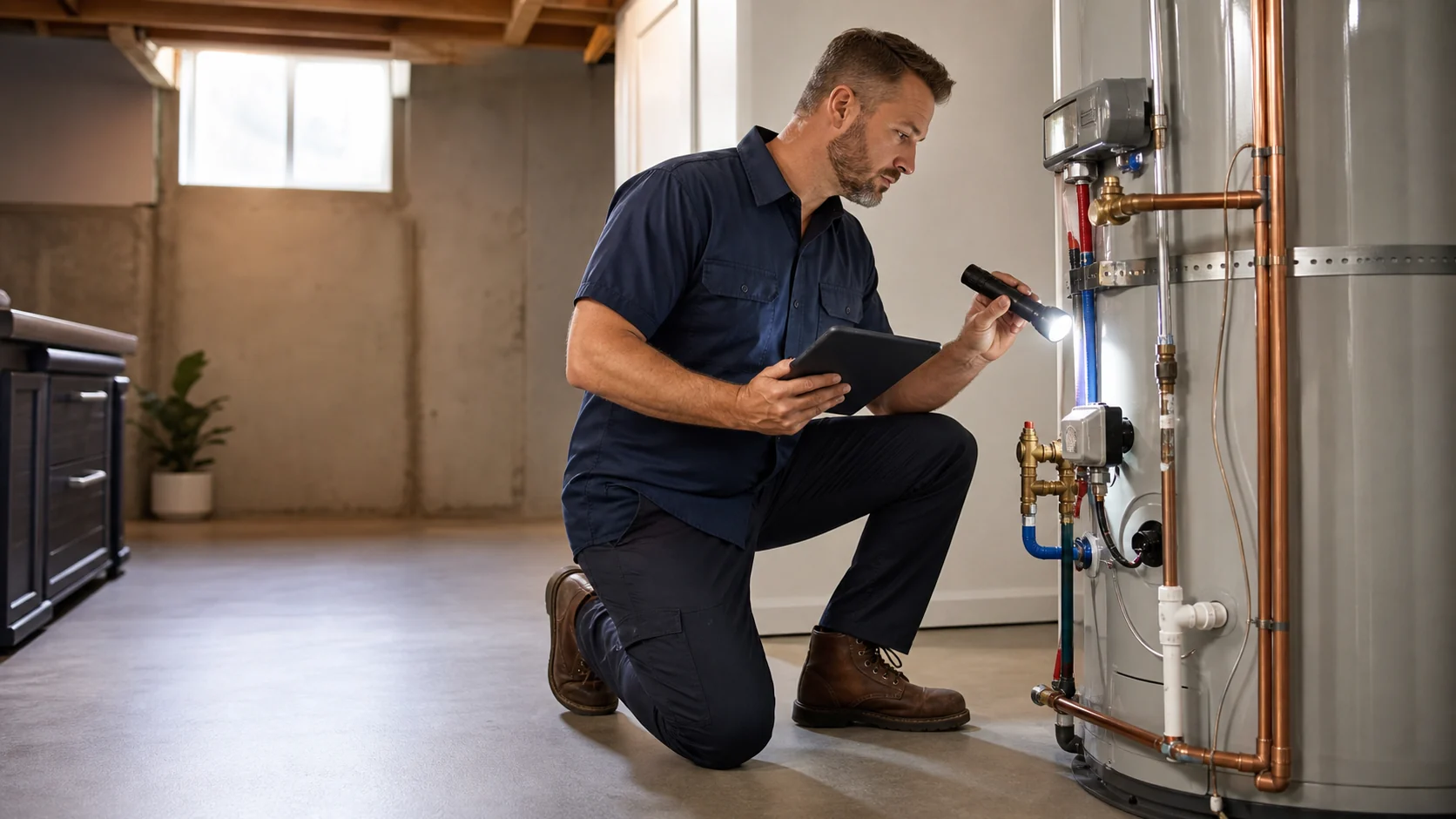
Many homes along the Wasatch Front deal with mineral-heavy water. Over time, minerals can settle inside a tank water heater or build scale inside tankless heat exchangers. The result may be popping sounds, slower recovery, lukewarm showers, error codes, or a shorter equipment life if maintenance is ignored.
Safety first: know where DIY should stop
This guide is homeowner education, not repair instructions. Do not disconnect gas lines, modify venting, remove electrical covers, cap relief valves, or work on any system that is leaking, scorched, smelling of gas, or near standing water. If something feels unsafe, stop and contact the gas utility, power utility, emergency services, or a qualified local water heater professional.
Why Utah water heaters collect sediment
Hard water contains dissolved minerals such as calcium and magnesium. When water is heated, some minerals can fall out of solution and settle at the bottom of a tank. In Salt Lake County and Utah County homes, that sediment can show up faster than homeowners expect, especially in older tanks, high-use households, and systems set very hot.
For general efficiency context, the U.S. Department of Energy notes that water heating is a major home energy use category and encourages homeowners to reduce hot-water waste and choose efficient equipment when replacing systems. Sediment maintenance is one practical way to keep an existing system from working harder than necessary.
Common signs sediment may be affecting your water heater
- Popping, rumbling, or crackling: heated water may be moving through mineral buildup at the bottom of the tank.
- Hot water runs out faster: sediment can reduce usable tank volume and slow recovery.
- Cloudy or gritty hot water: mineral particles may be moving through fixtures. Compare hot and cold taps to narrow the source.
- Higher energy use without lifestyle changes: a water heater that is fighting buildup may run longer.
- Tankless error codes or reduced flow: scale can restrict heat exchangers and filters if descaling is overdue.
Should every homeowner flush their own tank?
Not always. A simple drain-and-flush may be reasonable for some newer, well-maintained tanks when the homeowner understands the manufacturer instructions and local safety precautions. But there are situations where forcing a flush can create new problems.
Lower-risk maintenance conversation
- • Newer tank with a clear service history
- • Drain valve is in good condition
- • No active leaks or rust-through signs
- • Manufacturer instructions are available
Call a pro before flushing
- • Older tank that has never been flushed
- • Plastic drain valve looks brittle or clogged
- • Water around the tank, corrosion, or bulging
- • Gas, venting, electrical, or relief-valve concerns
If the tank is already near the end of its useful life, flushing may not solve the underlying issue. In some cases, a clogged or damaged drain valve can turn a maintenance task into a service call. When in doubt, ask a qualified provider to inspect the tank before attempting maintenance.
Tankless systems need descaling, not tank flushing
Tankless water heaters do not store a large tank of water, but hard water can still create scale inside the heat exchanger. Many manufacturers recommend periodic descaling with the correct solution, pump setup, isolation valves, and service procedure. Because mistakes can damage equipment or void warranty coverage, Utah homeowners should follow the exact manufacturer manual or hire a provider familiar with the brand.
If you are considering a tankless upgrade in Sandy, Draper, Lehi, Provo, Orem, or nearby cities, ask quote providers how they handle water quality, isolation valves, service access, condensate routing, and maintenance reminders. Those details can matter as much as the equipment price.
Simple homeowner checks that are safe
- Listen once a month. Note new popping, rumbling, or clicking after the burner or elements run.
- Compare hot-water performance. Write down whether showers are getting shorter or recovery feels slower.
- Look around the base. Water, rust trails, or a damp pan should be treated as a possible leak issue, not a sediment-only issue.
- Save model information. Photograph the rating plate, serial number, fuel type, tank size, and visible piping before requesting help.
- Check the manual. Use the manufacturer’s maintenance schedule instead of random online shortcuts.
When sediment points toward replacement instead of maintenance
Sediment symptoms do not automatically mean you need a new water heater. But replacement becomes more likely when the tank is older, leaks from the body or bottom seam, repeatedly loses hot-water capacity, has unsafe venting, or needs several repairs at once. Use the Utah replacement cost guide to understand the factors that can affect quotes, including tank size, fuel type, code updates, permits, access, and disposal.
Reliable external resources
For broader water-heating efficiency education, start with the U.S. Department of Energy water heating guide, DOE hot-water energy-saving tips, and ENERGY STAR water heater information. For maintenance steps, use your exact manufacturer manual or a licensed local provider rather than a generic video.
What to include in a service request
• City or ZIP
• Tank or tankless brand
• Age or serial number photo
• Popping/noise description
• Hot-water capacity change
• Photos of drain valve, pan, and label
If you are in Salt Lake County, Utah County, Salt Lake City, Sandy, Draper, West Jordan, South Jordan, Murray, Provo, Orem, Lehi, or American Fork and need help deciding whether sediment maintenance, repair, or replacement is the right path, send a water heater request with the details above.