
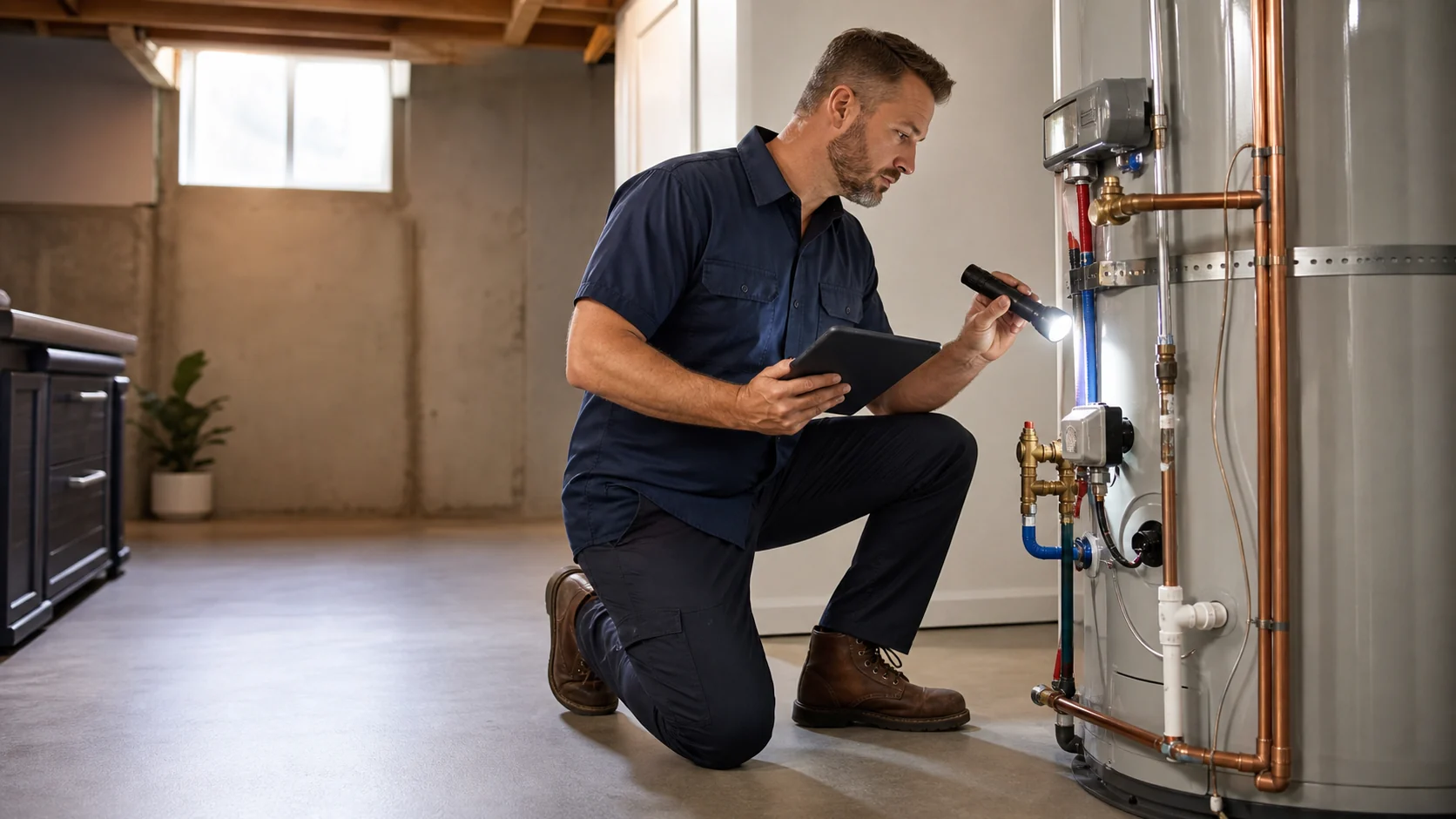
A heat pump water heater is not just a regular electric tank with a nicer sticker. It pulls heat from the surrounding air and moves that heat into the water. That can be efficient, especially in a basement or utility space that stays reasonably warm. It can also be a bad fit in a tiny closet, an unheated garage, or a room where condensate has nowhere to go.
Safety first: this is not a DIY wiring guide
Use this guide to prepare questions and compare quotes. Do not run new electrical circuits, alter breakers, move plumbing, cap gas lines, or install condensate drains unless you are qualified and permitted to do that work. A heat pump water heater may involve electrical, plumbing, ventilation, seismic restraint, and code questions in the same job.
Where heat pump water heaters make the most sense
The best candidates are homes that already use an electric tank, have enough room around the water heater, and keep the equipment area above the manufacturer's minimum operating temperature. Many Utah homes have basement mechanical rooms that are better candidates than a tight upstairs closet.
Gas-to-electric conversions can still be worth comparing, but they are more complicated. You may need an electrical upgrade, a plan for the old gas line and venting, and a clear answer on whether monthly savings justify the larger install cost. If the current gas tank is leaking, the decision timeline gets short, so it helps to know your options before the emergency.
The Utah-specific fit check
Do not ignore recovery time
Efficiency is the selling point, but hot-water recovery still has to match the household. A family with back-to-back showers, a soaking tub, laundry, and guests may need a larger tank or a model with a smart operating mode. Some hybrid units can use electric resistance elements when demand spikes, but that reduces the energy advantage.
If your current complaint is short showers, read the not enough hot water troubleshooting guide before you shop. A new unit should solve the actual problem, not just replace an old tank with a different kind of frustration.
Questions to ask before approving a quote
- Is this replacing an electric tank, a gas tank, or a tankless unit?
- Does the electrical panel have the right capacity, breaker space, and wiring for this model?
- Does the installation area meet the manufacturer's air-space and temperature requirements?
- How will condensate be drained, and what happens if the pump fails?
- Will the water heater need seismic strapping or a drain pan upgrade?
- Is a mixing valve recommended for the planned storage temperature?
- Which operating mode should be used for normal daily use, guests, and vacation periods?
- Are any utility, federal, state, or manufacturer incentives available, and who files the paperwork?
Rebates and incentives: verify before you count them
Incentives change often. Utah homeowners should check current utility programs and federal tax-credit rules before treating a rebate as part of the budget. If a quote includes an incentive, ask whether it is instant, mail-in, tax-related, or only available for certain model numbers.
For many Salt Lake County and Utah County homes, the boring paperwork matters: exact model number, installation date, contractor license information when required, and proof that the product meets the program's rules. A cheap-looking quote can get less attractive if the equipment does not qualify.
When a standard tank or tankless quote may be smarter
A hybrid water heater is not always the right answer. A standard gas replacement may make more sense when the home has a tight mechanical closet, no simple electrical path, no condensate drain option, or a deadline measured in hours because the tank is leaking. A tankless system may be worth pricing when space is tight or the household wants long-duration hot water, though tankless has its own maintenance and sizing questions.
If you are comparing options, use the Utah water heater replacement cost guide and the tankless installation page side by side. The right choice depends on the room, the household, the panel, the venting situation, and how long you expect to stay in the home.
Good signs for a hybrid quote
- • Existing electric tank in a roomy basement or mechanical room
- • Easy condensate drain path
- • Panel capacity already works or upgrade cost is modest
- • Homeowners care about operating cost and plan to stay put
- • Installer explains modes, noise, clearances, and maintenance plainly
Slow down if you hear this
- • "It fits anywhere" without checking the room
- • No answer on condensate drainage
- • No electrical-panel discussion
- • Rebate promises with no eligible model number
- • No plan for seismic strapping, pan, shutoffs, or permits where required
Sources and further reading
For product efficiency basics and qualified models, see ENERGY STAR heat pump water heaters and the broader ENERGY STAR water heater product information. For local incentive research, start with Rocky Mountain Power home savings programs and verify current requirements before buying equipment. Your installed model's manual and a qualified Utah plumber or electrician should decide the final installation details.
Comparing water heater replacement options?
Send your city, current fuel type, tank size, panel location, water heater room photos, and whether you are considering standard tank, tankless, or hybrid heat pump options. Those details help a local provider give a cleaner first recommendation.
Request replacement guidance