A shower that turns cold halfway through is annoying. Two showers in a row that both turn cold is a clue. The trick is figuring out whether the problem is demand, settings, sediment, a failing part, or a water heater that is simply too small for the way the house is being used now.
Safety first: observe, do not disassemble
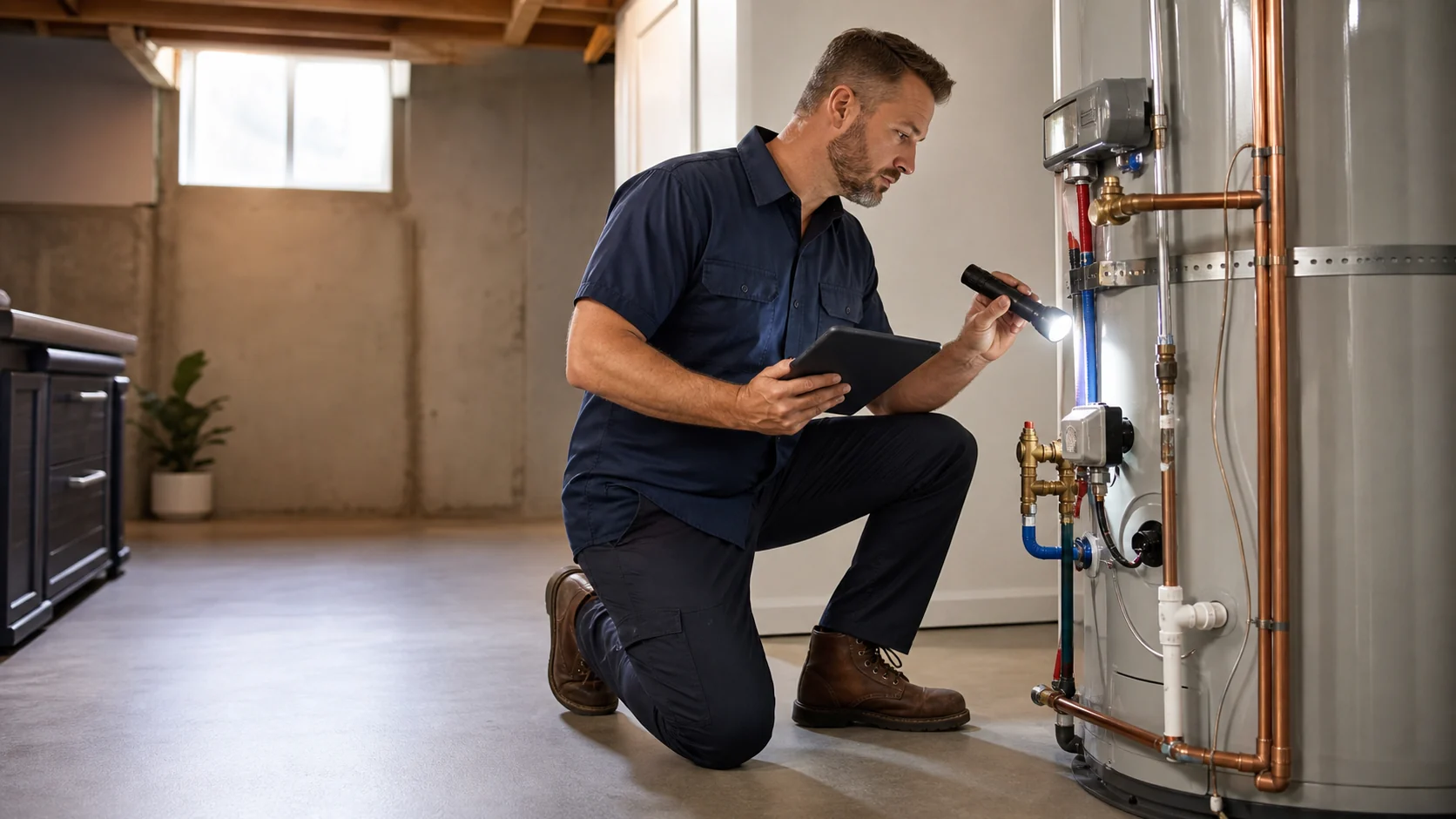
This guide is for homeowner notes and service planning. Do not remove burner covers, open electrical panels, relight a pilot if you smell gas, bypass a safety switch, raise temperature blindly, or drain a hot tank unless you know how to do it safely. If you smell gas, see burn marks, hear popping at a gas burner, find water near wiring, or suspect carbon monoxide, leave the area and call the utility, emergency services, or a qualified pro.
Start with what changed
Most hot-water complaints make more sense after you write down the pattern. A water heater that has always struggled with back-to-back showers is a sizing problem until proven otherwise. A heater that worked fine last month and now gives five minutes of lukewarm water may have a failed element, thermostat issue, dip-tube problem, sediment buildup, gas-control issue, or mixing-valve problem.
In Salt Lake County and Utah County, hard water adds another layer. Sediment does not explain every cold shower, but it can reduce usable tank volume, slow heat transfer, and make older heaters noisier. That matters in homes around Sandy, Draper, West Jordan, South Jordan, Murray, Provo, Orem, Lehi, and American Fork where a heater may be working through years of mineral buildup.
Quick notes to collect before calling
- How long the first shower stays hot before it cools down.
- Whether every faucet is lukewarm or only one shower/tub has the problem.
- Whether the issue is worse after laundry, dishwasher cycles, or guests staying over.
- The water heater age, size, and fuel type from the label if the label is easy to read.
- Any rumbling, popping, leaking, error codes, blinking status lights, or relief-valve drips.
- For tankless systems, whether temperature drops happen only when several fixtures run at once.
What the symptom usually points toward
Do not solve a capacity problem by making the water dangerously hot
Some homeowners raise the thermostat after a few cold showers. That may give the tank more usable mixed water, but it can also increase scald risk, especially for kids, older adults, and guests. If a plumber recommends a higher storage temperature for a specific reason, ask whether a mixing valve is needed and how the outlet temperature will be controlled.
If temperature is part of the question, use the safe water heater temperature guide first. A small adjustment is different from using temperature to hide a failing heater or undersized system.
When repair may make sense
Repair can be reasonable when the heater is not very old, the tank itself is not leaking, the problem is isolated, and the diagnosis points to a replaceable part or maintenance issue. Electric heaters with one failed element, tankless units due for descaling, or fixture mixing problems can sometimes be handled without replacing the whole system.
Ask for the diagnosis in plain language: what failed, why that explains the symptom, and whether the fix is expected to restore normal hot-water capacity. If the answer is vague, slow down before approving a repair.
When replacement should be on the table
Replacement is worth comparing when the heater is older, the tank is leaking, rust is showing around the base, repairs are stacking up, or the household has outgrown the original size. Finished basements, rental suites, larger tubs, and more back-to-back showers can all change the math.
For pricing questions, see the Utah water heater replacement cost guide. If you are deciding between one more repair and a new unit, use the repair-or-replace checklist before you spend money twice.
Good questions for a service visit
- • Is the water heater actually reaching the set temperature?
- • Is the issue at the heater, a mixing valve, a fixture, or a recirculation setup?
- • Is sediment reducing capacity or causing slow recovery?
- • For electric heaters, are both elements working?
- • For tankless heaters, is the unit sized for simultaneous fixtures in this home?
Call sooner if you see these
- • Water around the heater or a wet drain pan
- • Gas smell, soot, burner rollout, or venting concerns
- • Breaker trips or water near electrical parts
- • Relief valve discharge or hot water from the relief pipe
- • Error codes that return after resetting a tankless unit
Sources and further reading
For manufacturer education and general troubleshooting topics, see the A. O. Smith water heater info center. For tankless sizing and flow-rate basics, see Rinnai's tankless 101 guide. For efficient replacement options, compare certified models through the ENERGY STAR water heater product information. Your installed unit's manual and a qualified Utah plumber should make the final call for your home.
Running out of hot water too fast?
Send your city, water heater age, tank size or tankless model, fuel type, and a short note about when the water turns cold. Photos of the label, installation area, and any error code can help a local provider route the request.
Send hot-water details