Start by finding out whether the temperature changed at one fixture or throughout the house. A quick comparison can help a service technician separate a shower-valve problem from a water-heater or whole-home mixing issue. Keep skin out of the test. Water that feels merely uncomfortable at first can cause a serious burn with continued exposure.
Protect people before testing
Warn everyone in the home and supervise children, older adults, and anyone with reduced sensation or mobility. Stop using a fixture that is producing scalding or unpredictable water. Do not test with your hand, leave a child alone near a running tap, or raise and lower heater controls repeatedly. If someone is burned, move them away from the hot water and get appropriate medical or emergency guidance.
Map the problem by fixture
Choose two or three fixtures only if an adult can check them without exposure. Include the problem fixture and a sink supplied by the same water heater. If a shower is the only place running too hot while nearby sinks remain normal, note that pattern and stop using the shower. Its cartridge, limit stop, or local mixing hardware may need service.
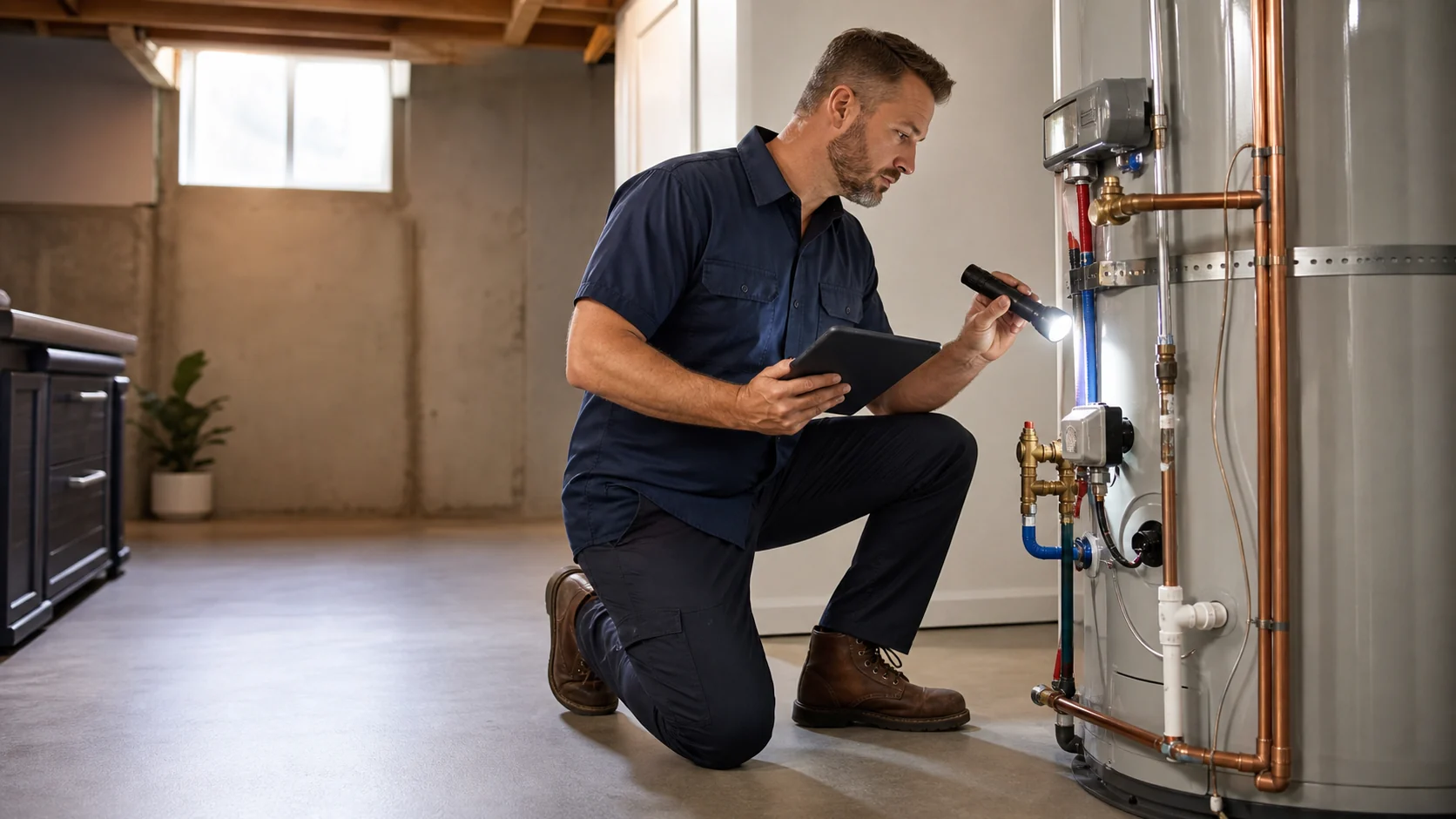
If every hot tap is hotter than before, the water heater setting, thermostat, control, sensor, or a central mixing valve becomes more relevant. A sudden whole-home change is not a reason to open the heater. Photograph the display and rating plate from a safe distance, then request qualified help.
Take a temperature sample without using your hand
Only continue if the fixture can run into a sink without splashing and no vulnerable person is nearby. Use a reliable kitchen thermometer and a heat-safe cup. Run the hot tap, collect the water carefully, and measure it without placing skin in the stream. Record the fixture, time, reading, and whether the heater had been idle or had just recovered after heavy use.
The U.S. Consumer Product Safety Commission urges households to lower residential water heaters to 120°F and warns that even 120°F water can cause a third-degree burn after prolonged exposure. That recommendation is a scald-risk reference, not permission to dismantle controls or a guarantee that every home should be adjusted the same way. Some systems use storage temperatures and mixing equipment that must be evaluated together.
Do not open electrical or combustion compartments
Electric storage heaters commonly have controls behind access panels supplied by 240 volts. Gas units have fuel, ignition, combustion, and venting components. Tankless and heat-pump models use electronic sensors and model-specific controls. Keep those covers closed.
Do not disable a mixing valve, bypass a safety control, repeatedly reset a high-limit device, or copy a thermostat procedure from another model. Find the exact model and serial number, then use the manufacturer's current manual to identify normal display information. Any internal testing belongs with a qualified service professional.
Look for the timing clue
- The problem started after plumbing, shower-valve, recirculation, or water-heater work.
- The temperature changed after a power outage or control reset.
- The water is hottest first thing in the morning or after several hours with no use.
- The problem appears only while another fixture or appliance is drawing water.
- A tankless display shows a new mode, setpoint, or error code.
- The heater is also cycling strangely, tripping a breaker, leaking, or making a new sound.
Include that timing in the service request. In Salt Lake City, Sandy, Draper, West Jordan, Provo, Orem, Lehi, and American Fork, the same diagnostic rule applies: a sudden temperature change matters more than the city or season. Utah's colder winter inlet water can change recovery and mixing, but it does not make unexplained scalding output normal.
Call promptly when the output is unstable
Request prompt service if hot-water temperature changed suddenly across the house, readings vary widely under similar conditions, a display and tap temperature do not agree, or anyone has already been burned. Stop and use emergency or utility help when there is also a gas odor, carbon monoxide alarm, smoke, scorched wiring smell, active leak near electrical equipment, or relief-pipe discharge.
Send the technician the heater type, model and serial photos, displayed setting, sample temperatures, affected fixtures, recent work or outages, and a description of who may be at greater scald risk in the home. That is enough evidence to start without asking a homeowner to open the appliance.
Sources and further reading
- U.S. Consumer Product Safety Commission: Avoiding Tap Water Scalds - burn-risk timing, the 120°F recommendation, and child supervision guidance.
- A. O. Smith product literature - model-specific instruction manuals and technical documents. Use the exact heater model rather than a generic procedure.
Did the temperature change without warning?
Send the affected fixtures, safe temperature readings, heater label, displayed setting, city, and any recent outage or plumbing work. Keep the heater closed and the unsafe fixture out of use.
Request Utah water heater help