
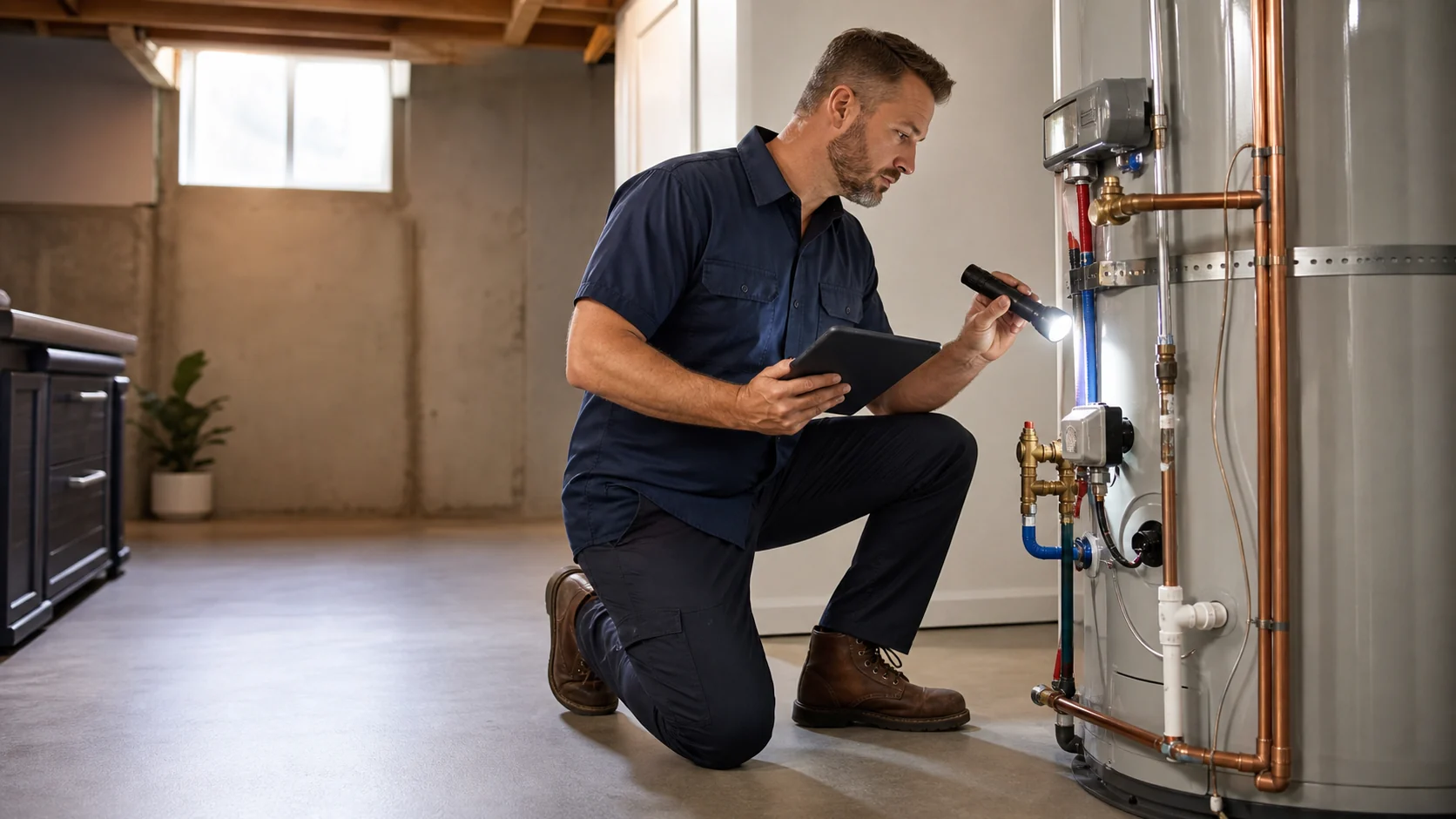
A sharp plastic, glue, rubber, solvent, or "new hose" smell gets your attention, especially after a water heater replacement. New plumbing parts can be one possibility, but odor alone cannot identify the material or tell you whether the water is safe. Start by mapping exactly where and when it happens. That is more useful than running every tap and hoping it fades.
Stop using the water if the odor is strong or sudden
Do not drink, cook with, or make ice from water that smells like fuel, paint thinner, pesticide, or another strong chemical. Keep it away from children and pets. If anyone feels dizzy, nauseated, short of breath, or has eye or throat irritation, move to fresh air and call 911 or Poison Control at 1-800-222-1222. If you smell natural gas near the heater, leave the building and call 911 or the gas utility from outside.
First, determine whether the smell is in the water or the room
Stand away from the water heater and smell the room before opening a tap. A room odor that is strongest near a gas control, vent, electrical connection, overheated plastic, stored chemical, or floor drain needs its own response. Do not remove covers or touch a hot, wet, scorched, or buzzing component.
If the room smells normal, collect water in a clean glass and carry it to another room before smelling it. Sink drains can create odors that seem to come from the water. Use separate glasses for hot and cold samples, and pour them out after the check.
Run a simple fixture comparison
If the water heater was just replaced
Write down the installation date and every part that changed. That may include flexible water connectors, isolation valves, expansion equipment, recirculation parts, pipe or thread products, and a whole-house treatment component. Photograph the heater rating plate and the visible hot and cold connections without disturbing them.
Call the installer and describe the odor in plain language. Tell them whether it is present at every hot tap, whether cold water is affected, when it began, and whether it grows stronger as water gets hotter. Ask the installer to compare the installed materials with the product instructions and their approved uses. Do not add bleach, vinegar, drain cleaner, fragrance, or another chemical to the water heater.
Check the water provider before assuming it is the heater
Salt Lake County and Utah County include many separate public water systems, so use the provider shown on the water bill rather than calling a city at random. Look for a current advisory, flushing notice, treatment change, or main repair. Ask whether the provider wants a sample and which tap to use before you flush the plumbing.
Every community water system publishes a yearly Consumer Confidence Report. It is useful background, but last year's report will not explain every new odor today. A current notice or direct call to the provider matters more when both hot and cold water changed at the same time.
What not to conclude from smell alone
EPA has secondary standards for some taste, color, and odor concerns. Those are aesthetic guidelines, separate from the enforceable health standards for regulated contaminants. That distinction does not make every unexplained chemical odor harmless. It means a smell is not a home water test and should not be used to name a contaminant.
Home test strips also have limits. A result for hardness or chlorine cannot rule out every other substance, and a generic strip cannot verify that a plastic-smelling sample is safe. Ask the water provider, local health department, or a qualified water professional which certified laboratory and test panel fit the circumstances before paying for broad testing.
Make a useful service record
- Date and time the odor started, plus any plumbing, heater, filter, or utility work that happened first.
- Whether it is plastic, rubber, glue-like, solvent-like, fuel-like, medicinal, or simply unfamiliar.
- Which hot and cold taps are affected, including an outdoor cold tap if it is safe and accessible.
- Whether the smell is in a glass away from the drain and whether it changes after water runs.
- Water-provider notices and the name or case number from any call.
- Photos of the heater label, visible connectors, filters, softener, and recent work.
Keep the description honest. "Solvent-like at every hot tap since Tuesday's replacement" gives an installer more to work with than "the water is toxic."
Sources and further reading
- U.S. EPA: secondary drinking water standards - explains how aesthetic taste, odor, and color guidelines differ from primary health standards.
- U.S. EPA: Consumer Confidence Reports - how to find and read the annual report from a community water system.
- Utah Division of Drinking Water: Consumer Confidence Reports - Utah's state resource for public water-system reports.
- Poison Control contact information - call 1-800-222-1222 in the United States for a possible poisoning or exposure.
- The installation manuals and approved-use documentation for the exact heater, connectors, valves, recirculation equipment, and treatment products installed in the home.
Did the odor begin after water heater work?
Send the city, installation date, hot-versus-cold pattern, affected fixtures, water-provider notice status, and clear photos of the heater label and visible connections. Those details help a provider decide what to inspect first.
Request Utah water heater help