
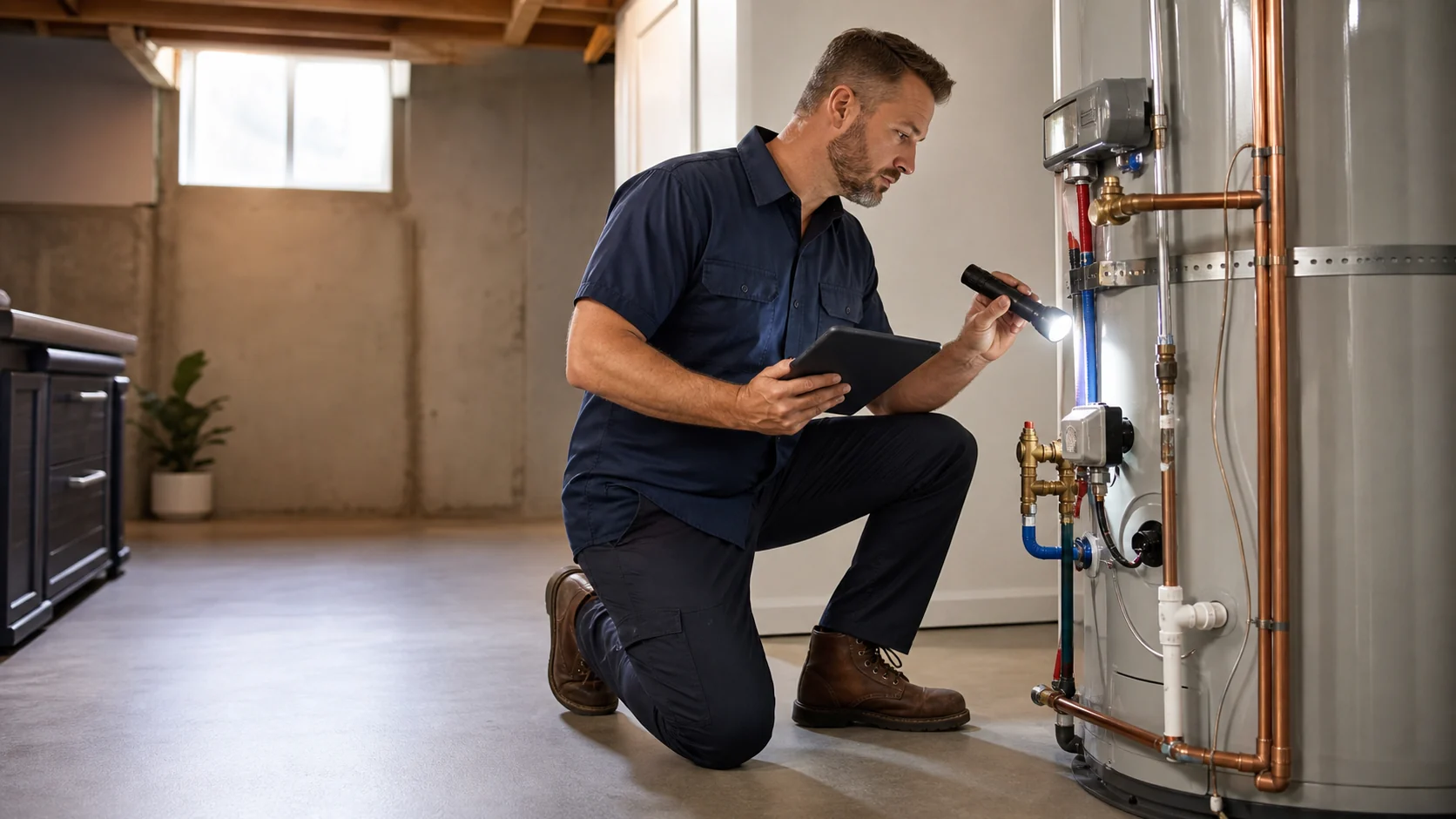
A gas water heater can be working, making hot water, and still deserve a safety check. The part most homeowners ignore is the vent: the metal flue, draft hood, sidewall pipe, or direct-vent system that carries combustion gases out of the house. If that path is blocked, loose, backdrafting, or installed wrong, carbon monoxide can become the real problem.
Leave the home if carbon monoxide is suspected
Carbon monoxide has no smell or color. If a CO alarm sounds, people feel dizzy or nauseated, or you suspect combustion gases are entering the home, get everyone outside and call emergency services or the gas utility from a safe location. Do not keep testing the water heater, relight pilots, tape vents, remove covers, or try to diagnose gas equipment yourself.
What the vent is supposed to do
Gas water heaters burn fuel and produce exhaust. On a standard atmospheric-vent model, warm exhaust rises through the draft hood and metal vent. Other heaters may use a powered vent, sidewall vent, concentric direct vent, or manufacturer-specific plastic venting. The details vary, but the goal is the same: combustion gases should leave the building, not spill into the utility room.
That is why venting is not a cosmetic detail. A loose joint, wrong slope, missing clearance, bird nest, snow blockage, disconnected pipe, or shared-vent problem can turn a hot-water issue into a safety issue.
Safe things a homeowner can look for
Keep this visual only. Do not remove panels, disconnect pipe, move gas lines, change vent parts, or run a match test. Stand back, use a flashlight, and write down what you see.
Worth writing down
- • Rust, white staining, scorch marks, or melted plastic near the draft hood or vent
- • A vent pipe that looks loose, crushed, disconnected, sagging, or patched with tape
- • Water dripping from the vent or corrosion around joints
- • A utility room that feels unusually humid or smells like exhaust when hot water runs
- • CO alarms missing, expired, unplugged, or showing a recent alert
Stop and get help when
- • A carbon monoxide alarm sounds or shows a peak reading
- • Anyone has headache, dizziness, nausea, weakness, confusion, or chest tightness
- • The burner area has scorching, soot, rollout marks, or melted parts
- • The vent is disconnected or blocked
- • You smell gas or hear hissing near the appliance
Utah-specific venting situations to watch
Wasatch Front homes put water heaters in all kinds of places: basement mechanical rooms in Salt Lake City, tight garage closets in Sandy and Draper, townhome utility spaces in Lehi, older Provo basements, and finished lower levels across Utah County. The location changes the risk. A small closet needs enough combustion air. A finished basement needs good leak and alarm planning. A sidewall vent needs to stay clear of snow, landscaping, storage bins, and dryer-lint buildup.
After remodeling, also pay attention to what changed around the heater. New doors, added insulation, sealed utility rooms, bathroom fans, range hoods, and high powered exhaust fans can affect draft in some homes. A licensed pro can test draft and combustion safely; a homeowner cannot tell by looking at the flame for five seconds.
Carbon monoxide alarms are not optional backup
The CDC describes carbon monoxide as an odorless gas that can cause sudden illness or death. NFPA recommends carbon monoxide alarms in homes where fuel-burning appliances are present. For a home with a gas water heater, treat working CO alarms as part of the water heater safety system, not as a nice extra.
Check the alarm manufacturer's instructions for placement, replacement age, battery requirements, and what different beeps mean. If you do not know how old the alarms are, that is a cheap problem to fix compared with guessing.
Do not use online videos for gas or vent repairs
It is fine to watch educational videos so you understand the parts. It is not fine to copy a vent repair from a video and hope it matches your heater, fuel type, vent material, clearances, local code, and manufacturer manual. Water heaters are not all vented the same way, especially after a tankless upgrade or a switch from an old atmospheric model to a powered or direct-vent unit.
If you are comparing replacement options, ask the installer to explain the vent plan in plain English. A quote should account for the existing chimney or sidewall route, combustion air, condensate where applicable, clearances, permits where required, and manufacturer instructions.
Questions to ask a qualified pro
- Is the current vent material correct for this water heater? Some systems require specific pipe, slope, supports, terminations, and clearances.
- Is the heater drafting safely under normal house conditions? Ask whether the pro can check draft or combustion instead of only looking at the pipe.
- Could exhaust fans or a sealed utility room affect operation? This matters after remodels and in tight mechanical spaces.
- Are CO alarms installed and current? A plumber may not replace alarms, but they can flag the safety gap.
- If replacement is likely, what changes in the venting cost? Vent changes can be a real part of a quote, especially for tankless or power-vent equipment.
Sources and further reading
For health symptoms and emergency guidance, read the CDC carbon monoxide overview. For alarm basics, see the NFPA carbon monoxide safety page. For high-level water heater product types and efficiency considerations, review ENERGY STAR water heater information and the manual for your exact model.
What to include in a service request
• City or ZIP
• Gas, electric, tankless, or unknown
• Photos of the heater label and vent from a safe distance
• Any CO alarm alert or symptom history
• Recent remodel, new doors, or added exhaust fans
• Whether the heater is in a garage, closet, basement, or finished space
If you are in Salt Lake City, Sandy, Draper, West Jordan, South Jordan, Murray, Provo, Orem, Lehi, American Fork, or a nearby Wasatch Front community and you are worried about a water heater vent, send a water heater request with photos and symptoms. If there is any carbon monoxide alarm or gas smell, leave the home first and use emergency channels.