The lights come back, everyone takes a shower, and the water is still cold. That does not automatically mean the water heater failed. Electric tanks, heat-pump units, many tankless heaters, and gas models with electronic controls all depend on electricity in different ways. The safe first step is to identify the heater and look for a clear warning sign.
Leave the heater alone if you smell gas, see water, or find heat damage
If you smell gas, leave the building without operating switches, flames, phones, or vehicles near the odor. Call 911 and the gas utility from a safe location. If the heater or nearby wiring is wet, do not touch it or operate its breaker. Scorching, smoke, buzzing, melted insulation, or a breaker that trips again also calls for qualified help rather than another reset.
First, identify what lost power
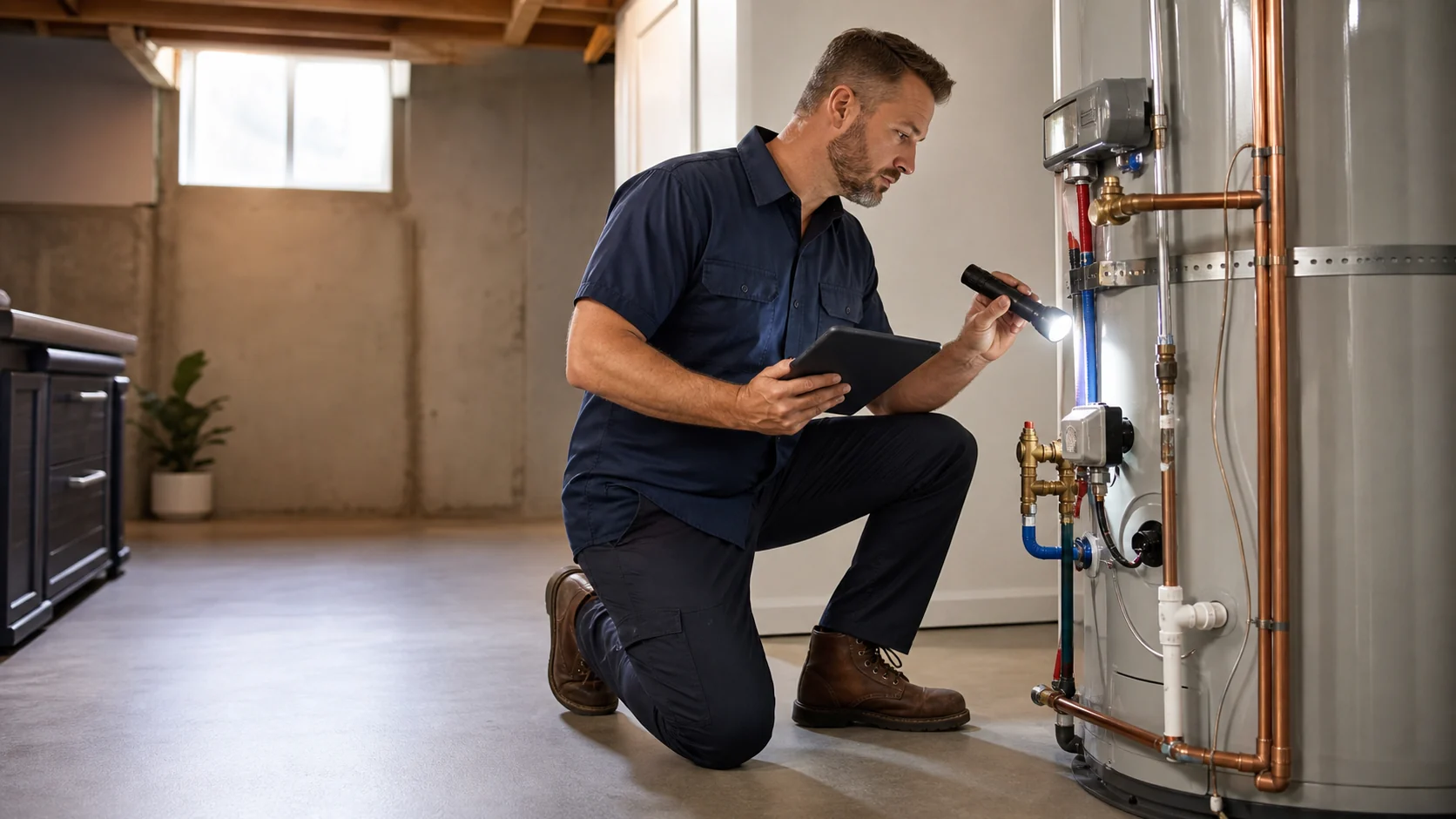
Read the label and look at the heater without removing a panel. A standard electric tank usually has a dedicated two-pole breaker and no exhaust vent. A gas tank has a gas line and a vent or powered exhaust system. A heat-pump water heater is a tall electric tank with an air intake and fan section. A tankless unit is wall-mounted and usually has a display.
A traditional gas tank with a standing pilot may continue heating during an electrical outage. A power-vented gas tank, electronic-ignition model, tankless heater, recirculation pump, or connected control usually will not. This distinction matters because “gas heater” does not always mean “works without power.” Use the exact model number and its manual before attempting any restart or relighting procedure.
A five-minute, no-tools check
- Confirm that power is stable. Check whether lights are steady and whether other large appliances are operating normally. If only part of the home has power, or lights are unusually dim or bright, call the electric utility or an electrician.
- Look around the heater. Stay on a dry floor. Check for puddles, water in a drain pan, dripping pipes, scorch marks, unusual noise, or a gas odor.
- Read the display without opening anything. Photograph any error code, status light, or blank screen. The model-specific manual will explain the code more reliably than a generic online reset sequence.
- Check the dedicated breaker visually. A breaker handle may sit between ON and OFF when it trips. Do not remove the electrical panel cover. If the area is dry and there are no damage signs, follow the breaker manufacturer’s normal handle-reset method once. If it trips again, stop.
- Give the heater recovery time. A tank must reheat stored water after power returns, and a large household can use that first batch quickly. Avoid changing the thermostat while you wait.
Why repeated resets are a bad test
A breaker, high-limit switch, flame-safety control, or error code is telling you that the equipment stopped under a condition it did not accept. Repeatedly clearing that signal can hide the symptom a technician needs to diagnose. It can also re-energize a damaged part.
Do not remove an access panel to press an electric water heater’s high-limit reset unless the manufacturer’s instructions specifically call for it and you are qualified to work around the equipment. The panel covers line-voltage wiring. A high-limit trip can also point to a failed thermostat or another fault that needs testing, not repeated button presses.
Gas water heaters need model-specific instructions
If a standing pilot went out, use the lighting instructions attached to that exact heater. Do not use a match, improvised flame, or instructions for a different model. Newer gas units may use a push-button igniter, electronic ignition, powered vent, or sealed combustion system. Opening a sealed burner area or bypassing a safety control is not homeowner troubleshooting.
Stop if the pilot will not stay lit, the unit locks out again, the vent fan sounds wrong, or a carbon monoxide alarm activates. Leave immediately for a CO alarm or suspected gas leak, then contact emergency services or the utility from outside.
What to send when you request help
A clean service request saves time. Photograph the full heater, model and serial label, visible breaker label, display or status light, and any water from a dry position. Note when utility power returned, whether the heater worked before the outage, whether the breaker or error returned, and whether every hot tap is affected.
For Salt Lake County and Utah County homes, include the city and heater location. A garage unit in Draper, a basement tank in Sandy, and a utility-closet tankless unit in Lehi present different access and temperature questions. The city alone does not diagnose the problem, but it helps route the request and prepare for the space.
Usually safe to observe
- • Heater type and model number
- • Visible breaker-handle position
- • Display, status light, and error code
- • Puddles, drips, odors, or scorch marks
- • Whether all hot taps are affected
Leave for a qualified pro
- • Repeated breaker or high-limit trips
- • Wet wiring or equipment
- • Gas-control and burner work
- • Electrical panel or access-panel testing
- • Vent, combustion, and CO concerns
Plan for the next Utah outage
Save a photo of the rating label and the manufacturer’s manual before the next summer storm or winter outage. Keep the heater and electrical panel accessible, test battery-backed smoke and carbon monoxide alarms, and know the utility emergency numbers. Never run a portable generator in a home, garage, basement, crawlspace, or near doors and windows. Ready.gov and the American Red Cross both warn that generators and fuel-burning equipment can create deadly carbon monoxide exposure.
If slow recovery or short hot-water runs were already common before the outage, the outage may have exposed an existing capacity or equipment problem. Use the not-enough-hot-water checklist to record the pattern. If the heater is older or has recurring faults, compare the repair-versus-replacement warning signs before approving work.
Sources and further reading
- Ready.gov: Power Outages — outage preparation, surge precautions, generator placement, and carbon monoxide warnings.
- American Red Cross: Power Outage Safety — utility, tripped-breaker, appliance, generator, and CO safety guidance.
Still no hot water after power is stable?
Send your Utah city, heater type, model number, error code, breaker behavior, and safe photos. We can help route the request for repair or replacement assessment.
Send the outage details