
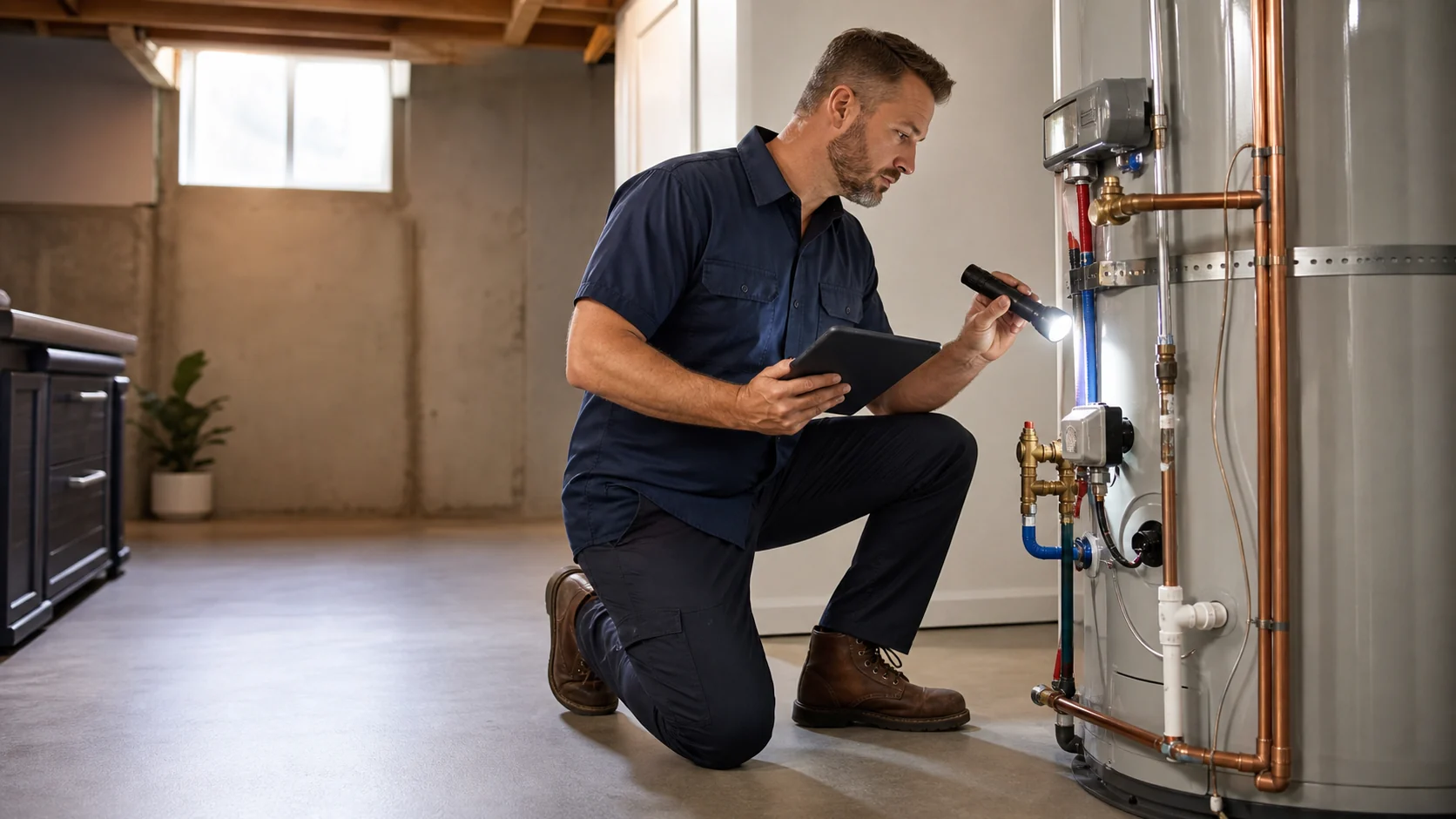
Water heaters are not silent appliances, but new, loud, or changing noises are worth paying attention to. In Salt Lake County and Utah County, hard water can make sediment-related sounds more common, while freezing garages, long plumbing runs, and pressure changes can create other noises that seem to come from the tank.
Safety first: listen and document, do not disassemble
This guide is for safe observation. Do not remove burner covers, electrical panels, thermostats, gas parts, venting, pressure relief components, or tankless covers to chase a noise. If you smell gas, see scorch marks, find water near electrical components, or notice the relief valve discharging, stop using the area and contact the utility, emergency service, or a qualified local water heater professional.
Quick sound-to-symptom checklist
Use this table to describe the sound when you request help. Exact diagnosis still requires an on-site evaluation, but clear details can help a provider decide whether the issue is routine, urgent, or replacement-related.
Why Utah hard water can make popping and rumbling more noticeable
Much of the Wasatch Front has mineral-heavy water. Over time, minerals can settle in the bottom of a storage tank, especially when maintenance has been skipped or the tank is older. During a heating cycle, water trapped around sediment can make popping, crackling, or rumbling sounds.
A little noise does not automatically mean the tank is about to fail, but a trend matters. Louder sounds, longer recovery times, rusty water, visible leaks, or a tank near the end of its expected life should push the conversation toward repair-versus-replacement planning. Start with the Utah hard-water sediment guide and the repair-or-replace checklist before guessing.
When a noisy water heater is more urgent
- Noise plus water: active leaking, a wet pan, damp drywall, or pooling near the heater deserves prompt attention.
- Noise plus gas odor or scorch marks: leave the area and contact the gas utility or emergency service before arranging ordinary repair.
- Noise plus relief-valve discharge: never cap or plug the relief line; pressure and temperature safety components need qualified evaluation.
- Noise plus breaker trips or burning smell: do not open electrical panels; keep clear of wet areas and request qualified help.
- Noise plus no hot water: document the brand, fuel type, age, and error codes if safely visible.
Safe details to collect
- • Short video or audio from a safe distance
- • City or ZIP and whether the heater is in a garage, basement, closet, or utility room
- • Tank or tankless brand and approximate age
- • Whether the sound happens while heating, after a faucet shuts off, or all the time
- • Visible leaks, rust, error codes, or relief-pipe discharge
Avoid these risky shortcuts
- • Do not turn temperature higher to overcome sediment symptoms
- • Do not cap a dripping pressure relief line
- • Do not remove gas, vent, or electrical covers
- • Do not flush a severely neglected older tank without understanding leak risk
- • Do not ignore a noise that is getting louder each week
Tankless water heater noises are different
Tankless systems may click, fan, or ramp up when hot water starts. However, grinding, loud vibration, repeated ignition failure, hard-water scale symptoms, or error codes should be checked against the manufacturer manual and evaluated by a qualified provider. In hard-water parts of Utah, tankless maintenance and descaling intervals can matter more than homeowners expect.
If your tankless unit is noisy, include the brand, model, error code, water softener status, and whether the sound happens at low flow or high-demand fixtures. See the tankless installation and quote guide if repeated service issues are making replacement worth comparing.
Reliable external resources
For general water-heating efficiency and maintenance background, review the U.S. Department of Energy water-heating overview and the DOE water-heater tank insulation safety notes. For maintenance concepts from a manufacturer, see A. O. Smith's water heater maintenance guide. Always follow the exact manual for your installed model and local code.
Request help for a noisy Utah water heater
If you are in Salt Lake City, Sandy, Draper, West Jordan, South Jordan, Murray, Provo, Orem, Lehi, American Fork, or nearby Wasatch Front communities, describe the sound, timing, age, and any leak or safety symptoms.
Send water heater details