
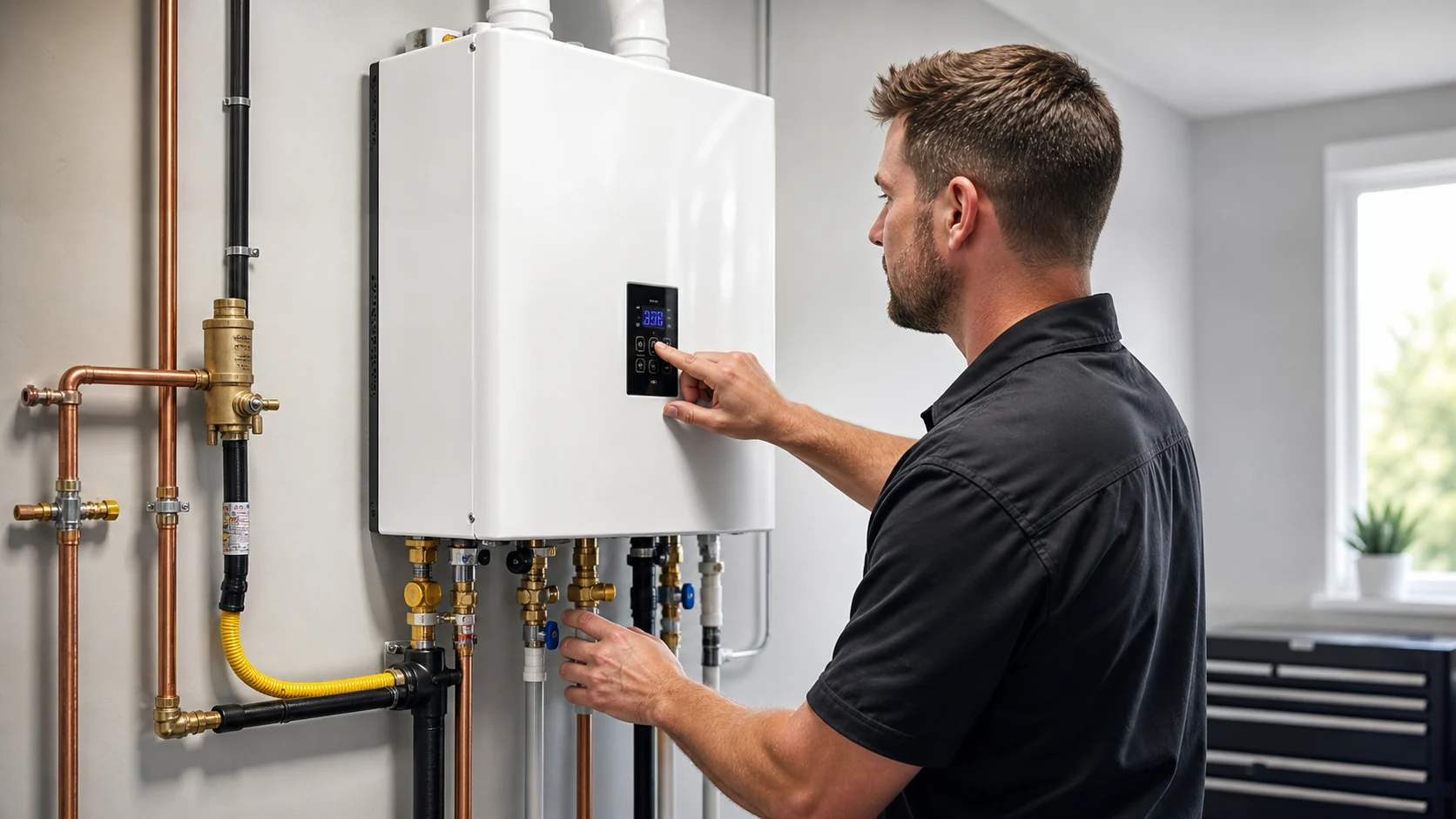
A tankless water heater is not a set-it-and-forget-it appliance, especially along the Wasatch Front. The unit may look clean from the outside while scale builds inside the heat exchanger, inlet screen, or small water passages. That buildup can show up as temperature swings, error codes, weaker flow, or a system that needs service sooner than expected.
Safety first: do not copy a random flush video
This guide is for homeowner planning and safe observation. Do not remove covers, disconnect gas or electrical parts, bypass safety devices, open hot piping, mix chemicals, or run a descaling pump unless you know the manufacturer procedure for your exact model and can do it safely. If you smell gas, see water near electrical parts, or get repeated combustion-related error codes, stop and call a qualified pro.
Why Utah tankless systems need attention
Salt Lake County and Utah County have plenty of hard-water homes. Hard water leaves mineral scale behind as water heats, and tankless units heat water fast through narrow passages. That is a rough combination. A home in Sandy, Draper, Lehi, Provo, Orem, West Jordan, or Salt Lake City may need a different maintenance rhythm than the same model installed somewhere with softer water.
Usage matters too. A family running long back-to-back showers, laundry, and dishwasher cycles will stress the unit more than a low-use guest suite. A recirculation setup can also add runtime. The right answer is not one universal schedule. It is a model-specific maintenance plan based on water quality, usage, age, venting, and warranty requirements.
Signs a tankless unit may be overdue for service
What homeowners can safely check
- Find the model number and serial number on the label. Take a clear photo for service requests.
- Look for isolation valves and service ports below the unit. Do not open them unless you are trained and the unit is safely shut down.
- Check whether the vent termination outside is blocked by snow, leaves, weeds, storage, or dryer lint.
- Write down any error code exactly as shown, including when it appears.
- Notice whether temperature swings happen at every fixture or only one shower, tub, or faucet.
- Check whether the unit has a condensate drain or neutralizer that looks backed up, cracked, or crusty.
- Keep boxes, paint, chemicals, and holiday bins away from the unit so leaks, vents, and shutoffs are visible.
What usually belongs on a pro maintenance visit
A proper visit is more than pumping solution through the heater and leaving. For many units, the pro should look at the inlet filter, service valves, venting, condensate handling, gas supply symptoms, combustion concerns, error history, and manufacturer maintenance instructions. Some manufacturers publish descaling or flushing procedures, but those procedures still depend on the exact model and installation.
If the home has very hard water, ask whether water treatment, a scale-reduction device, or a different service interval makes sense. If the unit is older and already throwing codes, ask whether maintenance is likely to restore performance or whether replacement quotes should be compared.
Questions to ask before booking service
- • Do you service my exact brand and model?
- • Will you check error history, inlet screen, venting, condensate, and water quality clues?
- • What descaling solution and procedure do you use for this manufacturer?
- • How often should this unit be serviced based on local water hardness and household use?
- • If the heat exchanger is scaled or failing, will you explain repair vs. replacement options?
Do not DIY these problems
- • Gas smell, ignition failures, or combustion codes
- • Vent pipe changes, loose venting, or blocked exhaust you cannot clear from outside
- • Water inside the cabinet or near electrical components
- • Repeated overheating or high-limit errors
- • Any work that requires removing panels, opening gas lines, or changing wiring
How this affects replacement planning
Maintenance can keep a good tankless unit running better, but it cannot make a poorly installed or undersized unit perfect. If the system has never delivered enough hot water, struggles during winter inlet-water temperatures, or needs major parts after years without service, compare the cost of repair against a correctly sized replacement.
For upgrade planning, start with the tankless water heater installation guide. If symptoms include rumbling, popping, or sediment in a tank-style unit, use the Utah hard water and sediment guide. If you are deciding whether to keep fixing an older system, read the repair-or-replace checklist.
Sources and further reading
For manufacturer maintenance context, see Rinnai's tankless flushing guidance and Navien's tankless maintenance overview. Navien also has a plain-English page on descaling tankless water heaters. For efficiency and product-selection background, review ENERGY STAR water heater information. Your exact model manual and a qualified Utah technician should control the final maintenance procedure.
Need tankless maintenance or a replacement opinion?
Send the city, model photo, error code if any, installation age, and what the hot water is doing. A local provider can help decide whether you need maintenance, troubleshooting, or a replacement quote.
Send tankless details