
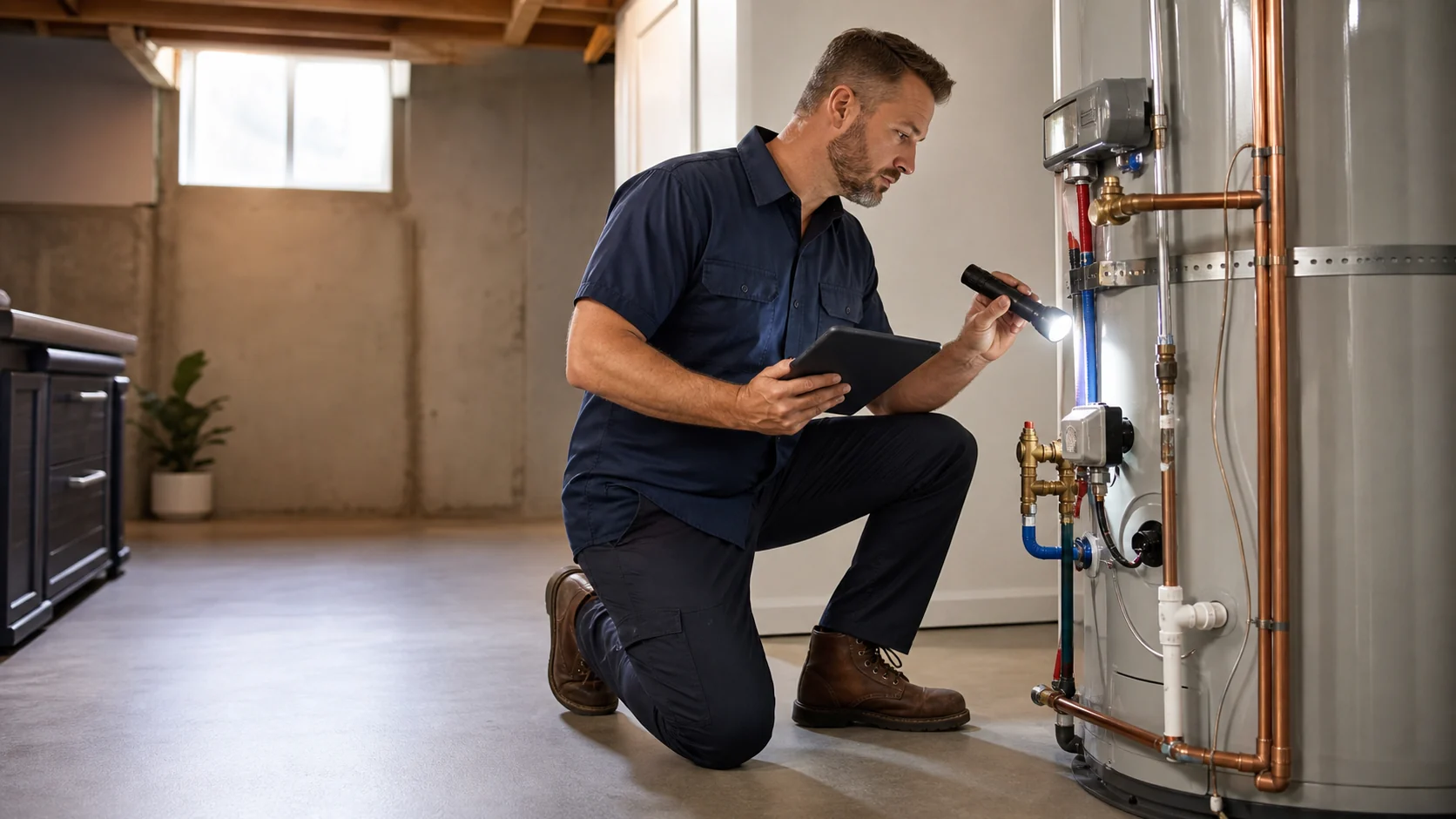
The drain valve is the small faucet-like valve near the bottom of a tank water heater. It is used for draining or flushing the tank during service. When that area is wet, homeowners usually want to know one thing first: is this a small valve problem, or is the tank leaking?
Do not turn this into a hot-water project
This guide is for safe observation only. Do not remove the drain valve, cap a leaking valve, drain a hot tank, work near electrical parts, or relight/adjust gas controls unless you are trained to do it safely. If water is spreading, the tank is bulging, you smell gas, or water is near wiring, step back and request urgent help.
First, confirm where the water is coming from
Use a flashlight and look from the side, not directly under hot piping. Wipe the floor only if it is safe, then watch for a few minutes. A true drain-valve leak usually starts at the little spout or around the valve stem. A tank leak often shows up as water running from the bottom seam, from under the insulation jacket, or from a rusted area that only looks close to the valve.
If the heater sits in a pan, check whether water is landing in the pan from above. Relief-valve discharge, condensation from nearby equipment, a loose cold-water connection, or a softener drain line can all make the drain valve look guilty when it is not.
What different leak patterns can mean
Why this comes up in Utah homes
Hard water is common across Salt Lake County and Utah County. Over time, minerals can collect near the bottom of a tank. That sediment can make a heater noisier, reduce hot-water performance, and make an old drain valve harder to operate cleanly. The risk is not just the drip. The bigger question is whether the valve leak is a small part failure or a sign that the tank is nearing the end of its useful life.
In finished basements in Sandy, Draper, West Jordan, South Jordan, Murray, Provo, Orem, Lehi, and American Fork, even a slow leak deserves attention. A pan and leak alarm help, but they do not fix a failing valve or tank.
Details to gather before you request help
- Photo of the full water heater, including the floor and any drain pan.
- Close photo of the drain valve area without touching the valve.
- Brand, model, serial number, tank size, and fuel type from the label.
- Whether water appears only after showers/laundry or drips all day.
- Any rumbling, popping, rusty water, short hot-water supply, or repeated pilot/ignition trouble.
- Your city or ZIP, plus whether the heater is in a basement, garage, closet, or utility room.
When a drain-valve leak becomes a replacement conversation
A newer heater with a clean, isolated valve drip may be repairable. An older heater with rust, rumbling, a plastic valve that looks brittle, water from the bottom seam, or repeated leaks should be compared against replacement before you spend money chasing one part. If the tank itself is leaking, replacing the drain valve will not solve the problem.
Use the repair-or-replace checklist if the unit is older or has multiple symptoms. If water is spreading now, start with the leaking water heater steps. For mineral buildup and flushing questions, read the Utah hard-water sediment guide.
Reasonable questions for a provider
- • Does the leak appear to be from the valve or the tank body?
- • Is the heater old enough that replacement should be quoted before repair?
- • Is flushing safe for this tank, or could it make a weak valve leak worse?
- • Should the drain valve be replaced with a more durable valve during service?
- • Would a pan, leak alarm, or shutoff improvement reduce damage risk?
Do not ignore these signs
- • Water from the bottom seam or under the tank jacket
- • Rust trails, bulging, or a soft/deteriorated base
- • Wet electrical controls or nearby outlets
- • Gas smell, scorch marks, or venting concerns
- • A leak above finished flooring or stored belongings
Sources and further reading
For general maintenance and safety context, see the A. O. Smith water heater maintenance guide and the A. O. Smith info center. For energy and maintenance basics, the U.S. Department of Energy's Energy Saver program publishes homeowner guidance on water heating. Always use the manual for your installed unit and local code requirements for final service decisions.
Seeing a drip near the bottom of the tank?
Send the city, water heater age, fuel type, and photos of the valve and floor area. A local provider can help sort out whether this looks like a repair visit, a replacement quote, or an urgent leak call.
Send water heater details