
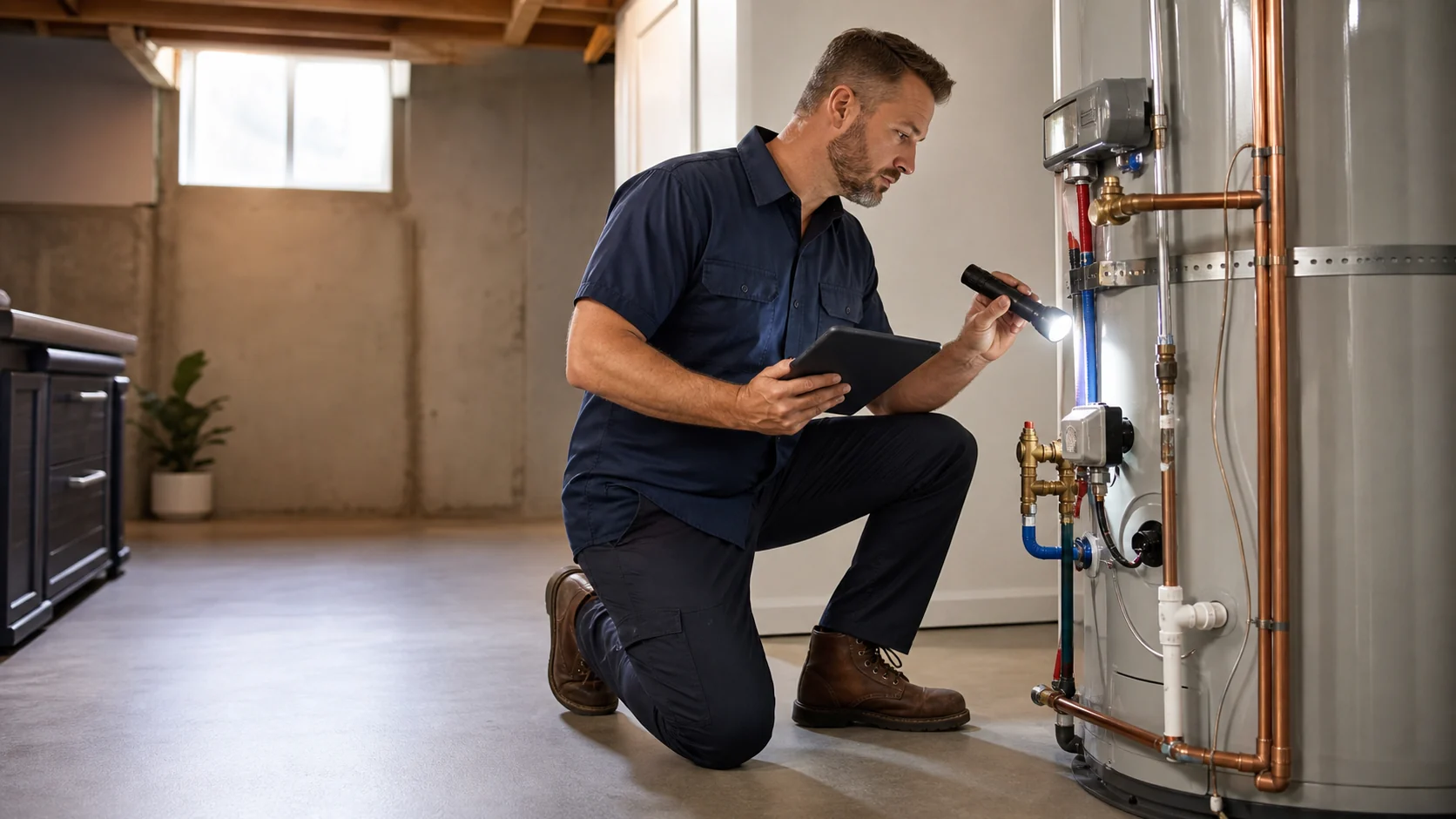
A full water heater is heavy. In an earthquake, that weight can pull on gas lines, water lines, venting, and nearby walls. Utah homeowners do not need to become plumbers to take this seriously. You just need to know what a secured setup usually looks like, what warning signs are easy to spot, and when to stop and call someone who works on these systems every week.
Safety first: do not move the tank yourself
This guide is for visual checks from a safe distance. Do not loosen straps, drill into framing, move a water heater, bend gas connectors, open electrical panels, remove venting, or test shutoff valves that look corroded or stuck. If you smell gas, hear hissing, see a tipped or leaning heater, or find water near electrical parts, leave the area and contact the utility, emergency service, or a qualified water heater professional.
Why this matters in Utah
Utah has real earthquake risk, especially along the Wasatch Front. Most homeowners think first about shelves, chimneys, and emergency kits. The water heater deserves a spot on that same list because it often sits in a garage, basement, closet, or utility room with fuel, power, water, and venting packed into a tight space.
A properly secured heater can reduce the chance of the tank tipping or tearing connections during shaking. It is also easier to inspect after an event if the area around it is clear and the shutoffs are accessible.
What a secured water heater usually has
Local code, manufacturer instructions, fuel type, wall construction, and tank size all matter, so treat this as a homeowner observation list rather than an installation manual.
Red flags to photograph before you request help
- No visible straps: many older Utah homes still have water heaters that were never restrained or were replaced without a clean restraint setup.
- Loose or sagging straps: a strap that hangs away from the tank or has missing hardware needs a closer look.
- Fasteners only in drywall: if you can tell the strap is screwed into drywall instead of framing, ask a pro to evaluate the anchor point.
- Straps across controls or covers: restraint should not block safe access to service panels, burner areas, labels, or required clearances.
- Leaning tank or kinked connector: do not try to straighten it yourself, especially on gas units.
- Stored items jammed against the tank: boxes, paint, cleaners, and holiday bins can block inspection and make a post-earthquake problem harder to spot.
Safe homeowner prep
- • Take wide photos of the tank, straps, top connections, lower connections, and surrounding wall.
- • Clear stored items so shutoffs, the data plate, and the relief pipe are visible.
- • Write down the brand, tank size, fuel type, and approximate age if the label is easy to read.
- • Check whether the heater sits in a garage, basement, finished closet, or upstairs utility room.
- • Add the heater area to your family earthquake walk-through, along with gas and water shutoff locations.
Leave this to a pro
- • Installing or relocating seismic straps
- • Moving the tank to reach framing
- • Reworking gas, electrical, venting, or relief piping
- • Fixing a leaning tank or damaged stand
- • Deciding whether a post-earthquake heater is safe to relight or reuse
Questions to ask during a repair or replacement quote
If you are already comparing water heater work in Salt Lake City, Sandy, Draper, West Jordan, South Jordan, Murray, Provo, Orem, Lehi, or American Fork, add earthquake restraint to the conversation. It is much easier to get this right while a qualified installer is already looking at the tank.
- Will the new or existing water heater be restrained according to current local requirements and manufacturer guidance?
- Are the straps anchored into framing or another approved support?
- Will the strap locations avoid controls, venting, water lines, relief piping, and gas or electrical connections?
- Does the current stand, pan, platform, or closet layout create a restraint problem?
- After installation, can you show me the shutoffs and explain what to do after an earthquake?
After an earthquake: slow down before relighting or reusing
After shaking, check from a safe distance first. Look for leaning, broken straps, wet flooring, kinked lines, dislodged venting, gas odor, scorch marks, or error codes. Do not relight a gas appliance or reset electrical components if anything looks wrong. When in doubt, keep clear and ask the gas utility or a qualified provider what to do next.
If the heater leaked, moved, or lost hot water after shaking, start with the leaking water heater emergency guide. If the unit is old or already had corrosion, noise, or sediment problems, use the repair-or-replace checklist before spending money on a short-term fix.
Sources and further reading
For earthquake preparedness basics, read Ready.gov's earthquake guide. For water-heating background and efficiency information, see the U.S. Department of Energy water-heating overview. For the final word on your system, use the installed unit's manual, local code requirements, and a qualified Utah provider.
Ask about earthquake restraint during water heater service
Send photos, city, fuel type, tank age, and the strap or shutoff concern. A local provider can tell you whether this belongs with a maintenance visit, repair, or replacement quote.
Send water heater details