
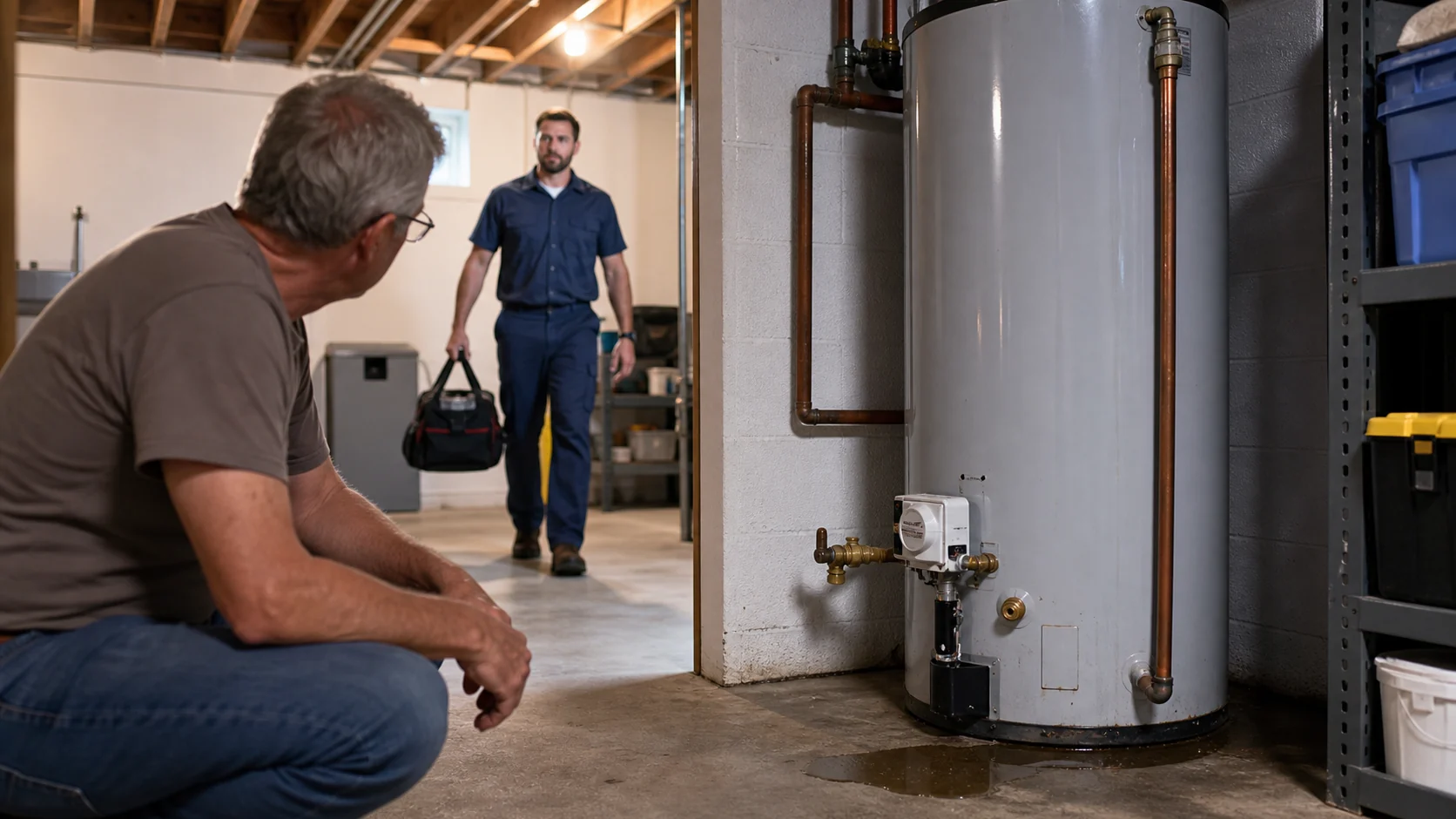
A water heater leak can be a small nuisance or a finished-basement problem depending on where the tank sits, whether water has a path to a drain, and how quickly someone notices it. This guide focuses on safe homeowner observation and prevention planning, not taking apart gas, electric, or pressure safety components.
Safety first: do not bypass protection devices
Never cap, plug, or redirect a temperature-and-pressure relief valve line in a way that blocks discharge. Do not open electrical access panels, burner areas, gas controls, venting, or tankless covers to investigate a leak. If you smell gas, see sparking, find water near electrical components, or notice active flooding, leave the area as needed and contact the utility, emergency service, or a qualified local professional.
Quick prevention checklist
Use this checklist when you look at a water heater in Salt Lake County, Utah County, or nearby Wasatch Front communities. If the heater is in a closet, finished basement, attic-adjacent space, or utility room with no nearby drain, prevention matters even more.
Where Utah homes tend to be vulnerable
In many Utah homes, the water heater is in a basement utility room, garage, mechanical closet, laundry area, or unfinished storage room. Finished basements in Salt Lake City, Sandy, Draper, West Jordan, South Jordan, Provo, Orem, Lehi, and American Fork can turn a small leak into flooring, trim, and drywall damage if there is no pan, floor drain, or alarm.
Garage installations have a different risk profile: water may be easier to contain, but freezing temperatures, stored items, and poor visibility can delay noticing a leak. Keep the area around the tank clear enough to spot rust streaks, damp concrete, pan water, or corrosion on fittings.
Leak alarm and shutoff planning
A simple water alarm is often one of the lowest-cost prevention upgrades a homeowner can make. Place it where water would appear first, test it on a schedule, and replace batteries before they fail. Smart leak sensors can be useful for second homes, rentals, and busy households, but only if notifications are actually enabled and received by someone who can respond.
Some homes also use automatic shutoff devices. These should be selected and installed with attention to the water heater type, plumbing layout, local code, and manufacturer instructions. If you are already comparing quotes for a water heater replacement in Utah, ask whether pan drainage, leak detection, shutoff access, expansion control, and code-required updates should be addressed at the same time.
Safe monthly observations
- • Look for water in the pan or on the floor
- • Check for rust trails below fittings or on the tank jacket
- • Confirm the leak alarm still sounds when tested
- • Make sure stored boxes are not hiding the drain pan
- • Note any new popping, rumbling, or recovery-time changes
Call promptly if you see
- • Active dripping from the tank body or seams
- • Continuous relief-valve discharge
- • Water near electrical parts or outlets
- • Gas odor, scorch marks, or venting concerns
- • A swollen, badly rusted, or unstable tank platform
Pan, drain, and replacement quote questions
If you request a repair or replacement quote, ask practical prevention questions rather than focusing only on the equipment price:
- Is the existing pan correctly sized and in usable condition?
- Can the pan drain to an approved location, or is a leak alarm the more realistic protection?
- Is the cold-water shutoff accessible and working, or should it be replaced during the project?
- Does the home need an expansion tank or other pressure-control evaluation?
- Would tankless, hybrid, or a different tank size change leak-risk planning or placement?
For older tanks, prevention planning should be paired with age and symptom review. Use the repair-or-replace checklist if the tank is leaking, noisy, rusting, or near the end of its expected service life.
Reliable external resources
For general efficiency and water-heating background, review the U.S. Department of Energy water-heating overview. For homeowner maintenance concepts from a manufacturer, see A. O. Smith's water heater maintenance guide. For tankless system context, the DOE also maintains an overview of tankless or demand-type water heaters. Always follow the exact manual for your installed model and local code.
Need help with a leaking or high-risk Utah water heater?
If you are in Salt Lake County, Utah County, Salt Lake City, Sandy, Draper, West Jordan, South Jordan, Murray, Provo, Orem, Lehi, American Fork, or nearby communities, describe the water heater location, age, fuel type, visible leak symptoms, and whether a pan, drain, or alarm is present.
Send water heater details