
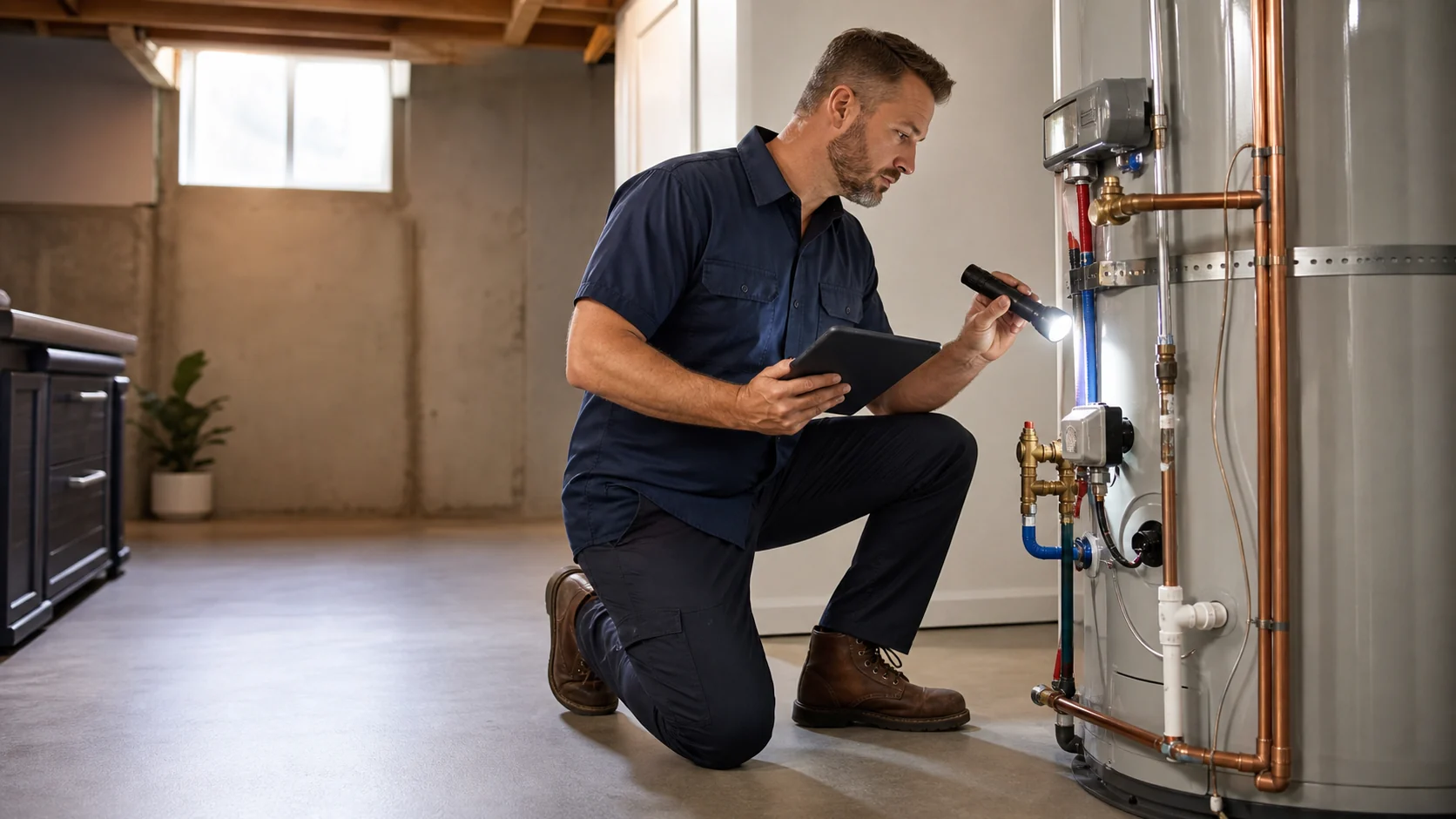
A water heater swap can look simple on a quote: remove one unit and connect another. The details around it may involve venting, gas piping, electrical work, drainage, seismic restraint, or a change in fuel type. That is why permit and inspection questions belong at the start of the conversation, not after the installer has left.
The short answer on Utah permits
Requirements depend on the property address, local building department, equipment, and scope of work. Do not assume that every Utah city handles a replacement the same way. Ask the building department with jurisdiction over your address and get the answer before work begins.
Start with the right building department
If the home is inside city limits, start with that city's building or permitting office. For an unincorporated address, check with the county. A mailing address can name a nearby city even when the property sits outside its boundary, so use the actual parcel jurisdiction rather than the city printed on an envelope.
Homeowners in Salt Lake City, Sandy, Draper, West Jordan, South Jordan, Murray, Provo, Orem, Lehi, and American Fork should check the rules for their own city. An HOA can have separate notice or exterior-work rules, but HOA approval does not replace a government permit when one is required.
Ask these five questions before accepting a quote
- Does this exact job require a permit at my address? Give the department the fuel type, tank or tankless model, installation location, and whether the project changes gas, vent, plumbing, or electrical connections.
- Who will pull it? The quote should identify whether the contractor or homeowner is responsible. If the contractor says no permit is needed, you can confirm that with the local department.
- Is the permit cost included? Look for permit and inspection fees as an included line item or a clearly stated exclusion.
- Who schedules the inspection? Ask when it should happen, whether the heater can be used beforehand, and who handles corrections if the inspector finds something.
- What proof will I receive? Request the permit number, inspection result, final invoice, model and serial numbers, and warranty information.
Why the scope matters
A like-for-like tank replacement is different from converting a gas tank to electric, adding a new circuit, installing a larger gas appliance, moving the heater, or switching to tankless. Those changes can affect which trades and permit reviews are involved.
Do not choose a conversion from the equipment price alone. Ask the installer to spell out venting, gas supply, panel capacity, condensate disposal, drain-pan work, expansion control, and removal of the old unit. Our quote comparison checklist helps put competing proposals into the same format.
What to save in your home records
• Signed quote and final invoice
• Permit number and inspection result
• Equipment model and serial number
• Manufacturer and labor warranties
• Installer company and license details
• Photos before and after installation
• Temperature setting at handoff
• Maintenance schedule and shutoff notes
Check the contractor separately
A permit record and a contractor license answer different questions. Utah's official license lookup lets you search a professional or company. Confirm that the name on the quote matches the party doing the licensed work, and ask for current insurance information when appropriate. The site does not verify or guarantee a provider's license, insurance, pricing, or workmanship for you.
A vague answer such as "permits are never needed for water heaters" is worth checking. So is a request that you pull a homeowner permit without a clear explanation of who will perform the work and who is responsible for inspection corrections.
What an inspection does and does not mean
A local inspection checks covered work against the applicable code and approved scope. It is useful documentation, especially when you later sell the home or make a warranty claim. It is not a guarantee that the equipment will never leak or that every part will last for a certain number of years.
After installation, use the new water heater closeout checklist during the first week. Watch for active leaks, unusual odors, error codes, repeated shutdowns, or water near electrical parts. If you smell gas or a carbon monoxide alarm sounds, leave the area and contact emergency services or the gas utility from a safe location.
If work has already started without a clear permit answer
Pause before covering, boxing in, or altering the installation. Call the building department, describe the work honestly, and ask what it needs next. Keep the quote, invoice, equipment label photos, and contractor messages together. The department can tell you whether a permit or inspection applies and how to handle the local process.
Sources and useful official links
- Utah Division of Professional Licensing verification search for checking a professional or business license.
- Lehi City applications, licenses, and permits for Lehi addresses.
- Draper City applications, licenses, and permits for Draper addresses.
- Your city or county building department for the permit rule tied to the property's jurisdiction and the actual project scope.
Planning a replacement in Salt Lake County or Utah County? Review the Utah replacement cost factors, then send your city, heater type, symptoms, and label photos when you are ready to request local help.