The bath starts hot, then the faucet fades to lukewarm while the tub is still filling. That does not automatically mean the water heater is broken. A deep soaking tub can ask for more hot water, and ask for it faster, than a storage tank can deliver in one stretch. The same symptom can also come from a failed heater part, a fixture problem, or hot water used elsewhere in the house.
Keep the test simple and safe
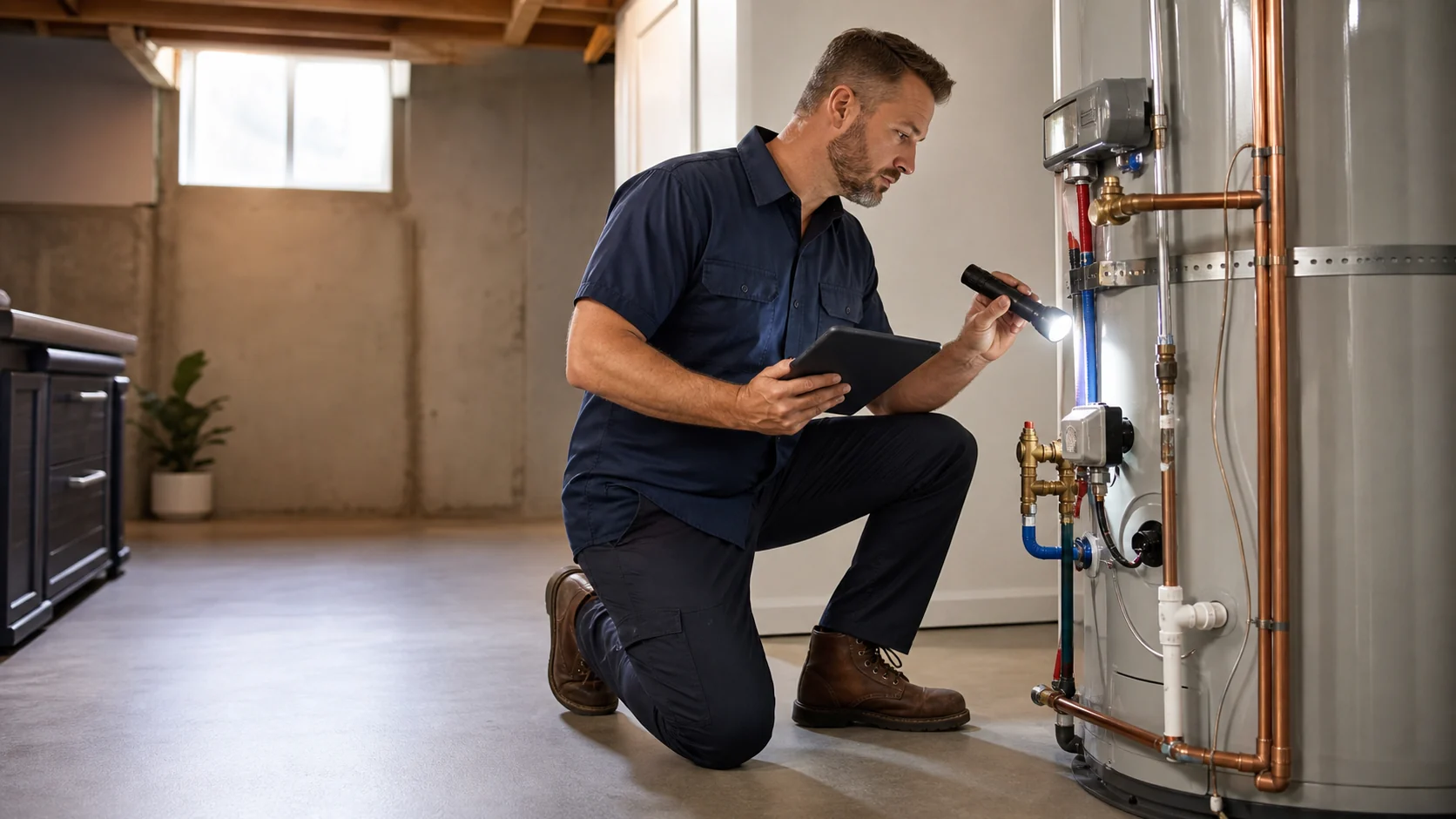
Do not raise the heater temperature to squeeze out a larger bath. Hotter storage water increases scald risk. Do not open electrical panels, remove burner covers, adjust a gas valve, or drain a hot tank for this test. If water is near wiring, you smell gas, a carbon monoxide alarm sounds, or the heater is leaking, stop and use the appropriate emergency or qualified-service path.
Why the tub finds the limit first
A shower blends hot and cold water while water leaves through the drain. A tub fill is different: the fixture may run near full flow for several minutes, and the whole mixed volume stays in the tub. Large soaking tubs, jetted tubs, and wide two-person tubs can need much more water than their outside dimensions suggest.
A tank's gallon label is not a promise that every gallon will arrive at the tub at the same temperature. Cold water enters the heater as hot water leaves. The burner or elements recover some heat during the fill, while mixing inside the tank and at the faucet changes how much bath-temperature water you get. The model's first hour rating is a more useful comparison than tank size alone.
Collect these facts before blaming the heater
Run one clean comparison
- Choose a time when no one has used hot water for long enough that the heater should be fully recovered. Use the exact-model manual or your normal recovery pattern rather than guessing.
- Turn off the dishwasher and washing machine, and ask everyone to leave hot-water fixtures off during the test.
- Fill the tub the same way you normally do. Note the start time, when the faucet becomes lukewarm, and the water level at that moment.
- On a separate fully recovered cycle, check whether a nearby sink stays hot. If only the tub loses heat, the tub valve or mixing control deserves attention.
This comparison tells a service provider far more than “the bath gets cold.” It separates predictable high demand from a whole-house heating problem and from a tub-only fixture problem.
What the pattern may mean
Why a Utah winter can make it worse
The heater must raise incoming cold water to the desired outlet temperature. When inlet water is colder, each gallon needs more heat. A storage heater may recover more slowly relative to demand, and a tankless unit may deliver less flow at the larger temperature rise. The tub that barely filled in August may come up short during a cold stretch along the Wasatch Front.
Do not assume winter explains a sudden, severe loss of hot water. If every fixture is cooler, recovery has changed sharply, an electric breaker trips, a gas unit shows a fault, or the tank is leaking, the heater still needs attention.
Replacement questions that fit the actual bath
- What is the tub's usable fill volume, and how much hot water does the household use in the same hour?
- What is the proposed storage model's first hour rating, not just its tank capacity?
- Can the heater recover while this tub faucet is running at its normal flow?
- For tankless, what flow will the model deliver at the winter temperature rise expected at this home?
- Could a tub valve, recirculation setup, or plumbing crossover be wasting capacity?
- Does the installed quote include any required gas, vent, electrical, drain, permit, or pressure-control work?
Bring the tub into the sizing conversation. A household count by itself misses the fixture that is causing the complaint. Use the Utah water heater sizing guide to compare tank and tankless ratings, then check the full scope with the quote comparison checklist.
Sources and further reading
- A. O. Smith: water heater sizing - peak-hour demand, first hour rating, and tankless flow considerations.
- ENERGY STAR: water heaters - current equipment categories and certified-product information.
- U.S. Consumer Product Safety Commission: tap-water scald prevention - why raising storage temperature without a safe plan is risky.
- The installation and operation manual for the exact heater model, plus the tub manufacturer's capacity information when available.
Need enough hot water for the tub?
Send your Utah city, heater-label photo, tub type or model, how far it fills before cooling, and whether nearby sinks stay hot. Those details help sort a fixture problem from heater repair or a capacity upgrade.
Request Utah water heater help