
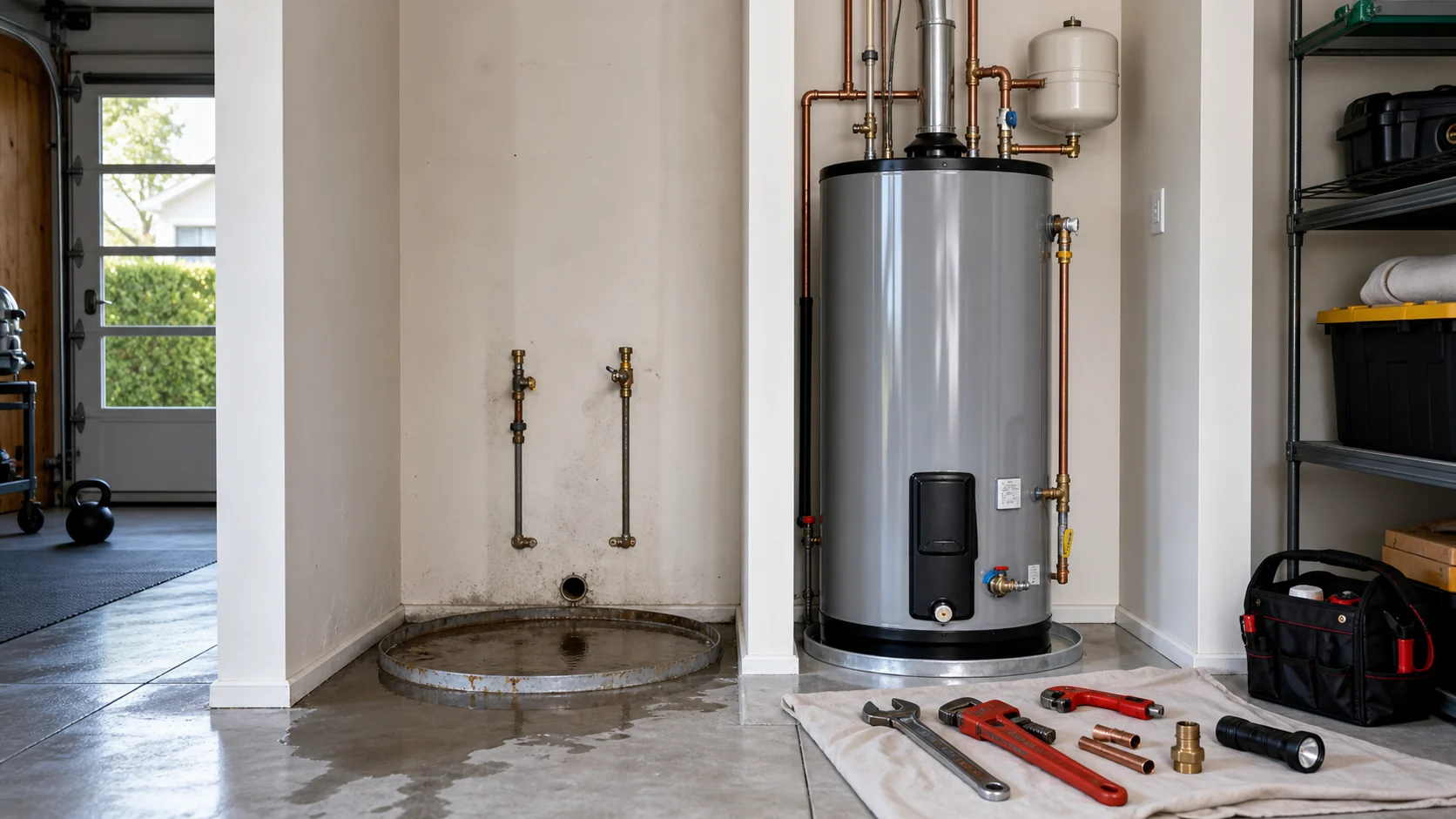
A detached-house replacement is often contained in one utility room. In a condo or townhome, the same job can affect a shared hallway, garage, roof vent, plumbing riser, or neighbor below. A little paperwork and a good photo packet can prevent the worst kind of installation-day surprise: a drained building, a heater that will not fit through the opening, or work stopped because nobody approved access.
An active leak comes before the checklist
If water is spreading toward another unit, ceiling, electrical panel, outlet, or appliance, notify the HOA or building contact and the affected neighbor promptly. Use only a shutoff you can identify and reach safely. If you smell gas, hear hissing, have a carbon monoxide alarm, or see smoke or scorching, leave the area and contact the gas utility or emergency services from a safe place.
Find out what belongs to the unit
Do not assume every pipe and valve inside the walls is the owner's responsibility. Read the declaration, bylaws, maintenance chart, or owner handbook for the property. Look for sections on water heaters, plumbing branches, shared risers, limited common areas, exterior penetrations, roofs, insurance, and emergency access.
Ask the manager or board one plain question in writing: "What approval, notice, contractor documents, and building access are required to replace the water heater in Unit ___?" Save the reply with the quote. Verbal instructions are easy to lose when a manager changes or a leak reaches another unit.
Build a replacement packet before requesting quotes
Measure the clear width and height of the closet opening, every tight turn on the removal path, and the available floor area. Send the measurements as context, not as a substitute for an installer visit. Pipes, relief lines, seismic restraints, vent fittings, and required service space can make a paper fit unusable.
Ask the HOA about these six details
- Notice and approval: Is an architectural request, work order, or manager approval required?
- Contractor documents: Does the property require proof of license, insurance, workers' compensation, or a named insured certificate?
- Work hours and access: Are there elevator reservations, loading rules, gate codes, floor protection, parking limits, or quiet hours?
- Water shutdown: Can the unit be isolated, or must building staff schedule a shared shutoff and notify neighbors?
- Common components: Who approves work on a shared vent, roof, exterior wall, drain, electrical room, or plumbing riser?
- Closeout: Does the HOA want the permit, inspection result, installer invoice, model number, photos, or warranty record?
In multi-unit buildings around Salt Lake City, Sandy, Murray, Provo, Orem, and Lehi, the property rules can be as important to scheduling as the heater itself. They do not replace city or county requirements. The local building department decides what permit or inspection applies to the address and scope.
Make the quote specific to the building
A useful proposal names the exact replacement model and covers removal, disposal, drain pan, relief piping, seismic restraint, venting or electrical work, permits, startup, and cleanup. For a condo, it should also state who handles common-area protection, elevator or stair access, scheduled shutdowns, and any HOA-required documents.
Ask whether the price changes if the main water supply has to be shut down, the heater must be carried down stairs, a roof or wall penetration needs approval, or the old unit cannot drain normally. Those are real scope questions. A low tank-only price does not tell you the installed cost.
Use the Utah quote comparison checklist to compare proposals line by line. The replacement cost guide explains why access, fuel type, venting, electrical work, and code-related items can move the total.
Do not improvise around shared walls or building systems
Leave gas piping, venting, fuel conversion, 240-volt wiring, panel work, relief piping, and plumbing alterations to qualified people. Do not move a vent into a shared chase, route a drain into an unknown opening, or close off a combustion-air opening because it sends cold air into the closet.
Changing from a tank to tankless or a heat pump model can reach beyond the heater closet. A tankless unit may need different gas, vent, condensate, or electrical provisions. A heat pump unit needs suitable air volume, condensate drainage, and an electrical review. In an attached building, those changes may touch property the owner cannot alter alone.
Verify the contractor and the final records
Search the business and individual in Utah's official license database, then compare the result with the name and license number on the quote. Our Utah plumber license guide explains what to save and why a business-name match is not the whole check.
After installation, keep the paid invoice, exact model and serial number, permit and inspection records when applicable, warranty documents, before-and-after photos, and the HOA approval. Note the unit shutoff location and the next maintenance date. If the condo is later sold or rented, that packet gives the next owner something better than a guess.
Sources and further reading
- Utah Division of Professional Licensing: license search - the official lookup for checking a Utah professional or business license.
- U.S. Consumer Product Safety Commission: carbon monoxide safety - background on fuel-burning appliances, alarms, symptoms, and emergency response.
- Utah Water Heater Help: permit and inspection checklist - questions for identifying the correct local jurisdiction and documenting the final installation.
Have the HOA rules and heater photos ready?
Send your city, property type, fuel, model label, access photos, leak status, and any HOA requirements. Ask for an exact model and a complete installed scope.
Request Utah water heater help