
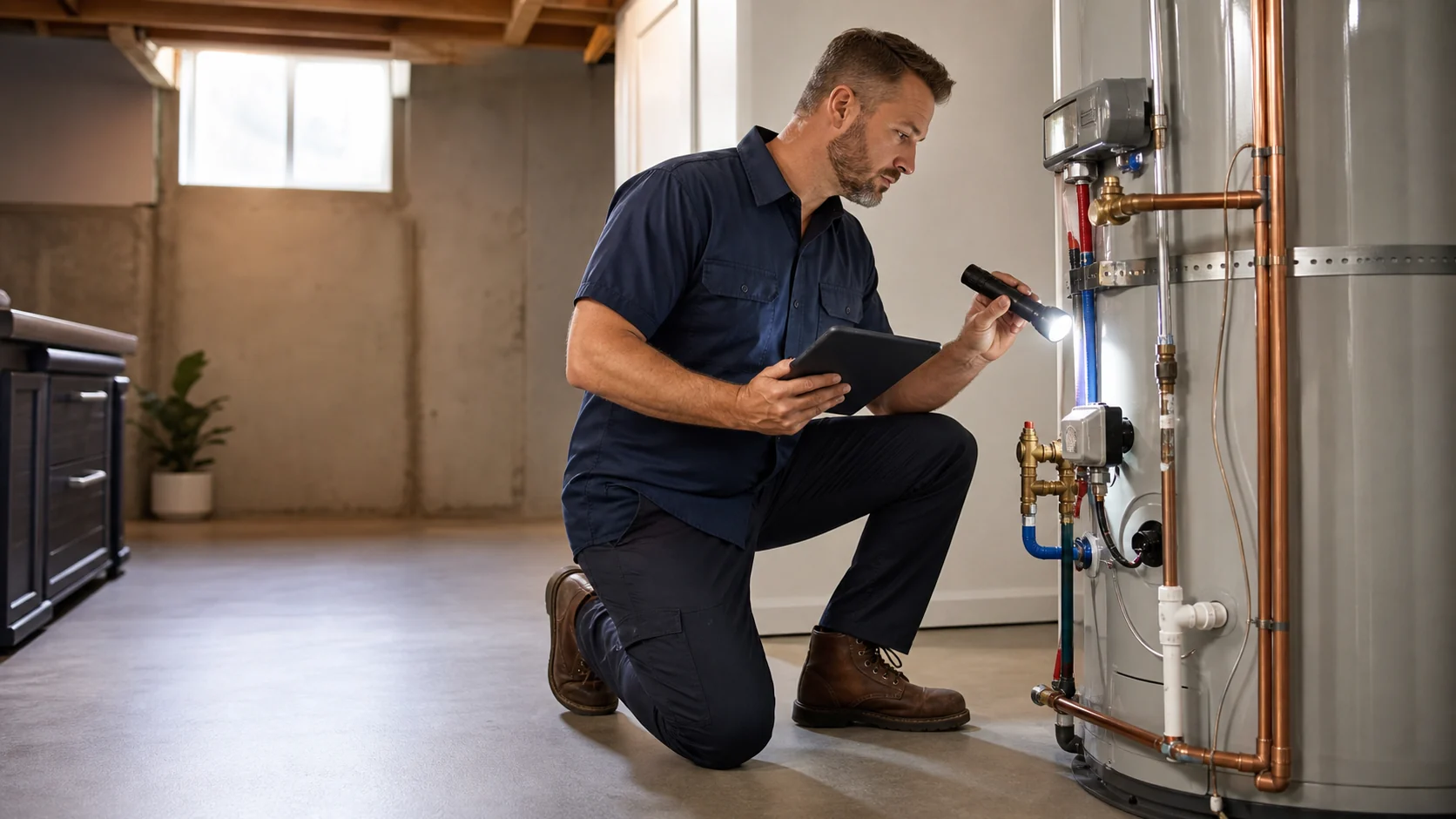
A manufactured-home water heater can look almost identical to one sold for a site-built house. That visual match is where bad replacement plans begin. Before accepting a quote, identify the home, photograph the old appliance, and ask the installer to show why the proposed model is approved for the installation.
Do not treat this as a swap-by-size project
Gas piping, fuel conversion, combustion air, venting, electrical wiring, and relief piping are not homeowner experiments. If you smell gas, see soot or scorching, hear a carbon monoxide alarm, or find water on electrical parts, leave the area as appropriate and contact the utility, emergency services, or a qualified professional.
Start by confirming what kind of home you have
People use "mobile home," "manufactured home," and "modular home" as if they mean the same thing. They do not always fall under the same construction rules. Find the home's data plate, certification labels, title, installation records, or manufacturer documents. If the paperwork is missing, ask the local building department or a contractor familiar with manufactured homes how the home is classified before choosing equipment.
This matters in communities across Salt Lake County and Utah County, including older parks and individually owned lots. The street address alone does not tell an installer which appliance listing or installation standard applies.
The six-photo packet that makes a quote more useful
- Full appliance: include the floor, top connections, door, and surrounding compartment.
- Rating plate: capture the manufacturer, model, serial number, fuel, input, voltage, tank capacity, and any listing language.
- Venting or exhaust: show the complete visible route without removing covers or disconnecting anything.
- Access opening: place a tape measure across the clear width and height, then photograph it.
- Drain pan and discharge route: show where the pan line and relief line appear to terminate.
- Home identification: photograph the data plate or certification label if you can reach it without moving panels or entering a hazardous space.
Also write down whether the unit uses natural gas, propane, or electricity. Do not infer the fuel from a seller's listing. Read the appliance label and have the installer verify the supply.
What federal manufactured-home rules say
The federal Manufactured Home Construction and Safety Standards require a listed water heater as part of the hot-water system. They also say appliances must follow their listing and manufacturer instructions, remain accessible and removable for service, and be secured against displacement.
For fuel-burning appliances covered by the standard, the combustion system must be separated from the home's interior. The rule describes a direct-vent or enclosed arrangement, with combustion-air and flue components listed or certified as parts of the appliance. A storage-tank water heater also needs a corrosion-resistant drain pan that carries leakage outside the home or to a drain.
Those are installation requirements, not shopping trivia. A quote should account for the exact appliance listing, the existing compartment, vent or intake parts, service access, and drainage. If a contractor proposes using a standard residential gas tank without checking those details, pause the job and ask for documentation.
Use this quote checklist
Small compartments create expensive surprises
Measure the clear opening, not just the old tank. Door trim, hinges, pipes, vent fittings, and the relief line can reduce working room. The replacement must be serviceable and removable after installation. A slightly wider tank may fit on paper but leave no safe path for connections or later repairs.
Keep the compartment free of boxes, paint, gasoline, cleaners, and other stored materials. Do not cover louvers, seal exterior openings, or change a compartment door because of drafts without having the combustion and venting design checked.
Propane and natural gas are not interchangeable labels
A home in Lehi or West Jordan may have natural gas, while a home farther from a distribution line may use propane. The flame does not make the equipment interchangeable. Federal standards say a fuel-burning appliance cannot be converted from one fuel to another unless the conversion follows its listing and the manufacturer's instructions.
Do not buy a conversion kit online and ask an installer to "make it work." Put the existing fuel and proposed model in the quote. If a listed conversion is allowed, the contractor should identify the approved parts and procedure.
Questions worth asking before you sign
- Is this exact model listed for the proposed manufactured-home installation?
- Does the model match the home's fuel and the site's elevation requirements?
- Will the existing vent, intake, compartment, and exterior access remain compliant with the new manual?
- Where will the drain pan discharge, and can that route be inspected?
- Is the electrical circuit or gas connection included in the scope?
- Who handles the permit and inspection for this address?
- Will I receive the manual, model and serial record, warranty details, and startup documentation?
Compare the full installed scope rather than the tank price. The water heater quote checklist helps put competing proposals on the same page. If the old unit's age is uncertain, use the serial number guide before deciding whether to repair it.
Sources and further reading
- 24 CFR 3280.609 covers manufactured-home water distribution systems and calls for a listed water heater.
- 24 CFR 3280.707 covers heat-producing appliances, fuel conversion, and applicable listings.
- 24 CFR 3280.709 covers appliance installation, access, combustion separation, clearances, and drain pans.
- A. O. Smith document finder is one place to locate model-specific manuals. Use the document for the exact model being proposed.
Need a Utah replacement quote?
Send the city, home type, fuel, old heater label, access measurements, and photos of the compartment. Ask each provider to identify the exact replacement model and complete installed scope.
Request Utah water heater help