
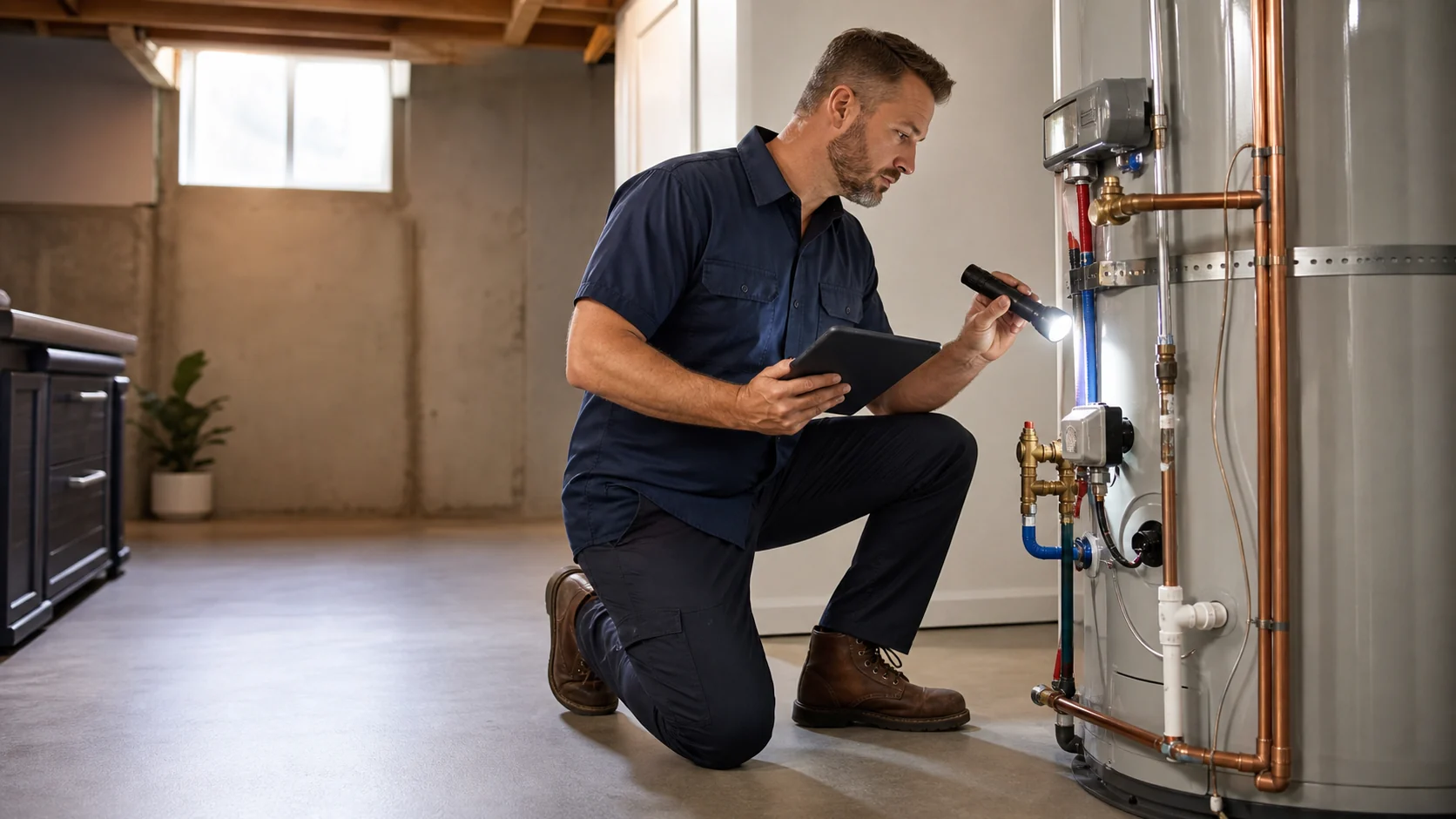
The anode rod is one of the least visible parts of a tank-style water heater, but it plays a major role in slowing tank corrosion. If you own a home in Salt Lake County or Utah County, it is worth knowing what the part does, which warning signs matter, and why replacement is usually a professional maintenance item rather than a casual DIY experiment.
Safety first: do not open the tank casually
This guide is homeowner education, not repair instructions. Anode rod service can involve hot water, pressure, seized fittings, gas or electrical shutoff steps, tight clearances, and manufacturer-specific parts. Do not remove covers, disconnect wiring, alter gas controls, cap relief valves, or force fittings. If you see leaking, scorching, gas smell, or water near electrical components, stop and seek urgent qualified help.
What does a water heater anode rod do?
Most glass-lined tank water heaters include a sacrificial anode rod made from a metal such as magnesium, aluminum, or aluminum-zinc alloy. The rod is designed to corrode before the steel tank does. That is why it is called “sacrificial”: as the rod is consumed, it helps protect the tank lining and exposed metal areas.
Once the rod is depleted, corrosion risk can increase. A tank may keep heating water for a while, but pinhole leaks, rusty water, or premature tank failure become more likely over time. The exact inspection and replacement interval depends on water chemistry, usage, tank model, installation, and manufacturer guidance.
Why Utah homeowners should care
Many Wasatch Front homes deal with mineral-heavy water. Hard water does not automatically mean the anode rod is bad, but mineral scale, sediment, and corrosion protection are connected maintenance conversations. In Sandy, Draper, Lehi, Orem, Provo, West Jordan, and nearby communities, homeowners often notice sediment sounds, cloudy hot water, or faster wear on plumbing fixtures. Those clues make it reasonable to ask about tank maintenance before a leak shows up in a finished basement or utility closet.
If your water heater is older, installed in a tight closet, or located above finished space, an anode rod conversation can be part of a broader risk check that also includes the drain pan, shutoff valve, relief line, expansion tank where applicable, and leak alarm.
Homeowner observations to write down
- • Tank age from the label or installation paperwork
- • Rusty, brown, or metallic-looking hot water
- • Rotten-egg odor mainly from hot water
- • Popping or rumbling sounds from sediment
- • Any moisture around fittings, pan, or relief line
Ask a qualified pro when
- • The heater is more than a few years old and has never been inspected
- • The anode fitting is hidden, tight, or seized
- • Hot water odor is persistent or changing
- • Rusty hot water appears at multiple fixtures
- • You are comparing repair vs. replacement
Common anode rod questions
Does a rotten-egg smell always mean the anode rod is bad?
No. Sulfur-like odor can involve water chemistry, bacteria, well systems, softeners, stagnant water, or the rod material. Some manufacturers offer powered or alternate-alloy anode options for odor issues, but the correct fix depends on the system. Avoid pouring chemicals into the heater or removing protection without professional guidance.
Can replacing the anode rod stop an old tank from leaking?
No. If the tank itself is leaking, an anode rod replacement is not a leak repair. A leaking tank usually means replacement planning. Use the leaking water heater emergency guide to reduce damage risk and request help quickly.
Should every tank get a new anode rod on a fixed schedule?
There is no single interval that fits every Utah home. A lightly used tank with different water chemistry may wear differently than a busy household with hard water, a recirculation line, or frequent hot-water demand. Manufacturer instructions and a qualified inspection are better than guessing from a generic schedule.
How an anode rod fits into an annual maintenance visit
During a maintenance conversation, ask whether the provider can check the tank age, visible corrosion, expansion tank where present, relief valve discharge path, combustion or electrical safety, sediment symptoms, and whether anode inspection is appropriate for your model. If the tank is near the end of its expected life, the provider may recommend comparing replacement cost instead of spending money on a difficult rod change.
For broader maintenance context, use the annual water heater inspection checklist and the Utah hard-water sediment guide.
Questions to ask before approving anode rod service
- Is the water heater still worth maintaining? Ask how tank age, visible corrosion, warranty status, and leak risk affect the decision.
- Which anode material matches the problem? Magnesium, aluminum, aluminum-zinc, and powered options can behave differently.
- Will the part fit my model and clearance? Some installations need flexible rods or special access.
- What happens if the old rod is seized? Forcing fittings can damage the tank or nearby plumbing.
- Should we also address sediment, pressure, or leak alarms? A single part swap may not solve the underlying risk.
Reliable external resources
For background on storage water heater operation and efficiency, review the U.S. Department of Energy storage water heater overview. For manufacturer maintenance context, see the A. O. Smith water heater maintenance guide and your specific model manual. Manufacturer instructions should take priority over generic online videos.
What to include in a service request
• City or ZIP
• Tank age or serial number photo
• Brand and model label photo
• Odor, rusty water, or noise symptoms
• Photos of the top of the tank if accessible
• Any leak, pan, or relief-line concerns
If you are in Salt Lake City, Sandy, Draper, West Jordan, South Jordan, Murray, Provo, Orem, Lehi, American Fork, or a nearby Wasatch Front community and want help deciding whether maintenance or replacement makes sense, send a water heater request with the details above.