
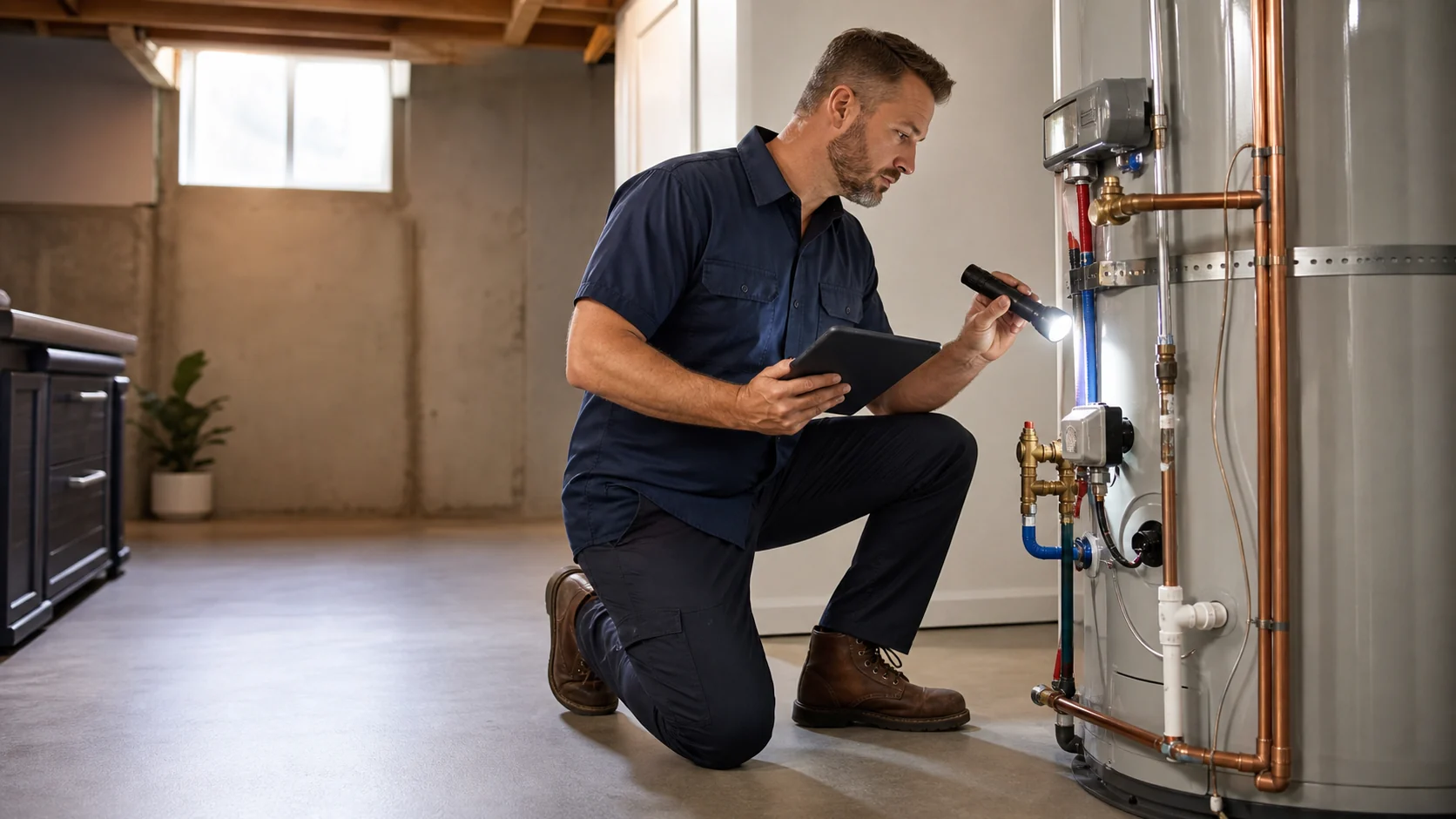
A lot of water heater trouble starts in a boring place: a packed utility closet. Boxes get stacked against the tank. A drain pan disappears under old paint cans. The shutoff valve is technically there, but nobody can reach it fast. In Salt Lake County and Utah County homes, especially basements and garage closets, that clutter can turn a small leak or service call into a bigger headache.
Safety first: look, clear space, then stop
This checklist is for safe homeowner observation and cleanup around the heater. Do not remove burner covers, open electrical compartments, change gas piping, alter venting, block or resize combustion-air openings, cap relief lines, or move the water heater yourself. If you smell gas, see scorching, find water near electrical parts, or have an active leak, leave the area and request qualified help.
Why access matters before anything breaks
Water heaters need room for inspection, maintenance, and emergency shutoff. A plumber may need to see the rating plate, test the leak source, reach the gas or electrical disconnect, inspect venting, check the drain pan, and remove the old tank if replacement is needed. If the heater is boxed in by shelves or storage, the first part of the job becomes access instead of diagnosis.
This matters in older Salt Lake City basements, Sandy and Draper utility rooms, West Jordan garages, Provo rentals, Orem townhomes, Lehi new builds, and American Fork homes with finished basements. The exact code and manufacturer clearances depend on the equipment and installation, but the homeowner goal is simple: make the heater visible and reachable without creating a safety problem.
Clear before a service visit
- • Boxes, bags, paint, cleaners, and stored fabric near the heater
- • Items blocking the front service panels or tank label
- • Storage covering the drain pan, floor drain, or leak alarm
- • Anything blocking the shutoff valve or electrical disconnect
- • Rugs, mats, or shelves that hide new water on the floor
Do not change these yourself
- • Gas line, flex connector, or gas control position
- • Vent pipe, draft hood, intake, or exhaust termination
- • Electrical covers, wiring, breakers, or thermostats
- • Temperature and pressure relief line routing
- • Combustion-air louvers or permanent openings
The quick homeowner access check
Can you open the door fully?
A narrow closet door or blocked garage corner can make replacement harder. Open the door fully and take one wide photo from outside the closet. If a shelf, washer, freezer, or stored furniture blocks the removal path, mention it when requesting quotes. Access problems affect time, labor, and whether extra work is needed before the heater can come out.
Can you see the label and controls?
The rating plate usually lists the model, serial number, fuel type, capacity, and input rating. Service providers use that information to check age, warranty, part compatibility, and replacement sizing. If the label is blocked by storage, clear the area and take a sharp photo. Do not remove panels just to find a label.
Can you reach the shutoff?
Homeowners should know where the water shutoff is before a leak. For gas units, you should also know where the gas shutoff is, but do not force a stuck valve or experiment with gas controls. For electric units, know which breaker serves the heater. If labels are missing or confusing, ask a qualified pro to identify them during service.
Can you see the floor?
A clean, visible floor helps you catch small leaks early. Look for staining, mineral crust, soft drywall, rust trails, or water marks around the pan and drain line. Utah hard water often leaves white mineral residue, so a crusty trail can be useful evidence even when the floor is dry during your check.
Storage mistakes that cause real problems
Utility rooms collect everything nobody wants upstairs. The trouble is that many stored items are flammable, messy, or simply in the way. Keep paint, solvents, gasoline, paper goods, cardboard, holiday decorations, and laundry piles away from the water heater. A gas water heater also needs proper air for combustion; do not cover louvers, grilles, or openings because the room feels drafty.
If the heater sits in a garage, keep the area from becoming a catch-all zone. Bikes, snow gear, camping bins, and lawn equipment can hide a leak or damage a valve. In finished basements, leave enough visible floor around the pan so a small leak does not quietly soak trim, carpet, or stored boxes.
Combustion air and venting: what to observe, not fix
Gas water heaters need proper venting and enough combustion air. Homeowners can safely notice blocked louvers, crushed vent pipe, loose-looking vent sections, heavy rust, soot, scorch marks, or a room that was recently sealed up during a remodel. Those are reasons to call for help, not reasons to improvise a fix.
If a closet has high and low grilles, do not tape them, cover them with plastic, or stack storage in front of them. If you have recurring pilot outages, a gas smell, headaches near the utility room, or a carbon monoxide alarm, leave the area and follow the alarm or utility guidance. Use the venting and carbon monoxide guide for the emergency warning signs.
Replacement planning: photos that save time
When you ask for a replacement quote, access photos can be just as useful as symptom photos. They show whether the job is a simple swap, a tight closet, a finished-basement risk, or a system that may need venting, pan, expansion tank, or shutoff updates.
Send these five photos with your request
• Full heater from floor to vent or top connections
• Wide photo showing the closet or room access
• Close photo of the model and serial number label
• Floor, drain pan, and any leak or rust marks
• Shutoff valves, expansion tank, venting, or error screen if visible
• Any narrow door, stairs, shelf, or finished-space concern nearby
When a tight closet should change the conversation
A tight closet does not automatically mean the heater is unsafe. It does mean you should ask better questions before approving work. Will the old heater fit through the door? Does the new model need different venting or electrical work? Is there room for a drain pan, expansion tank, leak alarm, or code-required upgrades? Will shelves need to be removed before the appointment?
If the current water heater is older, leaking, rusty, noisy, or hard to access, compare the repair-or-replace checklist before spending money on a short-term repair. If replacement is likely, the Utah replacement cost guide explains the access and code-upgrade questions that can affect the final price.
Sources and further reading
For manufacturer maintenance and installation context, start with A. O. Smith's installation and maintenance resources and the manual for your exact model. For scald-risk context around hot water temperatures, see the U.S. Consumer Product Safety Commission tap-water scalds guide. Local code requirements and manufacturer instructions can vary, so treat this page as a planning checklist, not a substitute for licensed service.
Need help with a cramped water heater setup?
If you are in Salt Lake County, Utah County, Salt Lake City, Sandy, Draper, West Jordan, South Jordan, Murray, Provo, Orem, Lehi, American Fork, or a nearby Wasatch Front community, send the access photos before the appointment. The clearer the closet picture, the fewer surprises during repair or replacement.
Request water heater help