
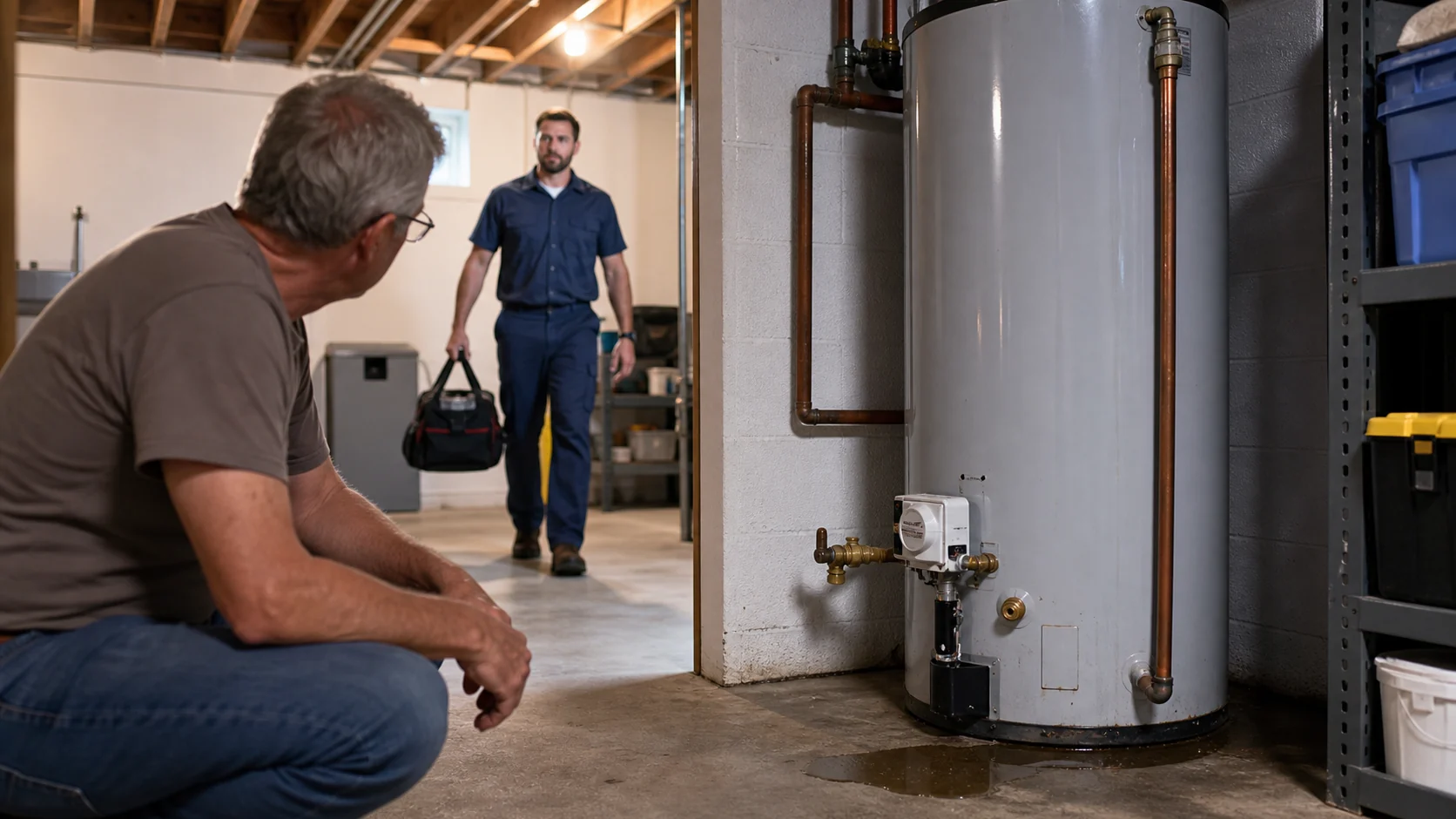
You dry the floor beside the water heater, come back later, and find it damp again. On a cold Utah morning, a gas water heater can produce temporary condensation after a long hot-water draw. A wet fitting, relief pipe, drain valve, or corroded tank can leave a similar-looking puddle. The difference matters, but nobody should gamble a finished basement on a guess.
Treat active water as a leak until you know otherwise
Keep people away from standing water near electrical equipment. If water is spreading, the tank body is leaking, the ceiling below is wet, or you smell gas or burning material, stop inspecting and request urgent qualified help. Do not remove access panels, operate the temperature-and-pressure relief valve, relight a pilot, tighten gas parts, or reach through water to touch a breaker or plug.
Start with a dry-floor observation
If the area is safe to approach, take a photo before wiping anything up. Dry the visible floor and the outside of the drain pan with towels. Place a dry paper towel near the edge of the wet area, without wrapping pipes or touching hot components. Check again after the heater runs and after the home has been quiet for a while.
Write down the timing. Did the water appear only after back-to-back showers? Does it drip continuously, even when no hot water has been used? Is the highest wet point above the tank, beside a valve, at the end of a discharge pipe, or directly under the tank jacket? Water travels down pipes and the outside of a tank, so the top edge of the wet trail is usually more useful than the puddle itself.
Why Utah weather can make condensation more noticeable
A.O. Smith explains that gas water-heater condensation can form when cold tank water cools combustion surfaces below the dew point. Hot flue gases then leave moisture on those surfaces. This can happen after a long draw brings a large amount of cold water into the tank or when a heater fires after sitting idle.
That pattern can be easier to notice when Wasatch Front inlet water is cold and a household uses a lot of hot water at once. Condensation should taper off as the tank comes up to temperature. Water that continues, appears when the burner has not recently run, or traces to a fitting or tank seam needs a different explanation.
Do not overlook nearby sources
The water heater may be the innocent bystander. Check from a safe distance for a leaking furnace condensate line, water softener drain, humidifier, washing-machine hose, floor drain backup, overhead pipe, or snowmelt carried in from the garage. On a heat pump water heater, the condensate drain is part of normal operation, but water outside the intended drain path can mean a clogged, disconnected, or poorly routed line.
Use a flashlight and photos rather than taking things apart. A wide photo of the room helps show neighboring equipment. A close photo should include the first visible wet point, not only the puddle.
What to send with a service request
Useful details
- • A wide photo and close photos of the highest wet point
- • Whether water appears after heavy use or around the clock
- • Tank, gas, electric, heat pump, or tankless equipment type
- • Brand, model, serial number, and estimated age
- • City and whether the heater sits in a garage, basement, closet, or finished room
Do not try these shortcuts
- • Do not cap or plug a relief discharge pipe
- • Do not seal a tank seam with putty or tape
- • Do not open electrical covers to hunt for moisture
- • Do not tighten gas-valve connections
- • Do not keep operating a confirmed leaking tank
When the answer is not “wait and watch”
- Water is spreading, soaking drywall, or reaching a lower floor.
- The tank body, jacket, or bottom seam is wet.
- The relief discharge pipe drips, sprays, or releases very hot water.
- Water is near a receptacle, wiring, control, burner, or other powered equipment.
- You smell gas, hear hissing, see soot, or have a carbon monoxide alarm.
- The heater is older and the new puddle comes with rust, rumbling, or discolored hot water.
For water that is actively spreading, use the leaking water heater emergency steps. If the moisture traces to the drain valve, see the drain-valve leak guide. A puddle from the relief line belongs in the relief-valve guide.
Sources and further reading
A.O. Smith's homeowner leak guide and technical bulletins explain the common sources of water around a heater and the short-lived condensation pattern on gas tanks. Your installed unit's manual takes priority because venting, condensate drains, shutoffs, and warning procedures vary by model.
- A.O. Smith: Why is my water heater leaking?
- A.O. Smith Technical Bulletin 15: Condensation
- A.O. Smith Technical Bulletin 51: Puddle on floor
Still finding water after the floor dries?
Send the timing, city, equipment details, and photos of the wet trail. A qualified local provider can separate condensation from a fitting, valve, drain, or tank leak.
Send leak details