
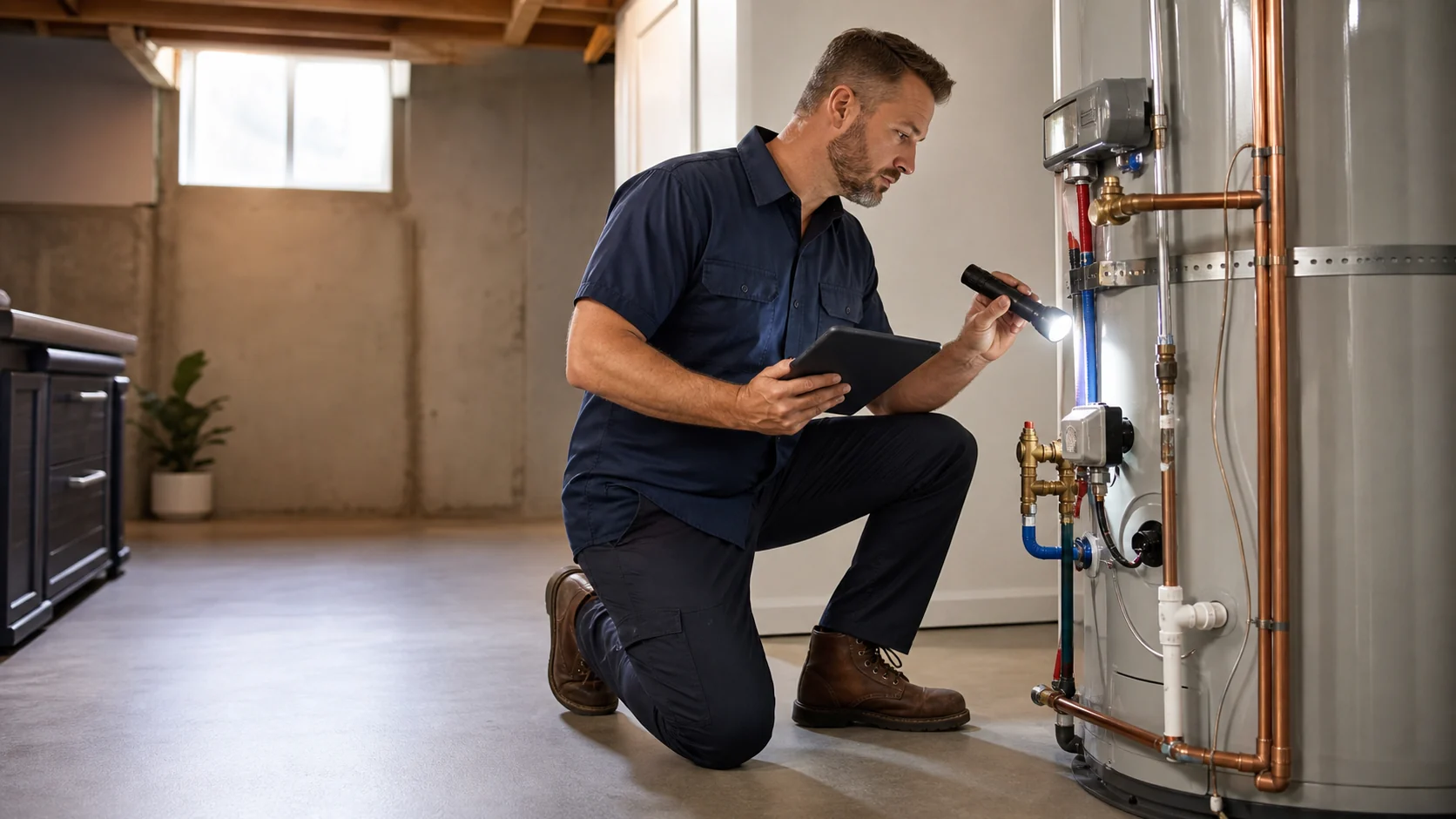
Most tank water heaters have a temperature and pressure relief valve, often called a T&P valve or TPR valve. You will usually see it near the top or side of the tank with a pipe running downward. If water is coming from that pipe, the job is to figure out whether the valve is doing its safety job, the plumbing pressure is wrong, or the valve itself is failing.
Treat relief-valve leaks as a safety symptom
Do not plug, cap, tape, or crimp the discharge pipe. Do not remove the valve, adjust gas controls, open electrical covers, or test the valve by hand if you are not trained. If the valve is releasing hot water, the tank is making popping or boiling sounds, water is near wiring, or you smell gas, move away from the heater and request urgent qualified help.
First, make sure it is the relief-valve pipe
The relief-valve discharge pipe is usually a plain pipe that points down toward the floor or a drain. It should not be threaded or capped at the bottom. Look for water at the pipe end, on the floor below it, or in the drain pan. If the wet spot is actually near the drain valve at the bottom of the tank, use the drain-valve leak guide instead.
Take photos from a safe distance: the full water heater, the relief valve, the pipe end, the drain pan, and any nearby floor drain. Those photos help a plumber see whether the pipe is routed safely and whether the discharge appears active or old.
What different relief-valve symptoms can mean
Why Utah homes see this problem
Relief-valve drips often show up after a water heater replacement, pressure-reducing valve change, softener install, or plumbing repair. Many Wasatch Front homes have backflow devices or pressure controls that can make the hot-water system behave like a closed system. When water heats, it expands. If that expansion has nowhere to go, pressure can rise and the relief valve may weep.
Hard water around Salt Lake County and Utah County can also leave mineral deposits around valves and fittings. That does not mean a homeowner should start opening the valve. It means the service call should include pressure, expansion, temperature, and valve condition instead of only swapping the visible part.
Details to gather before calling
- Photo of the full water heater and the relief-valve pipe from top to bottom.
- Whether the pipe is dripping, staining the floor, or releasing larger bursts of water.
- When the leak happens: after showers, laundry, dishwasher cycles, overnight, or all day.
- Water heater age, fuel type, brand, model, serial number, and tank size from the label.
- Whether there is an expansion tank, pressure-reducing valve, softener, or recent plumbing work.
- Your city or ZIP, especially if the heater is above finished space in Salt Lake City, Sandy, Draper, West Jordan, South Jordan, Murray, Provo, Orem, Lehi, or American Fork.
Questions worth asking a qualified provider
Ask about pressure, not just the valve
- • Is the relief valve leaking because of high pressure, high temperature, debris, or age?
- • Does the home need an expansion tank, or does the existing expansion tank need testing?
- • Is the discharge pipe routed safely and left open at the end?
- • Should the water heater temperature setting or mixing-valve setup be reviewed?
- • Is the tank old enough that repair and replacement should be compared?
Do not wait on these signs
- • Hot water spraying or draining from the pipe
- • Popping, boiling, or rumbling with active discharge
- • Water near electrical controls, outlets, or breaker panels
- • Gas smell, scorch marks, or venting concerns
- • A capped, blocked, or missing relief-valve discharge pipe
How this connects to other water heater decisions
If the relief valve drips because the home has a pressure or thermal expansion problem, simply replacing the valve may not solve the leak. If the heater is older and already has rusty water, loud sediment noise, short hot-water supply, or leaks in other places, use the repair-or-replace checklist before spending money on a small repair.
For pressure-specific background, read the Utah expansion tank guide. If the leak is active and water is spreading, start with the emergency leaking water heater steps.
Sources and further reading
For general inspection and relief-valve context, see the A. O. Smith water heater maintenance guide. For temperature and scald-risk background, the U.S. Consumer Product Safety Commission's tap-water scald guidance is useful when temperature settings or mixing valves are part of the conversation. Your installed water heater manual and local code requirements should guide final service decisions.
Seeing water from the relief-valve pipe?
Send the leak pattern, city, heater age, fuel type, and photos of the relief valve and discharge pipe. A local provider can help decide whether this is a pressure issue, valve repair, safety call, or replacement quote.
Send water heater details