Homeowners often notice this problem by sound: a gas burner that does not seem to stop, a tankless fan cycling with no faucet open, or a heat-pump water heater humming for hours. Before assuming the heater has failed, write down exactly what you hear, when it starts, and whether anyone is using hot water. That short timeline can separate normal recovery from a leak or control problem.
Stop if you find a safety warning
Leave the area and contact the gas utility or emergency services if you smell gas. Do not touch a wet breaker, control, plug, or wiring. Shut off water only if you can reach the correct valve without standing in water or reaching past hot, wet, gas, or electrical equipment. A leaking tank, scorched wiring smell, active relief-pipe discharge, carbon monoxide alarm, or dangerously hot tap water needs prompt qualified help.
Identify the equipment that is actually running
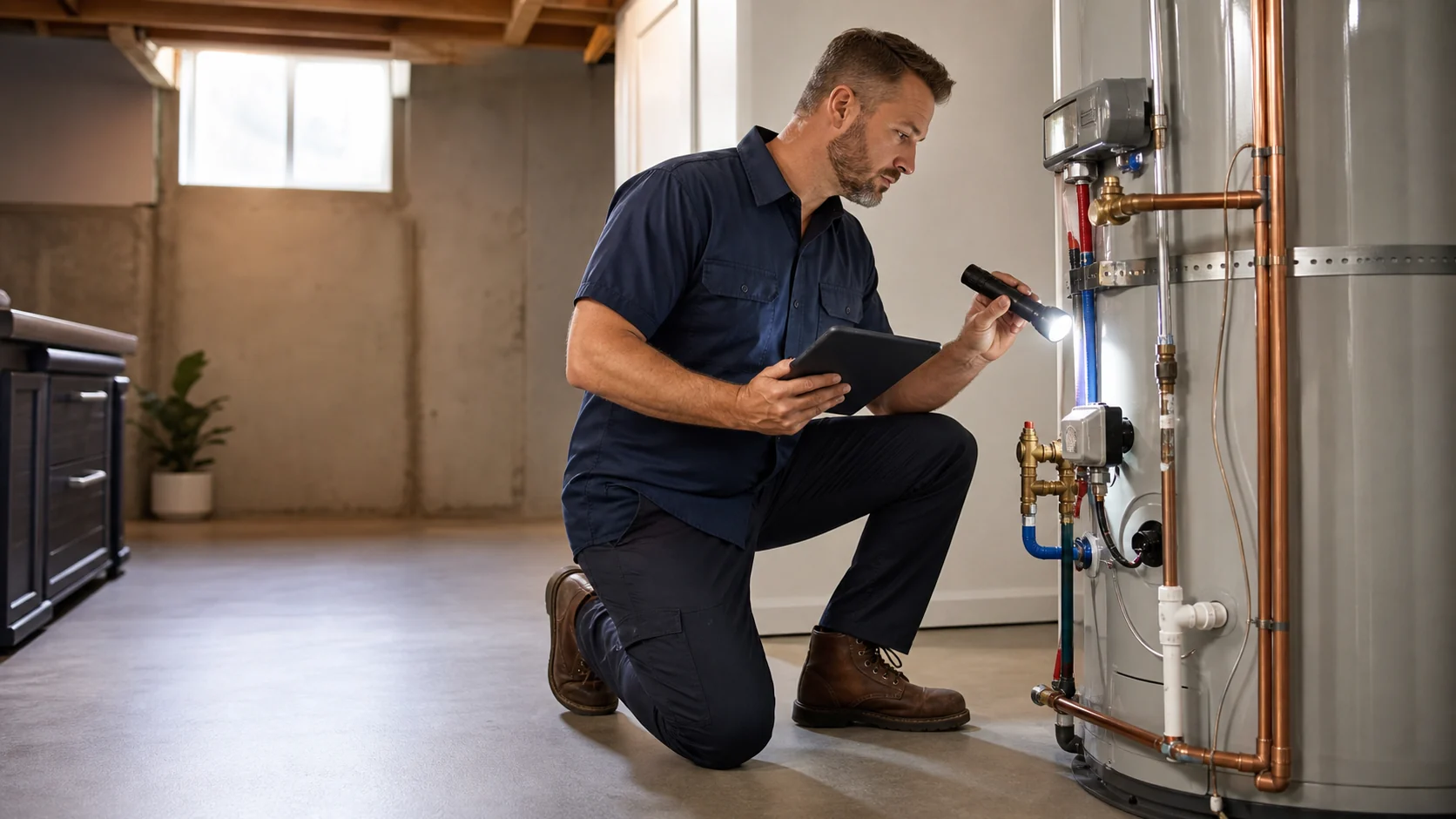
Look at the rating plate and visible controls without removing a cover. A conventional gas tank may make a low burner sound while reheating. An electric tank is usually quiet, so a constant hum could come from a nearby recirculation pump, furnace, softener, or other appliance. A heat-pump model has a fan and compressor and may run longer than a resistance element. Tankless units may run a fan briefly after a hot-water draw, but repeated operation when nobody is using water is worth documenting.
Do not judge the cycle by touching the tank, vent, pipes, access panels, or electrical covers. Record a short video from a safe distance instead. Include the display, any error code, and the time since the last shower, dishwasher cycle, or laundry load.
Use a one-hour household check
Pick a time when everyone can avoid hot water for an hour. Pause the dishwasher and washing machine. Make sure no faucet is dripping and no shower valve is partly open. Note the heater display or sound at the beginning, 30 minutes in, and at the end.
Check for water use you cannot hear
The U.S. Environmental Protection Agency suggests comparing the water meter before and after a two-hour period when no water is being used. Any movement points to a likely leak. Photograph the meter at both times rather than relying on memory. If the main meter changes, the EPA also recommends checking toilets and visible pipe fittings because the leak may have nothing to do with the water heater.
For heater-specific clues, look without touching: water in the drain pan, damp flooring, a relief discharge pipe that is dripping, a warm patch on a floor, or a hot pipe that stays warm far from the heater. See the site's hidden hot-water leak guide for a more detailed no-use meter check. Do not cap a relief pipe, tighten an old fitting, or open a wall to investigate.
Account for normal reasons a cycle gets longer
- Several showers, laundry, and dishwashing happened close together.
- Colder incoming water increased the amount of heating needed. This can be more noticeable along the Wasatch Front in winter.
- A heat-pump water heater is recovering in an efficiency-focused mode that trades speed for lower energy use.
- A tankless recirculation schedule or comfort setting is keeping pipes warm.
- The thermostat setting was changed, intentionally or accidentally.
Use the model's manual to identify the displayed mode and expected behavior. Do not copy a setting from a different brand or model. If the heater is producing water hotter than expected, do not keep raising or lowering controls as a test. Use the safe temperature guide and request service if the temperature is unstable.
Clues that point toward service
- The run time changed suddenly even though household hot-water use did not.
- Hot water runs out sooner while the heater operates longer.
- A gas burner repeatedly starts and stops, or the pilot keeps going out.
- An electric breaker or high-limit reset trips.
- A tankless unit shows an error code or activates when all fixtures are off.
- The utility bill rose at the same time as the longer cycles.
- You find moisture, corrosion, relief-line discharge, or a new rumbling or sizzling sound.
Those clues do not identify one failed part. Thermostats, heating elements, gas controls, sensors, recirculation components, leaks, scale, and plumbing crossovers require different tests. Gas combustion work and 240-volt electrical testing belong with qualified professionals.
Prepare a better service request
Send the heater's model and serial number, fuel type, age if known, equipment mode, error codes, a safe video of the sound, and the start and stop times from the quiet-hour check. Include recent utility use if available, but compare energy consumed rather than bill total alone because rates and billing periods can change.
Also list recent plumbing work, thermostat changes, a new recirculation schedule, houseguests, and any leak evidence. In Salt Lake City, Sandy, Draper, West Jordan, Provo, Orem, Lehi, and American Fork, winter inlet temperature and the heater's location can affect recovery, but a unit that suddenly runs much longer still deserves a real diagnosis.
Sources and further reading
- EPA WaterSense: Fix a Leak Week - no-use meter checks, household leak clues, and water-use comparisons.
- ENERGY STAR: heat pump water heaters - how heat-pump models operate and what to consider when comparing efficient equipment.
Still running after a no-use check?
Send the one-hour timeline, meter photos, heater label, equipment type, city, and any leak or error-code clues. That gives the service provider a useful place to start.
Request Utah water heater help