
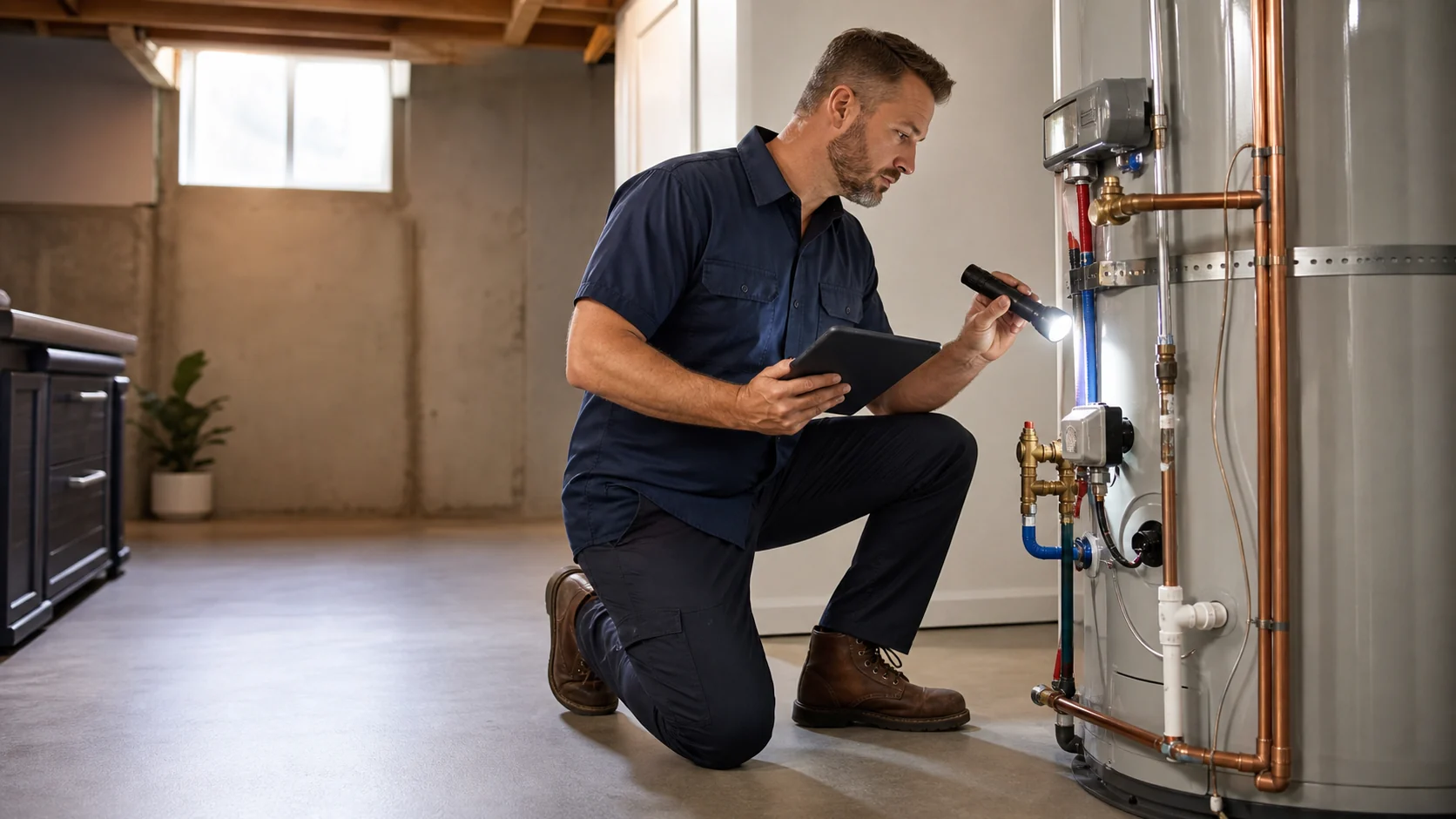
A hot-water leak is not always a puddle beside the tank. Water can escape at a fixture, inside a wall, under a slab, or along a buried line while the heater keeps replacing the lost hot water. The first job is to confirm that water is moving when the house should be quiet. Finding the exact pipe comes later.
Stop if water is near power or the leak is spreading
Do not step into standing water near electrical equipment. Do not remove heater covers, cut drywall, dig into a slab, operate an unfamiliar gas control, or cap a relief pipe. If you smell gas, leave the area and contact the gas utility or emergency services. A bulging tank, active tank leak, ceiling damage, or rapidly spreading water needs prompt professional help.
Clues that deserve a closer look
One clue rarely proves that a hot-water pipe is leaking. Two or three appearing together make the case stronger.
- The gas burner, electric elements, heat pump, or tankless unit runs when nobody has used hot water for a while.
- A water or energy bill rises without a matching change in household routine or utility rates.
- Hot water runs out sooner even though shower and appliance use has not changed.
- A floor, wall, cabinet, or ceiling develops a warm, damp, stained, soft, or musty area.
- You hear faint water movement when faucets, showers, toilets, irrigation, humidifiers, and appliances are off.
- The water meter's leak indicator or low-flow display continues to move during a no-use period.
Brief heater cycles can be normal because a storage tank loses heat while sitting. Recirculation systems can also move hot water on a timer, thermostat, or demand control. Record the time and frequency instead of assuming every cycle means a leak.
Run a no-use meter check
The EPA suggests checking the water meter before and after a two-hour period when no water is used. If the reading changes, the home probably has a leak. Use that as a whole-house test, not proof that the leak is on the hot side.
- Choose a two-hour window when nobody needs water. Tell everyone in the home what you are testing.
- Turn off faucets and water-using appliances. Make sure the dishwasher and washing machine are not scheduled to start. Pause irrigation, ice making, humidification, and automatic water treatment cycles if you know how to do so from their normal controls.
- Confirm that no toilet is refilling. A silent toilet leak can move the meter and has nothing to do with the water heater.
- Photograph the meter reading and any small leak-flow indicator. Do not open a sealed meter or utility enclosure.
- Use no water for two hours, then photograph the meter again.
Digital meters and utility portals do not all update the same way. Follow your water provider's instructions if its display, units, or interval data are unfamiliar. A changed reading confirms unexplained water use somewhere on the property. It does not locate the leak.
Separate a tank leak from a pipe leak
Look around the heater without touching hot pipes or controls. Check the top connections, drain pan, bottom seam, drain valve, relief discharge pipe, and nearby softener or HVAC condensate line. Water can travel along a pipe or floor before it becomes visible, so trace the wet path back rather than assuming the closest equipment caused it.
Use the top-of-tank leak guide or bottom-of-tank leak guide if moisture is visible at the unit. If the heater area is dry but the meter moves, note any warm flooring, damp baseboards, cabinet swelling, peeling paint, ceiling stains, or sound inside a wall.
Utah homes can hide leaks in different places
A finished basement may conceal a small leak until drywall or flooring changes. A slab-on-grade home may show a warm floor patch before visible water appears. In a garage or utility room, water may run toward a floor drain and stay unnoticed. Freezing weather can also damage piping in exterior walls, garages, crawl spaces, and other cold areas.
Do not use a warm floor patch alone to diagnose a slab leak. Sunlight, heating ducts, radiant heat, appliances, and recirculation lines can create similar temperature changes. Mark the edges with painter's tape, take a photo, and note whether the area changes when the heater cycles. A plumber or leak-detection specialist can decide whether pressure testing, acoustic equipment, moisture readings, or thermal imaging makes sense.
Details that save time on a service call
- Both meter photos, the elapsed time, and the amount of movement
- Whether toilets, irrigation, a softener, ice maker, humidifier, or recirculation pump were active
- Heater type, fuel, age, model-label photo, and how often it runs during quiet periods
- Photos of the heater, drain pan, visible piping, stains, and warm or damp areas
- The city and whether the home has a basement, crawl space, slab, or garage utility area
- Any change in hot-water supply, water pressure, meter use, or utility cost
For Salt Lake City, Sandy, Draper, West Jordan, South Jordan, Murray, Provo, Orem, Lehi, and American Fork homes, include the water provider shown on the bill. City boundaries and water-service boundaries do not always match, and the correct provider can explain its meter or usage portal.
Sources and further reading
- EPA WaterSense: Fix a Leak Week - meter-test instructions, common household leak checks, and water-use context.
Meter moving and the heater running?
Send the meter photos, heater label, city, warm or damp areas, and the list of equipment that was off during the test. Those details give a provider a useful starting point without guesswork.
Request Utah water heater help