
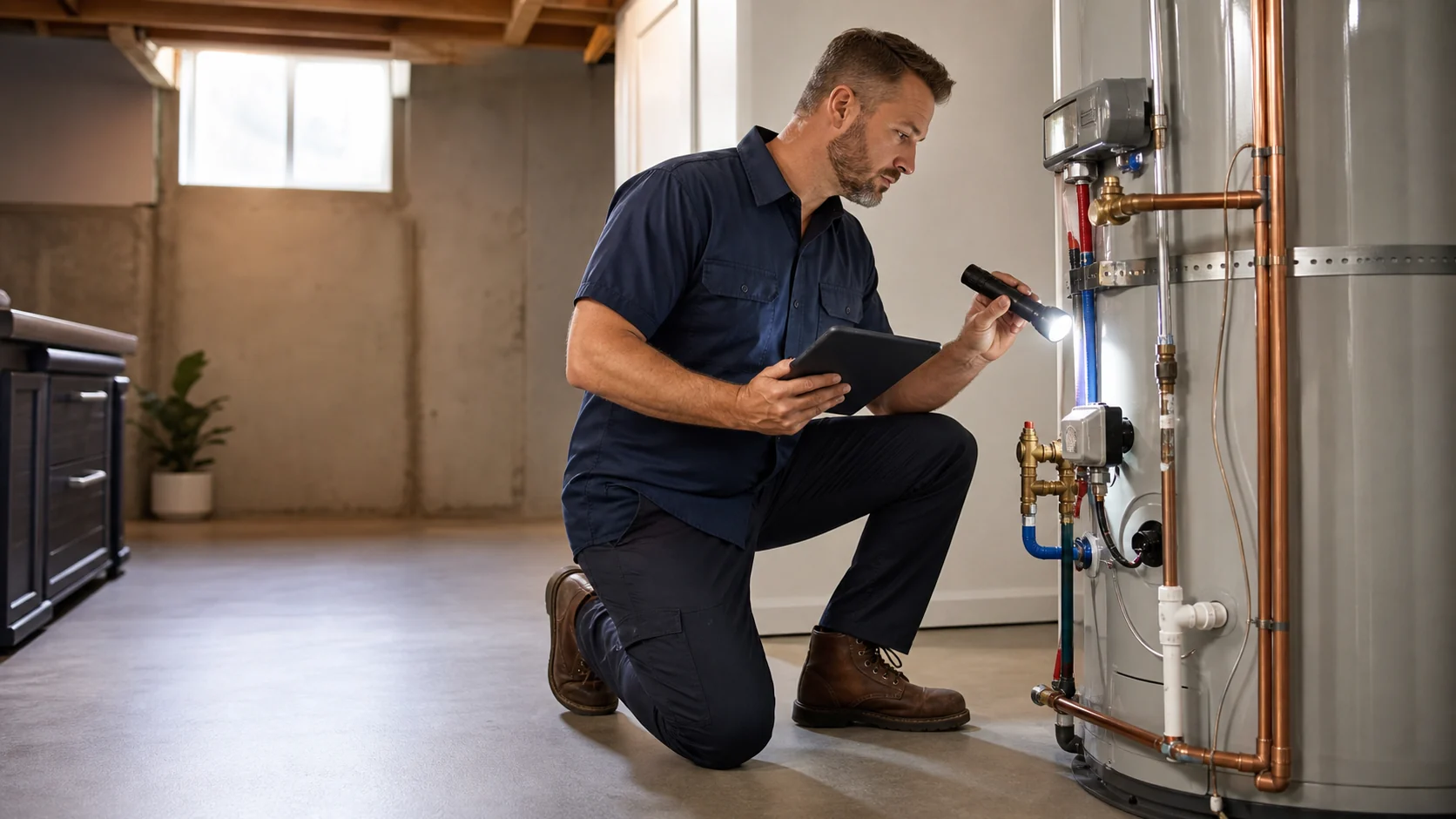
A higher gas or electric bill does not tell you how much of the increase came from hot water. Utah winter heating, a longer billing period, a rate change, holiday guests, and a water heater problem can all land on the same statement. A short comparison usually tells you where to look next.
Keep this check outside the heater
Do not remove electrical covers, adjust gas controls, bypass a safety device, or drain a tank just to investigate a bill. Leave the area and contact the gas utility or emergency services if you smell gas. Treat scorching, a carbon monoxide alarm, dangerously hot water, or a leak near wiring as an urgent problem.
Start with the bill, not the thermostat
Put the new bill beside the same month from last year and the previous two or three bills. Compare the details below rather than the dollar total alone.
- Billing days: a 34-day bill should cost more than a 28-day bill even if daily use did not change.
- Actual use: compare kilowatt-hours for electric service or therms for gas service.
- Price per unit and fees: if usage stayed similar but the total rose, rates or fixed charges may explain the increase.
- Actual or estimated meter read: an estimate can shift usage into a later billing cycle when the utility gets an actual reading.
- Whole-house loads: a gas furnace or electric space heating can dwarf water-heating changes during a Wasatch Front cold spell.
If the statement provides a daily-use comparison, use it. Dividing use by billing days gives a fairer comparison than looking at the total alone.
The most common hot-water changes are ordinary
Think through what happened in the house during the billing period. Guests, more showers, longer showers, a new soaking tub routine, extra laundry, or someone working from home can add hot-water demand without any equipment failure. A colder incoming water supply also makes the heater work harder to reach the same set temperature.
EPA says showers account for nearly 17 percent of residential indoor water use for the average family. That makes shower time and flow a sensible place to check first. A WaterSense-labeled showerhead uses no more than 2.0 gallons per minute and must meet the program's performance criteria. You do not need to buy anything before running the next test, though.
Run a seven-day hot-water check
Do not try to account for every gallon. You are looking for a pattern you can explain to a plumber or compare with the next utility statement.
- Write down showers, unusually heavy laundry, and dishwasher use.
- Check hot-water faucets, shower valves, and visible hot-water pipes for drips or dampness.
- Listen for the heater running or firing when nobody has used hot water for several hours. A brief cycle may be normal; repeated unexplained operation is worth documenting.
- Notice whether hot water runs out sooner, recovers more slowly, or arrives much hotter than before.
- Photograph the model label and note the tank size, fuel type, age, and temperature setting as found. Do not change a control you do not understand.
For a storage tank, also look at the floor, drain pan, top connections, relief discharge pipe, and bottom seam. A small hot-side leak can waste both water and energy. An active tank leak needs prompt attention even if the utility bill increase is modest.
When the heater itself moves up the list
A bill increase by itself cannot diagnose a bad element, burner, thermostat, control, or sediment problem. Equipment trouble becomes more plausible when the cost change arrives with a performance change.
- The heater runs much longer than it used to under the same household routine.
- Recovery has slowed, showers turn cold early, or every fixture stays lukewarm.
- Water temperature swings or becomes unexpectedly hot.
- A tank pops or rumbles and hot-water performance has also fallen.
- A tankless unit shows a recurring error code or cycles when no fixture appears to be open.
- There is visible moisture, corrosion, scorching, soot, a repeated breaker trip, or a gas or carbon monoxide warning.
Use the recovery-time guide if slow reheating is part of the change. If the tank is noisy, read the water-heater sound guide. Repeated breaker trips, gas odors, soot, venting concerns, and wet electrical parts are not energy-saving projects. They need qualified help.
Low-risk ways to reduce hot-water use
Fix known fixture leaks, shorten unusually long showers, wash full loads, and use appliance settings that fit the load. If a showerhead needs replacement, the WaterSense label gives you a verified efficiency and performance standard instead of relying on a vague "low-flow" claim.
Do not turn the heater dangerously low or high to chase savings. Households have different scald, health, appliance, and plumbing needs. The safe temperature guide explains the common 120°F starting point and the reasons some homes need a qualified provider to assess mixing valves or different settings.
Compare operating cost when replacement is already due
The yellow EnergyGuide label lets shoppers compare the energy use of similar appliances. The Federal Trade Commission notes that its annual operating cost is an estimate based on typical use and a national average energy price. Your Utah cost will depend on local rates and how the household uses hot water.
Compare models of similar capacity and check the exact installation scope before choosing the lowest estimated energy cost. Venting, electrical capacity, condensate drainage, available room, winter temperature, and household peak demand can change whether a heat-pump, gas, electric, or tankless model fits the home. Use the gas-versus-electric guide and quote comparison checklist before approving a replacement.
What to send with a service request
Include the city, heater type, model-label photo, approximate age, current symptoms, and when the bill changed. Add billing days and actual energy use from the statement, but redact your name, account number, meter number, payment details, and barcode before sending a bill image.
For homes in Salt Lake City, Sandy, Draper, West Jordan, South Jordan, Murray, Provo, Orem, Lehi, or American Fork, mention whether the heater sits in a cold garage, basement, utility closet, or conditioned room. That detail can matter when winter performance changes.
Sources and further reading
- EPA WaterSense: showerheads — residential shower-use context plus the 2.0-gallon-per-minute WaterSense limit and performance certification.
- Federal Trade Commission: how to use the EnergyGuide label — what the label compares and why actual operating cost depends on local rates and household use.
Bill up and hot-water performance down?
Send the heater label, fuel type, city, age, symptoms, and your redacted usage comparison. Those details make a repair or replacement conversation much more useful.
Request Utah water heater help