
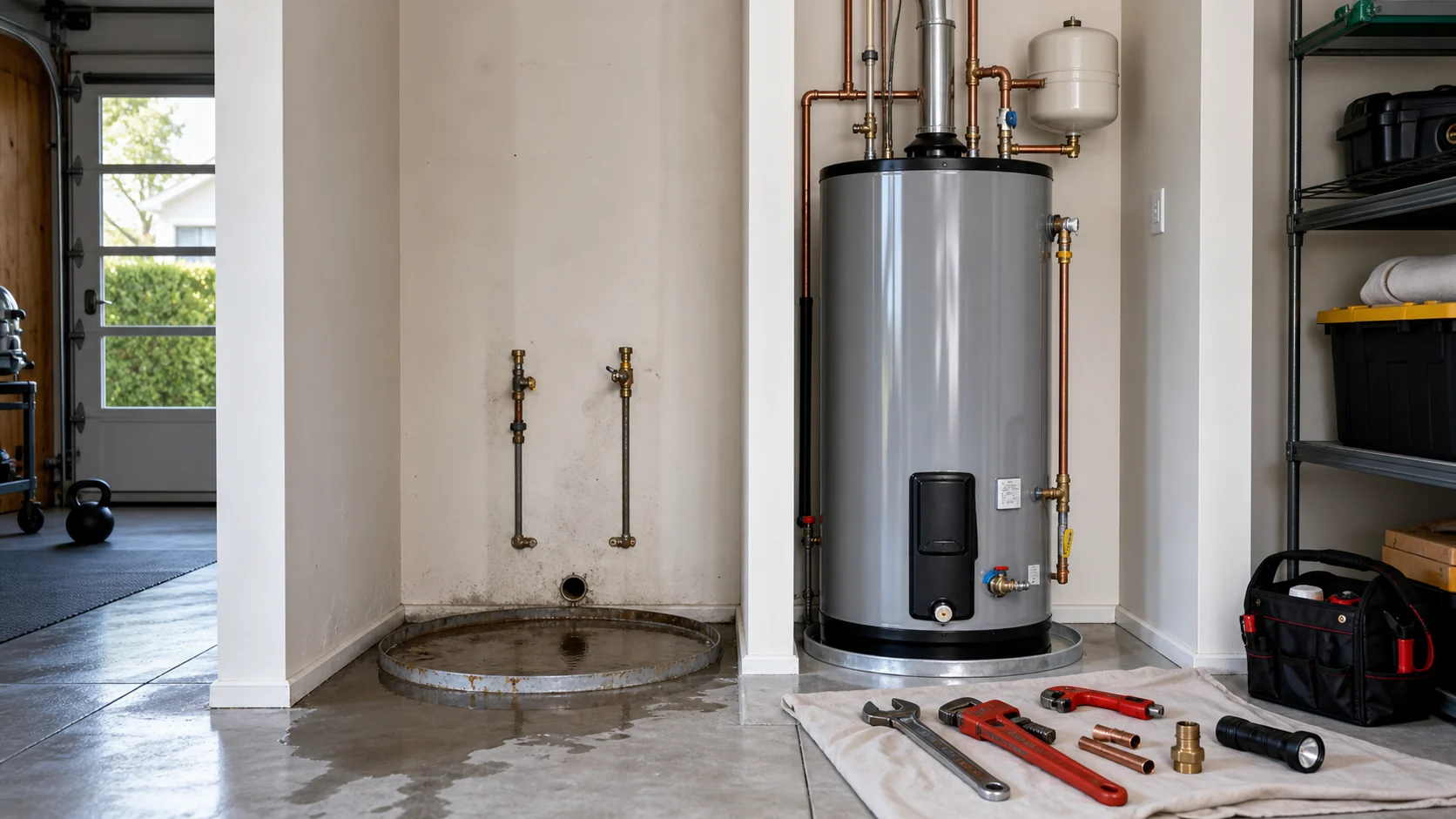
A water heater can still have parts or tank coverage even when the original paperwork has disappeared into a kitchen drawer. It can also be outside warranty despite looking fairly new. The only reliable way to know is to identify the exact model and serial number, check the manufacturer's terms, and ask who is responsible for diagnosis and labor.
A warranty check is paperwork, not a repair
Do not remove electrical covers, open a sealed burner compartment, disconnect gas or water piping, or climb into an unsafe space to reach a label. If the heater is leaking, smells like gas, has scorched wiring, or has triggered a carbon monoxide alarm, handle the hazard first. Warranty status can wait.
Collect these six items
- Model and serial number. Photograph the full rating label so every letter and number is readable. Do not rely on a handwritten note if a clear photo is possible.
- Installation date. Look for the installer invoice, closing documents, permit record, or a dated label near the unit. The manufacture date and installation date are not always the same.
- Proof of purchase. Save the receipt or paid invoice. If a previous owner installed the heater, check the home's appliance records and ask whether coverage transfers.
- Installer information. Record the company name, invoice number, and any separate workmanship or labor warranty.
- Photos of the problem. Take a full-room photo and close photos of water, rust, an error code, or the affected connection without touching the equipment.
- A short symptom timeline. Note when the problem started, whether it is constant or intermittent, and whether anyone has already serviced the heater.
Parts coverage does not always mean a free repair
This is where homeowners get surprised. A manufacturer may approve a replacement part while the homeowner still owes for diagnosis, labor, travel, shipping, removal, code updates, or reinstalling the equipment. A replacement unit may not include all the work needed to put it into service.
Before scheduling the visit, ask for the charges that apply if the claim is approved and the charges that apply if it is denied. Get the answer in writing when possible. That makes it easier to compare a warranty repair with a regular repair or replacement quote.
Check the serial number with the manufacturer
Use the manufacturer's own warranty page, not a generic serial-number chart copied onto another website. Rheem says a serial number is needed to verify terms and coverage. A. O. Smith provides a warranty-status tool using a serial or reference number. Navien tells owners to have the serial number ready and says a licensed professional must inspect the unit to begin a part or unit claim.
Those processes are examples, not universal rules. Registration requirements, start dates, transfer rules, exclusions, labor allowances, and claim steps vary by brand, model, installation, and purchase date. Read the warranty document tied to the exact model.
Ask the manufacturer
- • What coverage is active for this serial number?
- • What date did coverage begin?
- • Is proof of purchase or registration required?
- • Must an authorized or licensed provider diagnose it?
- • Is a claim number needed before parts are ordered?
Ask the service provider
- • What diagnostic or trip charge applies?
- • Which labor, shipping, and disposal costs are excluded?
- • Will you submit the claim or will I?
- • What happens if the manufacturer denies it?
- • Is repair sensible given the heater's age and condition?
Utah details worth saving with the claim
Keep the city, installation location, and permit or inspection record with the equipment file. A basement tank in Sandy, garage unit in Lehi, and closet installation in Provo can have different access, freeze, drainage, venting, and code questions. Those details do not decide warranty coverage, but they help a provider price the work that the warranty may not cover.
Hard-water scale or sediment may also affect diagnosis and maintenance questions. Do not assume that Utah water conditions automatically approve or void a claim. Ask the manufacturer or provider to point to the exact warranty language and document the condition they found.
When replacement may still be the better comparison
A covered part does not make every repair a good value. If the storage tank itself is leaking, the heater has repeated failures, other major parts are aging, or uncovered labor approaches replacement cost, compare both paths. The repair-or-replace guide can help organize that decision, while the Utah replacement cost guide explains the work beyond the price of the unit.
If the heater was installed recently, start with the original installer. A new-installation issue may fall under a workmanship promise, a manufacturer claim, or both. Use the post-installation checklist to see which records should stay with the home.
Sources and warranty lookup pages
- Rheem warranty and registration — product registration, serial-number lookup, coverage verification, and service links.
- A. O. Smith warranty verification — warranty status lookup using the heater's serial or reference number.
- Navien warranty claim process and FAQ — serial-number location, inspection, claim, parts, and limited-labor information.
Have the label but not sure what to do next?
Send your Utah city, model and serial photo, installation date if known, symptom timeline, and safe photos of the heater. Those details help separate a warranty question from a repair or replacement request.
Send the heater details