
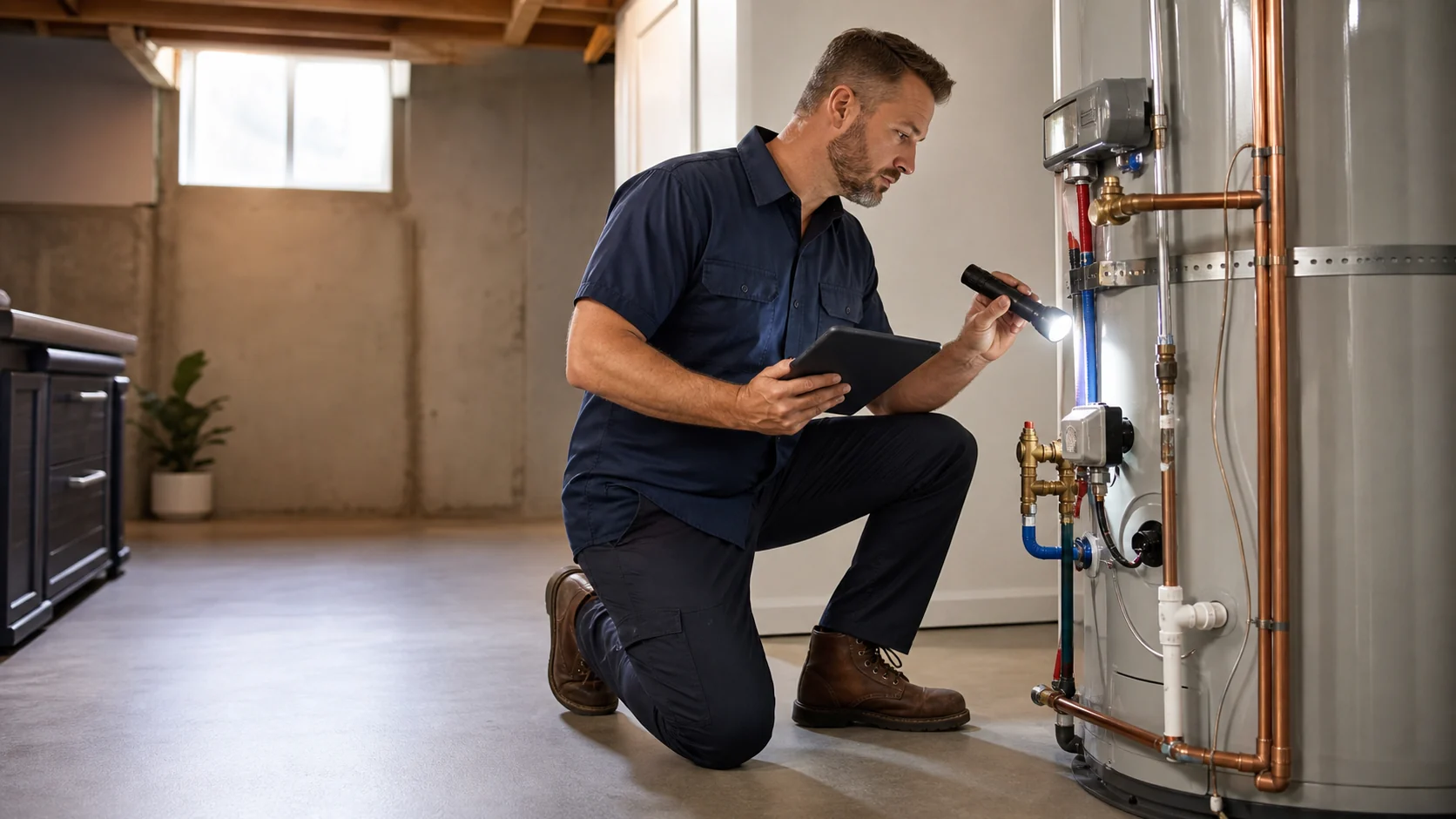
The water heater is easy to overlook during a showing. It sits in a dark corner, the taps run warm, and everyone moves on. Slow down. A few photos and a short hot-water test can tell your inspector, plumber, or seller exactly what needs a closer look.
Keep this inspection visual
Do not remove access panels, open gas controls, test wiring, operate a temperature-and-pressure relief valve, or relight a pilot during a home tour. If you smell fuel gas, hear a carbon monoxide alarm, see scorching, or find water near electrical parts, leave the area and contact the appropriate utility, emergency service, or qualified professional.
Photograph the label before you judge the tank
Take a clear photo of the manufacturer label, including the model and serial number. The serial number often encodes the manufacturing date, but the format varies by brand. Use the manufacturer's lookup or customer support rather than guessing from an online chart.
Also photograph the full installation from several feet away. Include the pipes above the tank, shutoff, vent or electrical connection, drain pan, nearby floor, and any service stickers. For a tankless unit, capture the front label, vent termination information, condensate line, isolation valves, and controller display.
The water heater age and serial number guide has a photo list you can use after the showing.
Write down the facts that affect replacement
Look for a water trail, not just a puddle
Fresh water may be obvious. Older clues are quieter: mineral crust below a fitting, rust tracks down the jacket, a stained drain pan, swollen baseboard, patched drywall, peeling paint, or a musty cabinet. Follow the visible trail upward without touching hot pipes or controls.
A dry floor during the showing does not prove the system has never leaked. Ask the seller whether the tank, relief valve, drain valve, expansion tank, or nearby plumbing has leaked, and request invoices for any repair. If you see moisture, use the condensation-versus-leak guide to document when and where it appears.
Check the room around a gas water heater
From a safe distance, look for a vent that appears disconnected, badly rusted, crushed, or sloped the wrong way. Note soot, melted plastic, scorch marks, missing covers, or stored items crowding the heater. Confirm that carbon monoxide alarms are present where required and ask the inspector to test and locate them.
Do not use a flame, smoke, tissue, or your hand to test draft. Venting, combustion air, gas pressure, and flue performance belong with a qualified professional. The Utah gas venting and carbon monoxide guide explains the warning signs that deserve prompt attention.
Run a simple hot-water check
With permission, run a hot tap long enough to confirm that it becomes hot and stays reasonably steady. Compare a nearby fixture with one farther away. Note weak hot-only pressure, temperature swings, discolored water, odor, unusual noise, or a long delay.
This is not a capacity test, and it does not replace an inspection. The seller may also have changed thermostat settings or used little hot water before the showing. If household size matters, ask about the tank's first hour rating or the tankless unit's rated flow and temperature-rise performance. Use the Utah water heater sizing guide before assuming the existing unit will suit a larger family.
Ask for records before accepting a verbal answer
- Installation invoice with exact model, installation date, and company name.
- Permit and final inspection information, if the local jurisdiction required them for the work performed.
- Warranty registration and any transferable-warranty terms.
- Maintenance and repair invoices, including tankless descaling or tank service.
- Seller disclosures about leaks, water damage, insurance claims, or recurring hot-water problems.
Permit records and requirements vary by city and scope. A missing paper copy does not prove the installation was unpermitted, and a permit does not guarantee that the system is problem-free. Ask the local building department to verify records for that address when the answer affects your purchase decision.
Verify the person you may hire
If an inspection leads to repair or replacement quotes, ask for the business name and the license holder responsible for regulated work. Utah's Division of Professional Licensing provides a public license search. Confirm that the license is current and appropriate for the work, then verify insurance, permit responsibility, model details, warranty coverage, and the full installed scope directly with the provider.
Turn findings into a closing decision
Sort the notes into three buckets. Safety or active-leak concerns need qualified review before you rely on the system. Age, poor documentation, corrosion, or repeated repairs may justify a replacement quote for budgeting. Comfort issues such as slow delivery or a small tank need a household-use conversation rather than an automatic replacement.
For a house in Salt Lake City, Sandy, Draper, West Jordan, South Jordan, Murray, Provo, Orem, Lehi, or American Fork, send the model-label photo, full-room photos, city, fuel type, observed symptoms, and closing timeline with a request for Utah water heater help. Ask for a written scope instead of a price based only on tank size.
Sources and further reading
- Utah Division of Professional Licensing: license search - verify the status and details of a Utah professional license.
- U.S. Consumer Product Safety Commission: recall search by company - search the manufacturer name and compare the affected model or serial range carefully.
- Utah Water Heater Help: quote comparison checklist - compare exact equipment, permits, related work, warranties, and exclusions before accepting a replacement proposal.
Found an old tank or a questionable installation?
Send the label, full-room photos, fuel type, city, symptoms, and closing timeline. Those details make a repair or replacement conversation much more useful.
Request Utah water heater help