
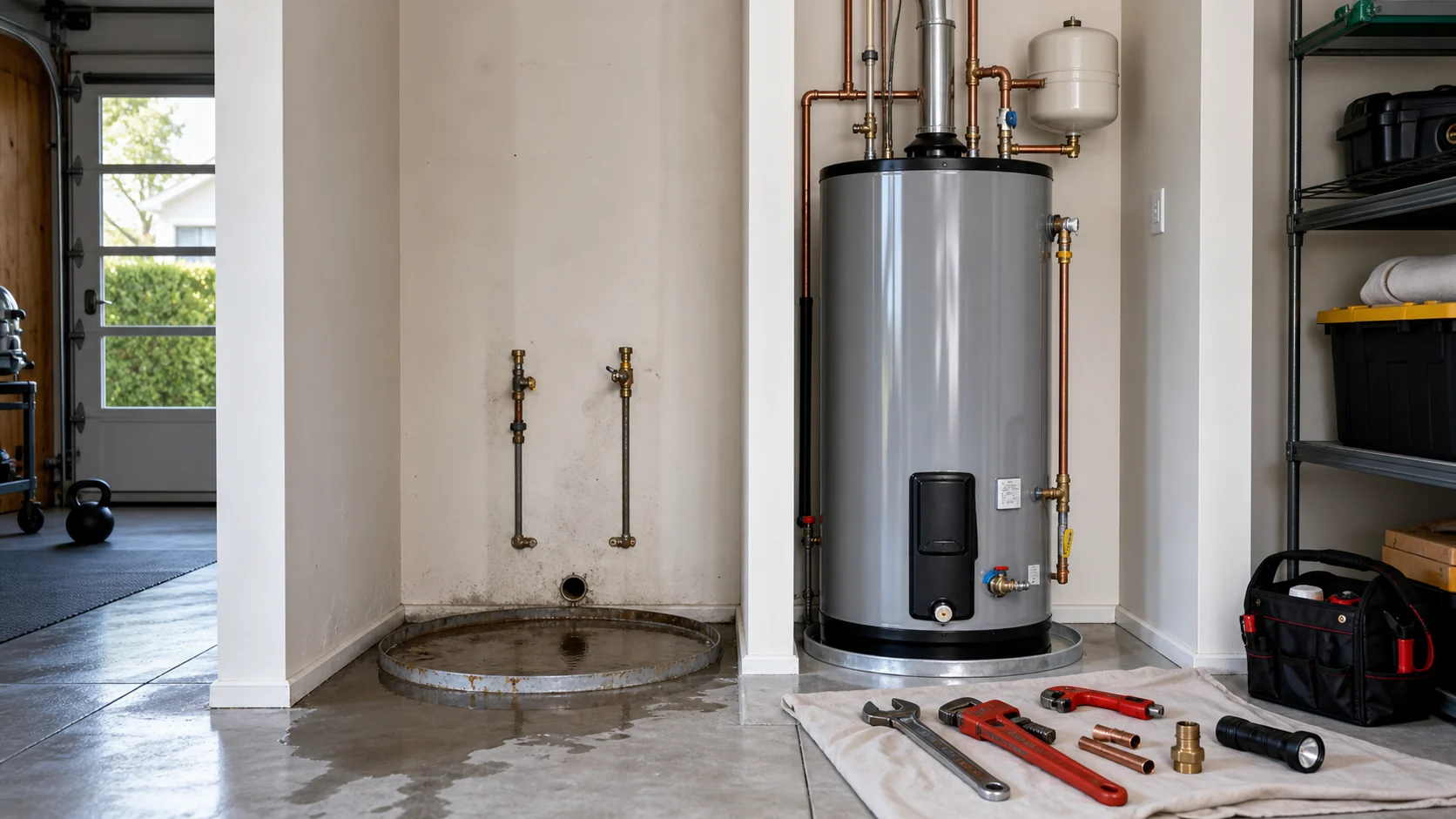
The easiest time to deal with an old water heater is while the replacement quote is still open. A line that says "remove old unit" can save a separate pickup, a borrowed trailer, and the risk of moving a tank that still holds water and sediment.
If the installer is not taking it, the right option depends on your city, waste-service account, heater type, and the facility receiving it. Salt Lake City lists hot water heaters among the appliances accepted through its Call 2 Haul program. Trans-Jordan lists hot water heaters as recyclable white goods. South Utah Valley's Dry Creek Transfer Station directs residents to its current disposal index and fee schedule. Rules, hours, and charges change, so check the destination on the day you plan to go.
Leave disconnection to the qualified installer
Do not disconnect a gas line, cap fuel piping, remove venting, open a 240-volt electrical connection, bypass a heat-pump refrigerant system, or drain scalding water just to make the tank ready for disposal. If you smell gas, hear hissing, see smoke, or have a carbon monoxide alarm, leave the area and contact the gas utility, fire department, or emergency services from a safe location.
Put haul-away in the written quote
Ask about the old unit before accepting a replacement bid. The answer should be clear enough that nobody is negotiating over a wet, heavy tank on installation day.
- Is removal from the basement, garage, closet, attic, or utility room included?
- Does the price include draining, safe disconnection, loading, transport, and the disposal or recycling charge?
- Who handles stairs, narrow doors, finished flooring, gates, or an elevator reservation?
- Will the provider remove a separate expansion tank, drain pan, stand, or abandoned vent material if replacement makes it unnecessary?
- Where will the old heater go, and is a disposal receipt available if you need one?
Keep the answer with the final invoice. Our Utah quote comparison checklist covers the rest of the installed scope, including permits, model numbers, warranties, and code-related work.
Three disposal paths that may fit
Salt Lake County and Utah County examples
Salt Lake City: The city's Call 2 Haul page includes hot water heaters in its household-appliance list. The program is tied to eligible city residential curbside garbage service and requires a scheduled collection. Do not leave a tank at the curb until the city gives placement instructions and a collection date.
Southern Salt Lake Valley: Trans-Jordan's recycling page lists hot water heaters among accepted white goods. Its facility rules also require loads to be fully tarped and secured. Confirm whether you should use the Sandy transfer station or South Jordan landfill, what the current residential charge is, and whether staff can help unload. Do not assume a tank-style heat-pump unit belongs in the same stream as an ordinary steel tank because it contains refrigeration equipment.
Southern Utah County: South Utah Valley Solid Waste District's disposal index says items are accepted at the current disposal fee unless the individual listing says otherwise, and loads must be covered. Call Dry Creek Transfer Station before driving from Provo or another Utah County city. Confirm that it accepts your heater type, whether your address qualifies for a resident rate, and what the current fee will be. Municipal cleanup events and transfer-station rules are not interchangeable.
If a recycler offers cash for scrap, ask whether it accepts complete water heaters or only prepared metal. Do not cut the tank open, remove gas controls, break apart heat-pump components, or dismantle electrical parts to meet a scrap rule. Choose a destination that will accept the intact, professionally disconnected unit.
Make sure the heater is actually ready to move
A storage tank can look empty while holding water and a layer of mineral sediment. That matters on basement stairs and in a pickup bed. Ask the installer to confirm in writing that the unit is disconnected, safely drained, and ready for transport.
Before loading, record:
- The heater type: gas tank, electric tank, heat pump, tankless, indirect, or another system.
- Whether all fuel, electrical, water, condensate, and vent connections have been handled by the appropriate trade.
- Whether the tank is empty and cool enough to move.
- Its approximate dimensions and the path from the room to the vehicle.
- The receiving facility's name, phone confirmation, hours, address, fee, and unloading instructions.
Tankless units, recirculation equipment, controls, and heat-pump water heaters may include electronic or refrigeration components that a metal-only drop-off does not accept. Give the destination the exact model number rather than describing every unit as "an old tank."
Transport without turning the heater into road debris
Use a truck or trailer rated for the load. Keep the heater below the side walls when possible, restrain it against movement with load-rated tie-downs, and cover the entire load as the receiving facility requires. A loose tarp is not a restraint. If the tank cannot be loaded, tied down, and unloaded without lifting beyond your ability, pay for haul-away.
Do not put a water heater in a curbside recycling cart, leave it beside a dumpster, set it out before a confirmed bulk appointment, or abandon it behind a business. A "free scrap" post is also a poor plan when the tank is still connected or a stranger would need to enter the home and handle fuel or electrical equipment.
Keep these records after the old unit leaves
Save the disposal or recycling receipt with the replacement invoice. Also keep photos of the old rating plate, the new model and serial label, the permit or inspection record when applicable, and the installer's final scope. Those records help with warranties, future maintenance, a home sale, and any question about what equipment was removed.
Finish the job with the new water heater installation checklist. If the old tank failed and caused damage, preserve photos and mitigation records before disposal using the leak documentation guide.
Sources and current disposal pages
- Salt Lake City: Call 2 Haul bulk item collection - eligibility and the city's current list of accepted household appliances, including hot water heaters.
- Trans-Jordan Cities: Recycling - current white-goods list, locations, and facility hours.
- Trans-Jordan Cities: Transfer Station - secure-load rules and customer requirements.
- South Utah Valley Solid Waste District: What To Do With? - current disposal index, fee guidance, and covered-load reminder for Dry Creek Transfer Station.
Replacing a Utah water heater?
Send your city, heater type, location in the home, model photo, access notes, and whether the quote should include complete haul-away. If the old heater is actively leaking, use the emergency guide first.