
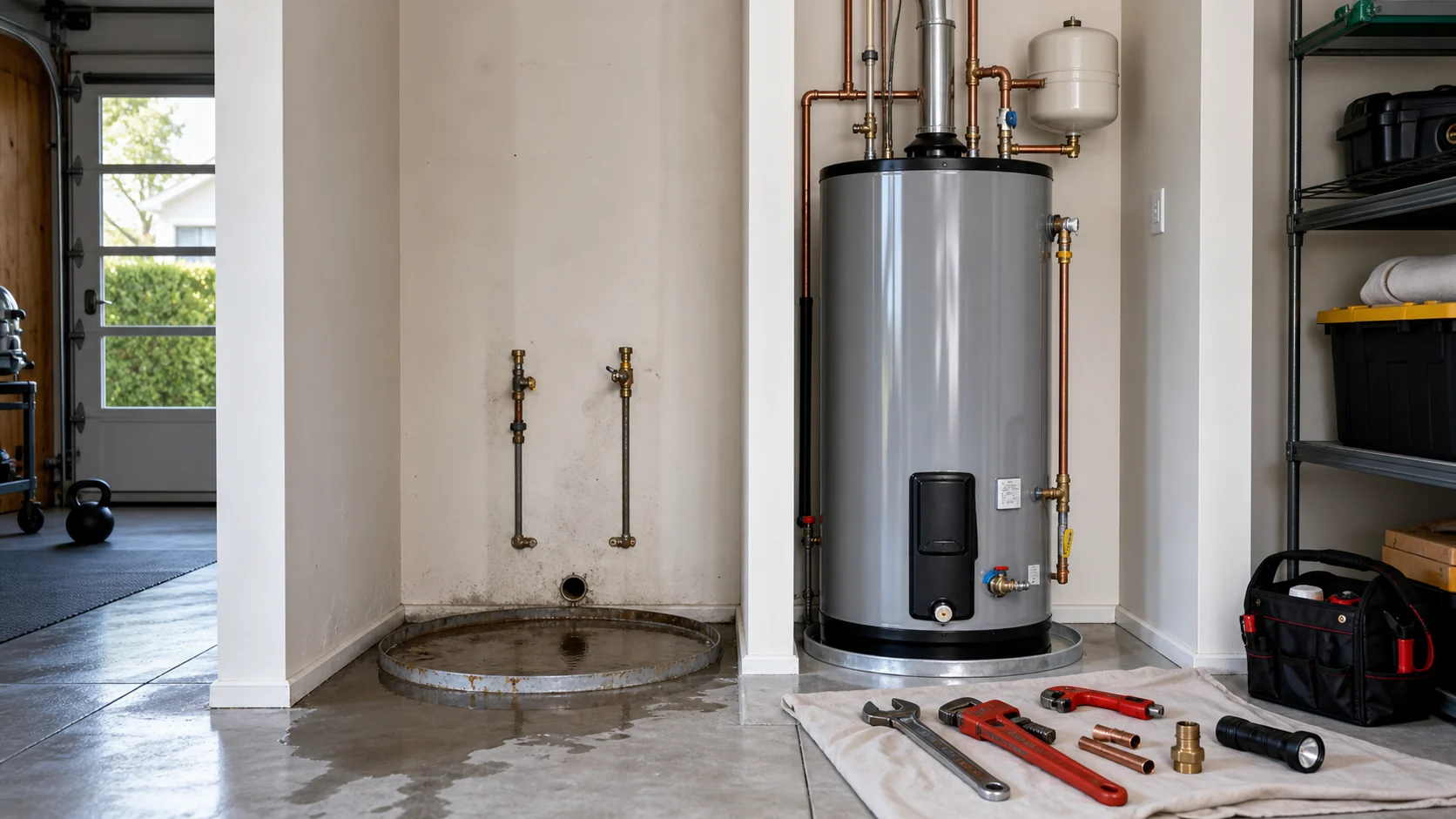
Most homeowners do not need to touch the water heater before a replacement appointment. The useful work happens around it: move the holiday bins, measure the tight doorway, find the quote, and decide who can approve a change if the installer discovers something behind the old tank.
Do not drain or disconnect the heater unless the installer tells you to
A tank can hold very hot water, and gas or 240-volt electrical connections are not homeowner prep work. Do not remove panels, loosen pipes, cap a relief line, alter a vent, or relight a problem heater. If the tank is actively leaking, water is near electrical equipment, you smell gas, or a carbon-monoxide alarm sounds, treat that as an urgent safety problem rather than waiting for the scheduled appointment.
The night before: clear a real working route
Walk the path from the exterior door to the heater. A replacement tank is bulky, and the old one may leave with water and sediment still inside. Move shoes, rugs, toys, storage boxes, and breakable items. Unlock gates and make sure the crew knows about narrow stairs, low ceilings, finished floors, or a utility closet with a tight turn.
Clear the room around the heater without disturbing pipes, vents, controls, or cords. Do not stack the moved items against a furnace, electrical panel, floor drain, or another fuel-burning appliance. In a finished basement, ask what floor and wall protection the crew will bring. In a garage, move vehicles and fuel, paint, solvents, and cardboard away from the work area.
Have ready
- • Accepted quote and full model number
- • Photos sent during the estimate
- • Permit or HOA instructions, if applicable
- • A reachable adult who can approve changes
- • A clear path, parking note, gate code, and pet plan
- • Questions about shutoffs, warranty, and maintenance
Leave to the crew
- • Draining and moving the old heater
- • Gas, propane, vent, and combustion-air work
- • 240-volt wiring, breakers, and disconnects
- • Relief-valve and discharge-pipe changes
- • Pressure, expansion, and code evaluation
- • Startup, testing, and leak checks
Confirm what is arriving
Pull up the accepted quote before the truck arrives. It should identify the manufacturer and full model number, fuel type, capacity or tankless output, quoted price, and included work. Confirm whether the price covers the old-unit haul away, permit, drain pan, expansion control, seismic restraint, vent or electrical changes, cleanup, and startup.
If you were promised a specific model, do not rely on a familiar brand badge. Ask to see the carton or rating label before installation begins. If a substitute arrives, compare capacity, first hour rating or tankless performance, efficiency, vent type, controls, dimensions, and warranty. Get the change in writing before work proceeds. Our quote comparison checklist explains the details worth matching.
Plan for a water shutoff and a cold stretch
Ask the installer how much of the home will lose water and for roughly how long. Fill a drinking-water pitcher in advance if needed, run the dishwasher the night before, and avoid scheduling showers or laundry during the appointment. A new storage tank also needs time to heat after it is filled and started, so hot water may not return the moment the crew finishes.
Homes with a shared shutoff need more planning. Condo and townhome owners may need HOA approval, neighbor notice, mechanical-room access, or a scheduled building shutdown. Review the Utah condo and townhome replacement guide before appointment day.
Expect discoveries, but ask for evidence
An estimate may not reveal a corroded shutoff, damaged vent, missing drain route, unsuitable electrical circuit, high water pressure, or access problem hidden by the old unit. A change can be legitimate without being automatic. Ask the installer to show the condition, explain why it affects the proposed installation, state whether the work is required or optional, and give the price in writing.
Make access easy without exposing the household
Secure pets in a room that will not need to be opened. Keep children away from the work route, tools, hot drain water, and the old appliance. If nobody can stay home, confirm entry arrangements, decision limits, photo updates, and payment steps directly with the company. Do not leave a door unlocked or hide a key unless you have deliberately agreed to that access plan.
Take a quick photo of the room before work begins, especially around finished walls, flooring, nearby appliances, and storage. It gives everyone a neutral reference if a scratch, damp spot, or prior stain becomes a question later.
Before the crew leaves
Ask for a short walk-through while the finished installation is visible. Have the installer point out the heater's water shutoff, gas shutoff or electrical disconnect, temperature control, relief discharge, drain pan route, and any filter or condensate maintenance point. Do not practice emergency shutdowns or operate the relief valve just for the demonstration.
- Photograph the final rating plate with the model and serial number readable.
- Save the invoice, written change orders, manual, warranty, and permit details together.
- Confirm the old heater will be removed and the work area cleaned.
- Ask when hot water should be ready and what sounds or startup behavior are normal.
- Check the visible floor and connections for water before signing off.
- Get the service contact for a first-week leak, error code, temperature problem, or shutdown.
Use the new installation closeout checklist for the first week after replacement.
Utah details that can change the appointment
Permit and inspection requirements can differ between Salt Lake City, Sandy, Draper, Provo, Orem, Lehi, and other local jurisdictions. Ask the installer who checked the requirement, who will obtain any permit, and whether a later inspection needs homeowner access. Utah's official license lookup can confirm the license information supplied for the company or professional doing the work.
Basement stairs, finished utility rooms, garages that freeze, high-elevation gas equipment, and hard-water maintenance plans also deserve mention before the truck is loaded. None of these automatically requires a particular product. They are details the installer should account for in equipment selection and job scope.
Sources and further reading
- Utah Division of Professional Licensing: license lookup - the state's public tool for checking professional and business license information.
- A. O. Smith product literature - manufacturer manuals for model-specific installation, startup, operation, and maintenance instructions.
- ENERGY STAR certified products - federal efficiency information for comparing qualifying water-heating equipment.
- The building or permit office for the Utah city or county where the heater will be installed.
Need to line up a Utah replacement?
Send your city, current heater type, model photo if available, leak or performance symptoms, access notes, and preferred timing. We can review the request and coordinate the next step.
Request water heater help