
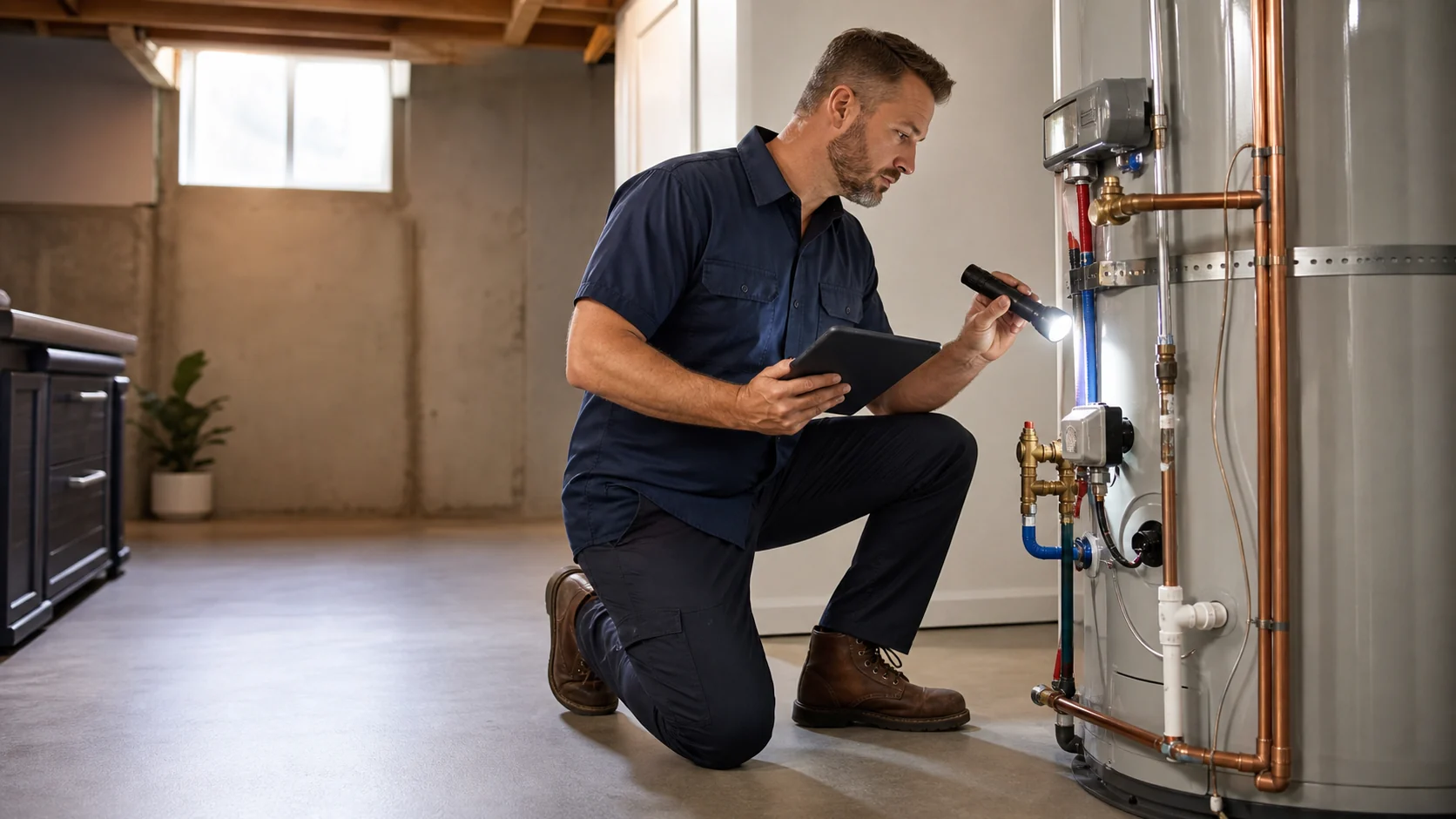
A water heater in the garage is common across Salt Lake County and Utah County. It can be a good location because leaks are usually easier to manage than in a finished basement. It also creates its own problems: freezing drafts, blocked access, stored paint or gas cans, vehicle impact risk, combustion-air issues, and carbon monoxide concerns around gas units.
Safety first: look only from the outside
This checklist is for safe visual checks. Do not move gas piping, alter venting, open electrical covers, relight pilots repeatedly, cap relief pipes, remove access panels, or drain a hot tank unless you are trained. If you smell gas, have a carbon monoxide alarm, see scorch marks, or find water near wiring, leave the area when appropriate and request urgent qualified help.
Start with the garage around the heater
Most useful checks happen before you touch anything. Stand back and look at the full setup: tank, vent, pipes, drain pan, shutoff valve, relief-valve pipe, floor, wall, nearby storage, and the path from the driveway or garage door. A provider can read those clues quickly if you send clear photos.
Gas water heaters need extra attention in garages
If the garage water heater is gas, pay attention to air, venting, flame rollout clues, and carbon monoxide alarms. You are not trying to diagnose combustion. You are collecting warning signs that tell a qualified person what to inspect first.
- Look for vent clues. Rust, gaps, loose sections, sagging, scorch marks, or a vent that looks bumped by storage deserves service attention.
- Keep air openings clear. Do not pile storage against louvers, closet doors, or wall openings that may provide combustion air.
- Check alarm coverage. Carbon monoxide alarms should be installed and maintained according to the alarm maker's directions and local requirements.
- Do not keep relighting a pilot. A pilot that keeps going out can point to thermocouple, air, draft, gas-control, or safety issues. Use the pilot-light guide instead of repeated attempts.
Cold-weather checks for Utah garages
Garages in Draper, Lehi, Provo, Sandy, West Jordan, and nearby foothill neighborhoods can get much colder than the rest of the house. That matters for exposed water lines, condensate from high-efficiency or tankless units, and any heater sitting near a drafty door.
Look for uninsulated pipes, cracked foam insulation, dripping condensate lines, wet concrete near the drain, and signs that someone has used a space heater or makeshift heat tape. Do not add electrical heat or tape as a guess. Ask a provider what is safe for that model and location.
What to photograph before requesting help
- Full garage view. Stand back far enough to show the heater, wall, floor, car path, and storage around it.
- Data label. Capture brand, model, serial number, gallon size, and fuel type if readable.
- Top and side connections. Include the vent, water lines, shutoff valve, gas line or electrical connection, expansion tank if present, and relief-valve pipe.
- Floor and drain area. Show the pan, drain line, concrete, nearby wall base, and any rust or mineral stains.
- Problem closeups. Photograph leaks, corrosion, burn marks, disconnected insulation, error codes, or anything that looks newly changed.
Local note for Wasatch Front homes
A garage water heater in a newer Lehi home, an older Provo home, and a tight Sandy townhome garage may all need different advice. Hard water, seismic restraint, cold drafts, drain access, and finished rooms next to the garage change the risk picture.
When garage symptoms point toward repair or replacement
A clean, newer heater with one small, explainable issue may be a repair call. A garage heater with a leaking tank body, heavy rust, relief-valve discharge, repeated pilot problems, venting concerns, or unreliable hot water should be compared against replacement before you spend money on another small part.
If water is active now, start with the leaking water heater emergency guide. If the unit is older or showing several symptoms at once, use the repair-or-replace checklist and the Utah replacement cost guide.
Sources and further reading
For manufacturer maintenance context, see the A. O. Smith water heater maintenance guide. For carbon monoxide safety basics, review the National Fire Protection Association carbon monoxide safety page. Your installed model manual and local code requirements should guide final service decisions.
Need help with a garage water heater?
Send the city, heater age, fuel type, symptoms, and the photos above. A local provider can use them to sort repair, replacement, venting, leak, or safety questions without starting from a guess.
Send garage water heater details