
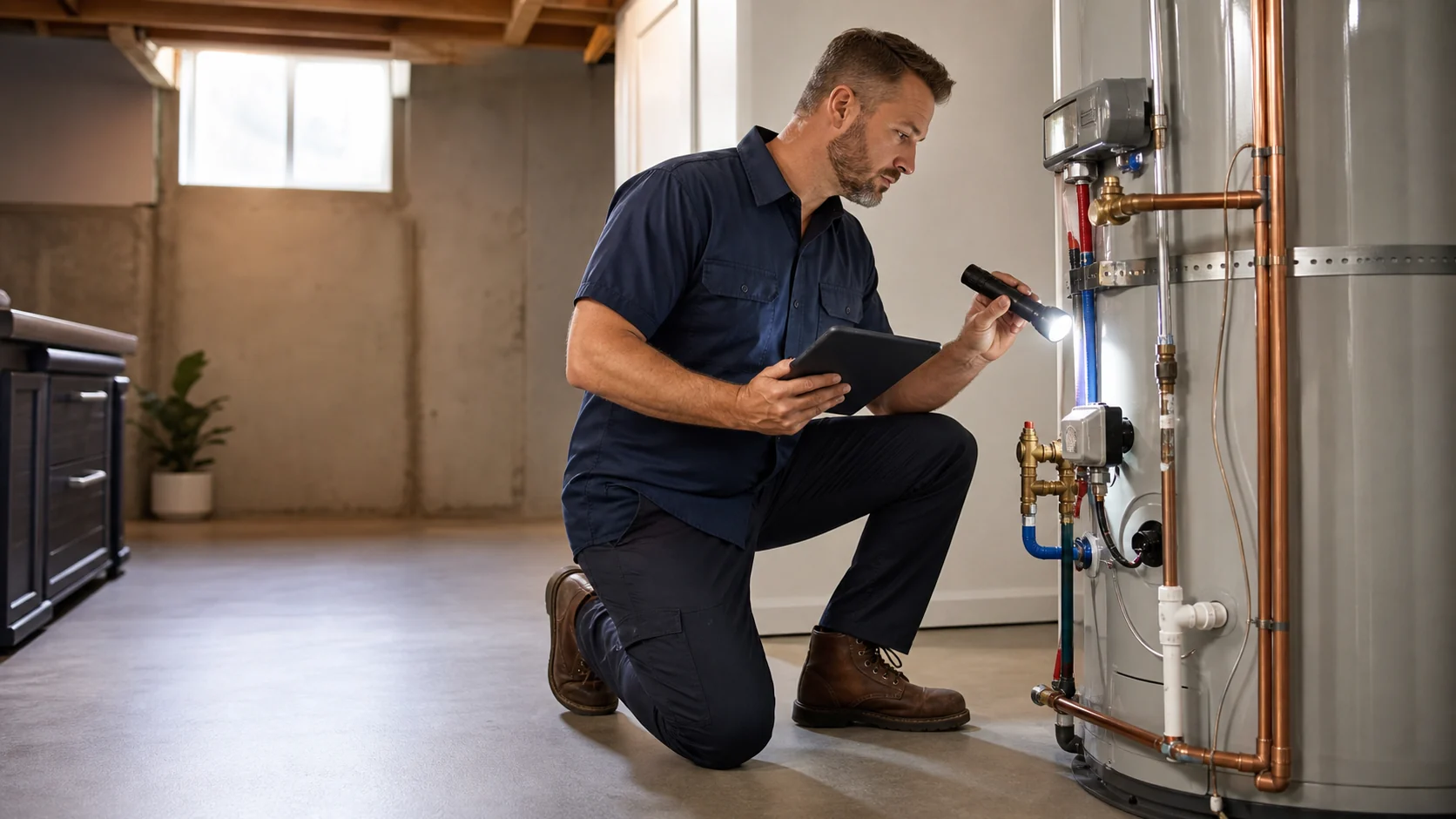
A water heater does not need complicated homeowner tinkering before every trip. The best vacation or winter plan is usually boring: spot obvious leaks, keep the room safely warm, know where shutoffs are, avoid risky gas/electrical work, and leave enough information for someone checking the house.
Safety first: do not create a bigger problem while preparing
This guide is for safe observation and planning. Do not remove burner covers, open electrical panels, cap relief lines, alter venting, bypass safety devices, or shut off gas/electric service unless you understand the exact manufacturer instructions and safe restart procedure. If you smell gas, see scorch marks, find active leaking near electrical parts, or notice a pressure relief valve discharging, leave the area and contact the utility, emergency service, or a qualified local professional.
The 15-minute pre-trip water heater check
Use this checklist a day or two before leaving so you still have time to request help if something looks wrong. It applies to homes in Salt Lake City, Sandy, Draper, Murray, West Jordan, South Jordan, Provo, Orem, Lehi, American Fork, and nearby Utah communities.
Vacation mode, temperature changes, and energy savings
Many modern water heaters and tankless systems have vacation, away, or energy-saving settings. These can reduce energy use during longer trips, but the right choice depends on the model, fuel type, restart procedure, local freeze risk, and whether anyone will be using hot water while you are gone.
For short Utah weekend trips, changing settings may not be worth the confusion. For longer travel, follow the manufacturer manual rather than internet guesses. If the controls are unclear, take a photo of the control panel and model label from a safe distance and ask a qualified provider what is appropriate for that exact unit.
Good trip-prep habits
- • Put a water-leak alarm near the pan or floor if the area is safe and dry
- • Leave your house checker the location of the main water shutoff
- • Keep mechanical-room pathways clear for emergency access
- • Photograph the data plate, visible error code, and existing leak/rust concerns
- • Schedule service before travel if the tank is old and already showing symptoms
Avoid these last-minute mistakes
- • Do not cap, plug, or redirect a pressure relief discharge line
- • Do not turn off gas and assume relighting will be simple later
- • Do not drain a tank unless the manual and situation call for it
- • Do not block vents, combustion air openings, or required clearances with storage
- • Do not ignore a small leak because “we will only be gone a few days”
Cold-snap planning for Utah garages and basements
Most Wasatch Front homes are built with winter in mind, but water heaters in garages, exterior-wall utility closets, unfinished basements, or poorly heated spaces deserve extra attention during cold snaps. The goal is not to wrap or modify the heater randomly. The goal is to keep the room safe, accessible, and above freezing while preserving required air, venting, and service clearances.
- Keep warm air available: do not close off a mechanical space in a way that could cause freezing or combustion-air problems.
- Protect nearby plumbing: watch for exposed lines near exterior walls, garage doors, or crawlspace openings.
- Check after severe weather: after a deep freeze, look for new drips, error codes, or no-hot-water symptoms before a small issue becomes water damage.
- Use safe insulation guidance: tank blankets and pipe insulation have model-specific and fuel-type cautions. Follow the manual and reputable guidance, especially around gas controls, vents, thermostats, and labels.
When to request help before leaving town
Pre-travel service is worth considering when a water heater is already giving warning signs. A last-minute inspection is less stressful than returning to a cold shower, a flooded basement, or a failed tank in a finished utility closet.
- Water in the pan, damp flooring, rusty fittings, or a stained relief-valve discharge path
- New popping, rumbling, sizzling, or knocking sounds that are getting worse
- A tank near the end of its expected life, especially in hard-water areas
- Tankless error codes, scaling symptoms, or poor hot-water flow before guests arrive
- Temperature that swings from too hot to lukewarm without a clear fixture explanation
For more detail, compare the noisy water heater guide, Utah hard-water sediment guide, and repair-or-replace checklist.
Reliable external resources
For general water-heating efficiency and safe maintenance context, review the U.S. Department of Energy water-heating overview and ENERGY STAR water heater guidance. For any vacation mode, insulation, draining, or restart step, the installed unit's manufacturer manual should override generic advice.
Need a water heater checked before travel?
If you are in Salt Lake County or Utah County, send the heater type, age if known, city, visible symptoms, and whether you are preparing for travel, winter guests, or a cold snap.
Request Utah water heater help