
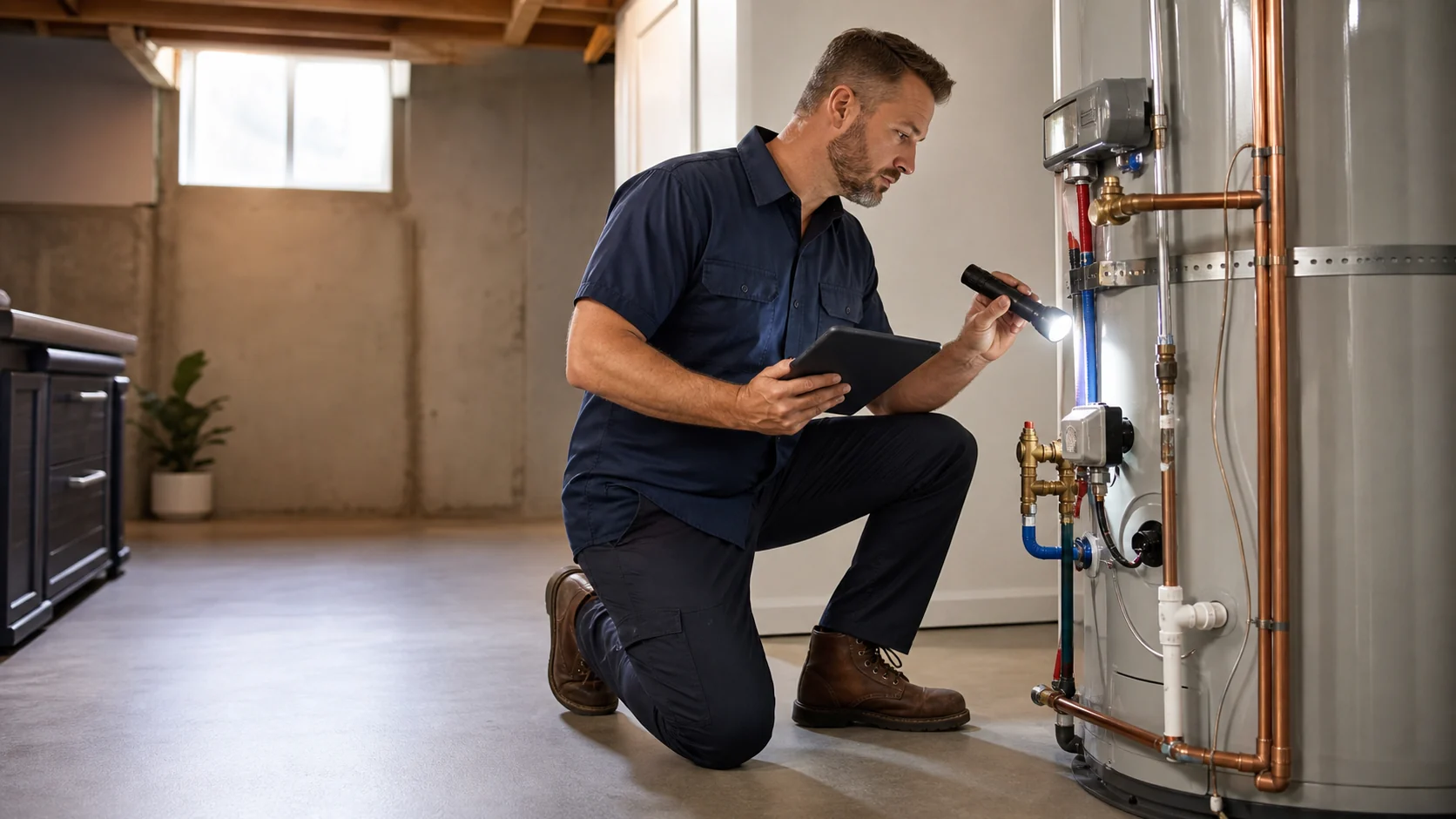
The sound can be dramatic: a faucet coughs, spits water into the sink, then settles into a normal stream. Before blaming the water heater, compare a few fixtures and think about what changed. A recent utility interruption in Salt Lake City, a shutoff for plumbing work in Sandy, or a new heater in Provo can all leave air in the lines.
Stop if the water looks like steam or is dangerously hot
Keep people away from the faucet and heater if water flashes to steam, the hot water is suddenly scalding, the tank is shaking or banging violently, or water is discharging from the temperature-and-pressure relief pipe. Do not cap the relief pipe, remove covers, reset controls repeatedly, or approach wet electrical equipment. Request prompt qualified service. Leave and call the gas utility from a safe place if you smell gas; go outside if a carbon-monoxide alarm sounds.
Start with a four-tap comparison
Choose fixtures that are safe to reach. Remove nothing at the heater. At each fixture, begin with the cold side, then test the hot side separately. Use a moderate flow and stand clear of the first spray.
What happened just before it started?
A useful timeline often narrows the call faster than the sound itself. Note whether the sputtering began after a neighborhood water outage, a city crew worked nearby, the home's main valve was closed, a filter or softener was serviced, frozen plumbing thawed, or the water heater was drained or replaced.
After a storage water heater is refilled, manufacturer instructions commonly call for a hot faucet to remain open until water flows in a steady stream. That step helps confirm the tank is full and lets air escape before the heater is energized. The exact startup sequence belongs to the manual for that model. If you did not perform the installation, call the installer rather than trying to repeat its gas or electrical startup.
Watch the stream, temperature, and color
Brief spurts that fade into an ordinary stream after a known interruption fit a simple trapped-air pattern. Write down how long each fixture takes to settle. Also note cloudy water that clears from the bottom of a glass upward, particles that remain in the glass, brown discoloration, unusual odor, or temperature swings.
Do not assume all post-outage water is ready to drink. Check the water provider's website or phone line for boil-water, do-not-drink, or flushing instructions. Those instructions take priority over general internet advice. The Utah drinking-water advisory guide explains how to separate utility directions from water-heater troubleshooting.
Do not use the relief valve as an air-release tool
The temperature-and-pressure relief valve is a safety device, not a convenient way to bleed a water line. Hot water can discharge with force, and a valve disturbed at the wrong time may not reseal. Never cap, plug, tie, or block its discharge pipe. If that pipe is dripping or releasing water, use the relief-valve leak guide and arrange qualified service.
Make a useful service note
- List every affected fixture and whether hot, cold, or both sides sputter.
- Record the start date and any water outage, shutoff, plumbing work, freeze, heater drain, or replacement.
- Note whether the stream settles, how long that takes, and whether the problem returns after sitting.
- Include safe observations of water color, particles, odor, temperature changes, leaks, banging, alarms, or error codes.
- Photograph the heater's model label and the room from a normal standing position only if the area is dry and safe.
For a whole-home hot-side pattern, include the heater type and any recirculation equipment. The water-heater identification guide shows what to photograph without opening the unit.
Sources and further reading
- A. O. Smith: water heater maintenance - manufacturer guidance on routine checks and leaving gas, electrical, and relief-valve work to qualified service.
- A. O. Smith manuals and product documents - a starting point for finding the fill and startup instructions for an exact model.
- Utah Division of Drinking Water: Consumer Confidence Reports - official water-system report links for Utah communities.
- U.S. EPA: Consumer Confidence Reports - how public water customers can identify their supplier and review annual water-quality information.
- The current outage, flushing, or drinking-water notice from the utility serving the home.
Hot-side sputtering will not settle down?
Send your Utah city, affected fixtures, hot-versus-cold pattern, recent outage or plumbing work, heater type, and any temperature, color, leak, noise, alarm, or error-code details.
Request Utah water heater help