You turn on the shower after a hard freeze and get cold water, a weak trickle, or nothing at all. It is easy to assume the water heater failed overnight. Sometimes it did. More often, the first clue is the flow pattern: one branch of plumbing may be frozen while the heater itself is still working.
Start at the faucets, not at the burner, breaker, or tankless cabinet. Keep the test short, write down what each tap does, and stay alert for water where it should not be. A frozen pipe can split and remain quiet until the ice begins to melt.
Stop if you find an emergency warning
Leave the area and call the gas utility or emergency services if you smell gas or a carbon-monoxide alarm sounds. Do not touch standing water near electrical equipment. If water is spraying, spreading toward wiring, or running through a ceiling, use the main water shutoff only if you can reach it safely and call a qualified plumber. Do not use a torch or any open flame to thaw a pipe.
Run a two-minute hot-and-cold comparison
Pick a sink near the water heater and another fixture farther away. At each one, test the cold side and hot side separately. Do not put your hand under water that may suddenly become very hot; observe the flow first.
Repeat the comparison at no more than a few useful fixtures. Testing every tap for several minutes can waste water and will not reveal what is happening inside a wall. Note whether the affected fixture sits over a garage, beside an exterior wall, in a basement corner, or near another unheated space.
Look for a frozen pipe without opening equipment
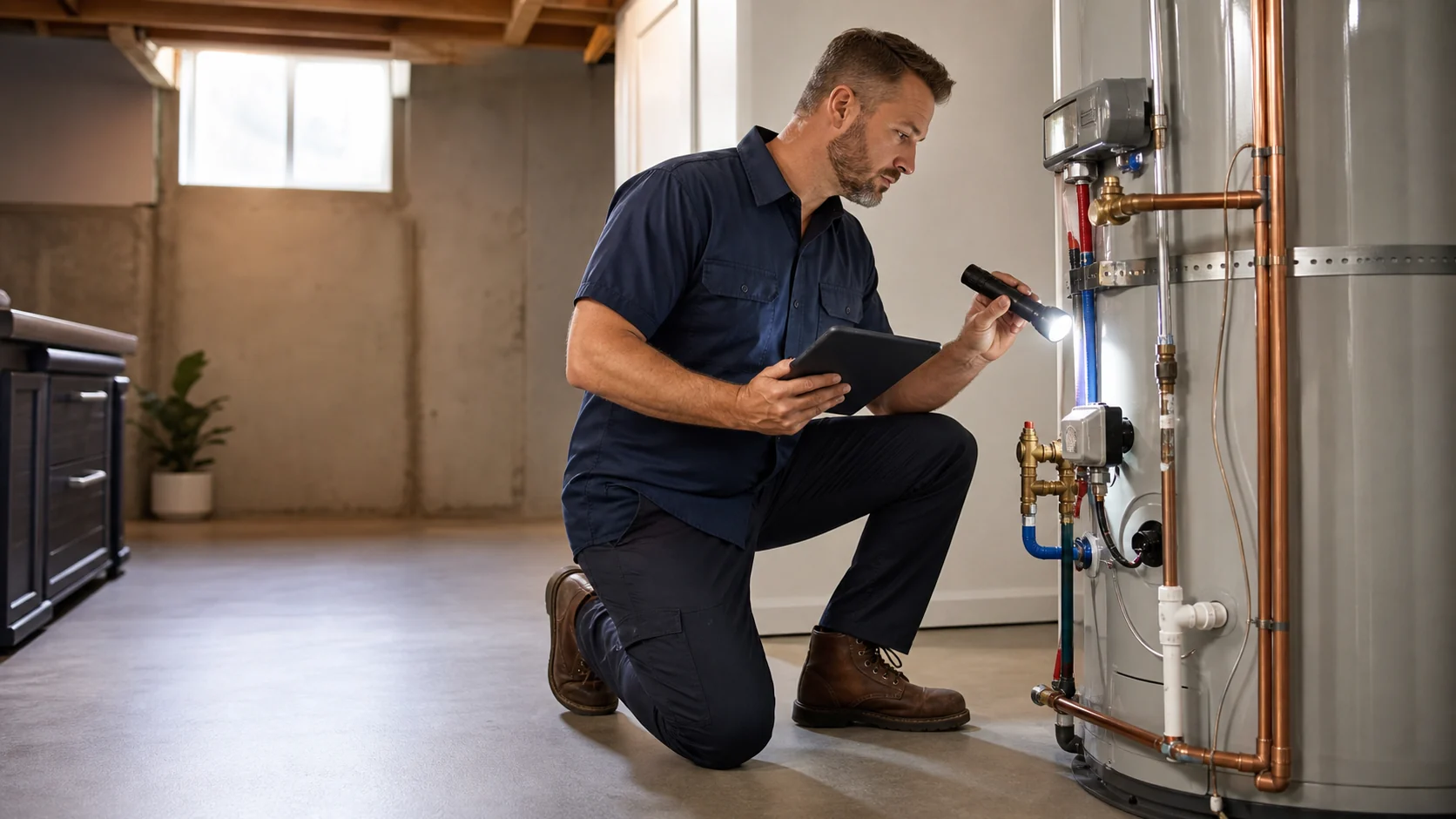
The American Red Cross lists pipes in garages, basements, crawl spaces, attics, cabinets, and exterior walls among the common freeze locations. For a water-heater complaint, look at visible plumbing between the heater and the first heated part of the house. Frost, a localized bulge, or an unusually cold section deserves attention, but the ice blockage may be somewhere you cannot see.
- Check the floor, drain pan, ceilings below, and nearby walls for new water.
- Look at visible hot and cold pipes without squeezing, bending, or striking them.
- Make sure the main water shutoff is reachable before thawing begins.
- Move boxes and belongings away from the area if you can do so without touching wet electrical equipment or gas controls.
- Photograph the highest wet point, any frost or split, and the affected faucet's flow.
A pipe does not always leak while it is frozen. Ice can temporarily plug a crack. Watch the area as temperatures rise and after normal flow returns.
If the frozen section is visible and accessible
The Red Cross recommends keeping the affected faucet open and warming an accessible frozen pipe with controlled heat, such as an electric heating pad wrapped around the pipe, a hair dryer, or towels soaked in hot water. Heat should continue only until normal pressure returns. Keep any portable heater away from combustible materials and follow its safety instructions.
Never use a blowtorch, propane or kerosene heater, charcoal stove, or another open-flame device. If you cannot locate the frozen area, it is inside a wall or ceiling, or gentle warming does not restore flow, call a licensed plumber. Hidden pipe work can turn a manageable freeze into a fire, flood, or electrical hazard.
Protect the water heater while flow is uncertain
A storage tank that stayed full may retain heat even when a downstream pipe freezes. The risky part is guessing. If the home lost water pressure, plumbing was drained, a pipe split, or you cannot confirm that an electric tank is full, do not energize it. Electric heating elements can be damaged if they operate without being covered by water.
Do not relight a gas unit, open a burner compartment, remove an electrical access panel, or reset a tankless system repeatedly. A tankless heater needs adequate water flow before it can fire, and many units will show a model-specific error when flow, venting, power, or freeze protection is disrupted. Record the code and use the manufacturer's manual for that exact model.
If any part of the heater, gas control, plug, receptacle, wiring, or nearby panel got wet, leave it off and arrange an inspection. The water-shutoff guide explains why tank fullness matters, while the tankless error-code checklist covers safe documentation.
What to check after water returns
Normal flow is not the end of the check. Dry the floor if it is safe, then watch the previously frozen area, heater connections, drain pan, and ceilings below for at least the next several hours. Listen for water movement when every fixture is closed. If the home's water meter has a flow indicator, a no-use meter check can help identify a hidden leak.
- Confirm normal cold and hot flow at the fixtures you tested earlier.
- Allow the heater its normal recovery time instead of raising the temperature setting.
- Check for drips that begin only after the piping warms and pressure returns.
- Record any tankless code, breaker trip, status-light pattern, unusual sound, or relief-valve discharge.
- Call promptly if pressure remains low, the meter shows unexplained flow, or water appears inside a wall, ceiling, or heater cabinet.
If hot water still does not return but hot-side flow is normal, continue with the no-hot-water after an outage checklist. For an active tank leak or spreading water, use the emergency leaking-water-heater guide.
Prepare the vulnerable spot before the next Utah freeze
Homes along the Wasatch Front can have very different cold spots. A finished Salt Lake City basement may hide a rim-joist draft; a Draper or Lehi garage utility room may expose supply piping when the garage door stays open; a vacant home in Provo or Orem may cool for days before anyone notices.
Once the immediate problem is repaired, ask what froze and why. The lasting fix may involve sealing an air leak, insulating both hot and cold pipes, keeping a garage door closed, changing how a vacant home is heated, or relocating vulnerable plumbing. Heat cable should be listed for the application and installed according to its instructions. Do not wrap insulation or heat cable around burner, vent, electrical, relief-valve, or other water-heater components unless the manufacturer specifically allows it.
Before travel or a forecast cold snap, review the Utah vacation and winter-prep checklist. It covers heat settings, shutoff access, leak alerts, and cold utility spaces without asking homeowners to modify gas or electrical equipment.
What to send when you request help
A useful service request includes the city, overnight temperature if known, which hot and cold taps flow, the location of visible frozen piping, whether water pressure was lost, and whether the heater has power, a status light, or an error code. Add photos of the whole heater, rating plate, visible pipe route, floor, and any wet area. Describe what happened rather than naming a part you have not tested.
For work that requires a licensed trade professional, verify the license through Utah's official lookup. Local permit and inspection requirements depend on the city or county responsible for the property.
Sources and further reading
- American Red Cross: Preventing and thawing frozen pipes - common freeze locations, prevention steps, safe warming methods, and the warning against open flames.
- Ready.gov: Winter Ready - federal guidance for cold weather, power outages, carbon monoxide prevention, and home heating safety.
- Utah Division of Professional Licensing lookup - Utah's public search for professional and business license information.
- The owner and installation manuals for the exact water-heater model in the home.
Flow came back, but the hot water did not?
Send the city, heater type, model-label photo, hot-and-cold flow results, any visible freeze location, and any leak, code, light, or breaker symptom. We can review the request and coordinate the next step.
Request water heater help