An error code is the heater telling you where its controls noticed trouble. It is not a complete diagnosis. The same code family can have different meanings on two models, and the cause may sit outside the heater itself. Before pressing reset or turning power off, take one clear photo of the display and write down what the hot water was doing.
Do not reset a gas odor, CO alarm, leak, or damaged equipment
If you smell gas, leave the building without operating nearby switches or flames and call 911 and the gas utility from a safe location. Leave immediately for a carbon monoxide alarm. Do not touch a wet heater, wet wiring, scorched parts, a loose vent, or a unit making abnormal combustion sounds. Those conditions need emergency or qualified professional help, not another start attempt.
Capture these six details while the code is visible
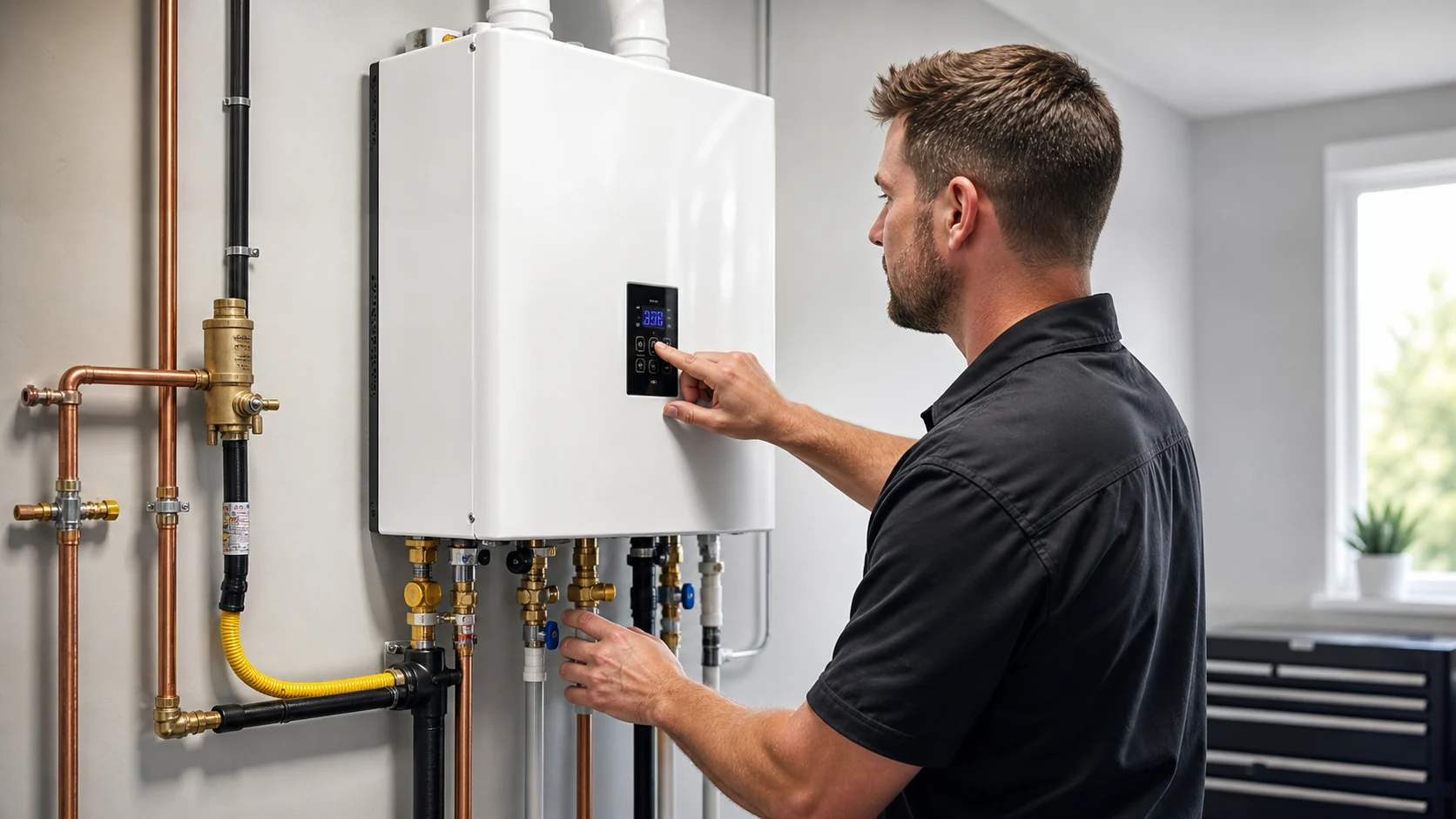
- Photograph the full display. Include every letter, number, symbol, and blinking indicator. “Code 10” and “code E110” are not interchangeable.
- Photograph the model label. Take the picture without removing the front cover. The model determines which manual and code table apply.
- Note what triggered it. Did the code appear when one shower started, when a second fixture opened, during recirculation, after a power outage, or when no one was using hot water?
- Record the water symptom. Write down whether the water stayed cold, went hot then cold, lost flow, or returned after a short wait.
- Write down recent changes. Include plumbing work, a closed valve, power interruption, maintenance, filter cleaning, a new recirculation schedule, or unusually cold weather.
- Save the time and repeat count. One code after a utility outage is a different service history from the same lockout every morning.
Do this before clearing the display. A technician can work with “Navien NPE model, E-code photographed, happened when two showers opened at 7:10 a.m.” A note that only says “tankless reset needed” throws away most of the useful evidence.
Use the manual for the exact model
Search the manufacturer’s official support or download library using the complete model number. Do not rely on a code list copied to a forum, a retailer page, or a video for a different product line. Manufacturers change controls and code definitions between model families.
The manual may give a homeowner check, such as confirming that a visible supply valve was not accidentally closed. It may instead tell you to call for service. Stay inside those boundaries. Do not remove the cabinet, test line voltage, adjust gas pressure, bypass a sensor, take apart a vent, or open a combustion chamber.
When is one reset reasonable?
Only when the official manual for your exact model says the displayed condition can be reset by the homeowner, and only after you have ruled out the warning signs above. Follow the manual’s sequence once. If the same code returns, the heater is not fixed merely because it can be restarted for a few minutes.
Repeated resets can erase a useful pattern and keep placing equipment back into a condition its controls rejected. An ignition, flame, exhaust, overheating, freeze, condensate, flow, or sensor-related lockout deserves the model-specific procedure. The label matters more than a guessed code category.
Utah conditions worth adding to the service notes
Cold Wasatch Front weather can reveal problems that were easy to miss in summer. Tell the provider whether the unit is in a garage, exterior wall, basement, or utility closet; whether the code began during a cold snap; and whether an exterior vent termination is visibly blocked from a safe location. Do not climb onto an icy roof or disassemble a vent to investigate.
Hard-water scale can also affect tankless performance, but an error code is not proof that descaling is the answer. Include the last professional maintenance date, water-softener status, and any change in flow or temperature. If you are unsure what service is due, use the tankless maintenance guide before approving a generic flush.
What to send with a Utah service request
- The complete brand, model, and serial number.
- A clear photo or short video of the code and status lights.
- The exact hot-water symptom and affected fixtures.
- Whether the code clears, repeats immediately, or returns only under certain demand.
- The heater location and city, such as a garage unit in Lehi or basement unit in Sandy.
- Recent power, plumbing, gas, recirculation, or maintenance work.
- Any visible leak, vent concern, odor, unusual sound, or cold-weather pattern.
This information helps separate a repair call from a capacity, maintenance, plumbing, or power-supply question. If the heater also goes hot and cold, compare your notes with the tankless temperature-swing guide. If it is older and faults are becoming frequent, review the repair-or-replace checklist.
Send the code, not just the complaint
Include the display photo, model label, Utah city, affected fixtures, and what happened just before the code appeared. Keep the unit off if the code repeats or any gas, CO, leak, electrical, or vent warning is present.
Request tankless helpSources and further reading
- Navien download library provides model-specific manuals, guides, and technical documents. Match the complete model number before using an error-code table.
- Rinnai residential FAQ covers homeowner questions and points owners toward model-specific support and qualified service.
- The operation manual and safety label attached to your exact heater take priority over a general web guide.