The furnace may start before the water heater, or a neighbor may have gas while your address is still waiting for restoration. That does not mean the water-heater control needs repeated resets. First establish whether gas service is actually restored. Then separate normal reheating time from a heater that never restarted.
Gas odor, hissing, or a carbon monoxide alarm means leave
Do not use a light switch, thermostat, phone, garage-door opener, match, lighter, or appliance control in the building. Do not search for the leak. Get everyone outside, move away from the building, and call 911 or the gas utility from a safe place.
Enbridge Gas lists 1-800-767-1689 as the emergency number for its Utah, Idaho, and Wyoming service area. Check the utility's current official site or your bill before saving any number.
Start with the outage, not the pilot
Check the gas utility's official outage notice, restoration message, text alert, or account page. If the utility says crews must visit each home or relight appliances, wait for that process. Do not open a gas valve that the utility closed, remove a lock or tag, or assume a valve was forgotten.
One working gas appliance does not prove that every appliance is ready. A water heater may have its own shutoff, ignition sequence, safety lockout, or electrical supply. In a condo or townhome, a building manager may also control access or coordinate restoration.
Make a quick safety check from the doorway
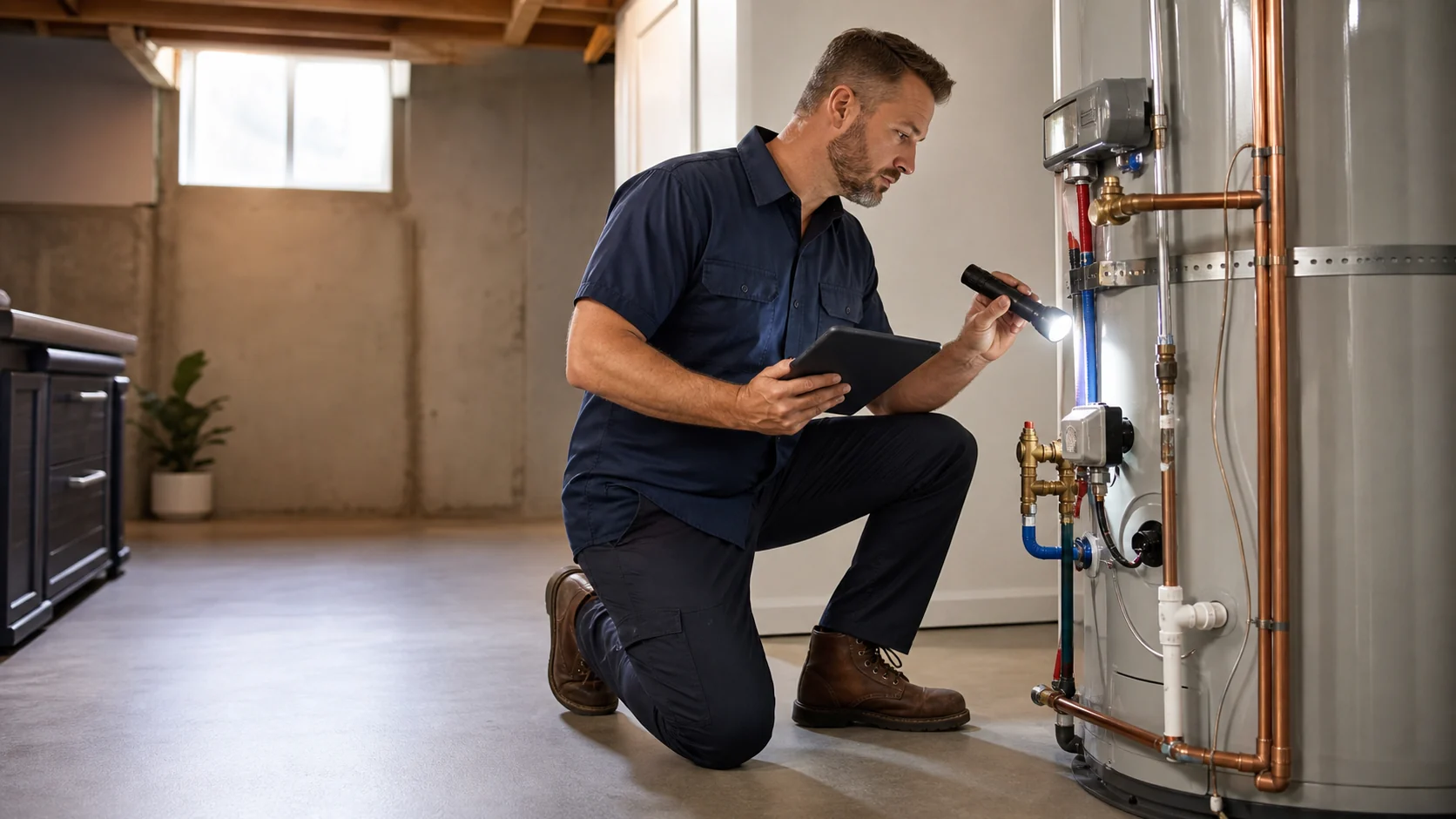
If there is no gas odor and no alarm, look without opening a burner compartment or touching piping. Stop and request qualified help if you see soot, scorching, melted wiring, a displaced vent, water on the gas control, or recent flooding around the heater.
Confirm that the carbon monoxide alarms in the home show normal operation. A CO alarm is not a troubleshooting tool for standing over an appliance. If it sounds, move outside and follow the alarm manufacturer and emergency responder instructions. Headache, dizziness, nausea, weakness, confusion, or unusual sleepiness can be carbon monoxide symptoms; get into fresh air and seek emergency help.
Identify the ignition type before touching a control
Photograph the full rating plate and control without removing a cover. Search the manufacturer's product-literature page using the complete model number. The instructions printed on the heater take priority over a generic video, an old manual for a similar model, or a neighbor's procedure.
When one owner restart may be reasonable
Consider one restart only when the utility has confirmed service restoration, the room has no gas or exhaust warning, the heater is dry and undamaged, and the exact manufacturer instructions describe an owner lighting or restart procedure. Read the whole sequence first. Follow every stated wait period.
Stop if the pilot will not light, the status light reports a fault, the flame will not stay on, the igniter does not work, or the control locks out again. Repeated attempts can hide the useful symptom and may release unburned gas. Do not bypass a sensor, hold a safety control in place, adjust gas pressure, clean a burner with improvised tools, or take apart a sealed combustion chamber.
Our status-light guide explains how to record a flash pattern before resetting it. The power-vent guide covers blowers, electrical dependence, and safe observations after an outage.
Allow for a cold tank to recover
A burner that has just restarted does not produce a full tank of hot water immediately. Avoid judging it from a tap after a few minutes. Note the restart time, leave hot-water fixtures off, and use the model's first hour rating or recovery information as context. A larger tank, cold incoming water, and a tank that cooled throughout a long outage all add waiting time.
After a reasonable model-specific recovery period, test one sink carefully. Keep hands out of the initial stream because a control problem can also produce unexpectedly hot water. If the first fixture is warm, compare a second fixture before blaming the heater; a single shower or faucet can have its own mixing-valve problem.
Send a useful service request
A short, specific report helps a provider distinguish an ongoing utility issue from an ignition, vent, control, or power problem. Include:
- your city and whether the utility confirmed restoration for the address;
- the approximate time gas service went off and came back;
- the complete heater model and serial number;
- a photo or short video of the control, display, or several full status-light cycles;
- whether other gas appliances work, without running them solely as a test;
- any odor, alarm, soot, water, vent, storm, construction, or flooding history;
- the exact restart step attempted and what happened next.
Homes in Salt Lake City, Sandy, Draper, West Jordan, South Jordan, Murray, Provo, Orem, Lehi, and American Fork can have different utilities, building arrangements, and restoration procedures. Use the provider shown on the current bill and follow its instructions for the address.
Sources and further reading
- Enbridge Gas: Utah, Idaho, and Wyoming service area - current customer-service and emergency contact information. The page lists 1-800-767-1689 for gas emergencies.
- U.S. Environmental Protection Agency: carbon monoxide and indoor air - health effects, household sources, and steps for suspected exposure.
- A. O. Smith manuals and warranty sheets - an example of an official manufacturer lookup for exact-model documents. Use the literature page for the brand named on your heater.
Gas is restored, but the heater still will not run?
Send the city, restoration time, exact model label, control photo, status-light video, and any alarm or damage history. Do not keep resetting a heater that will not stay lit.
Request Utah water heater help