
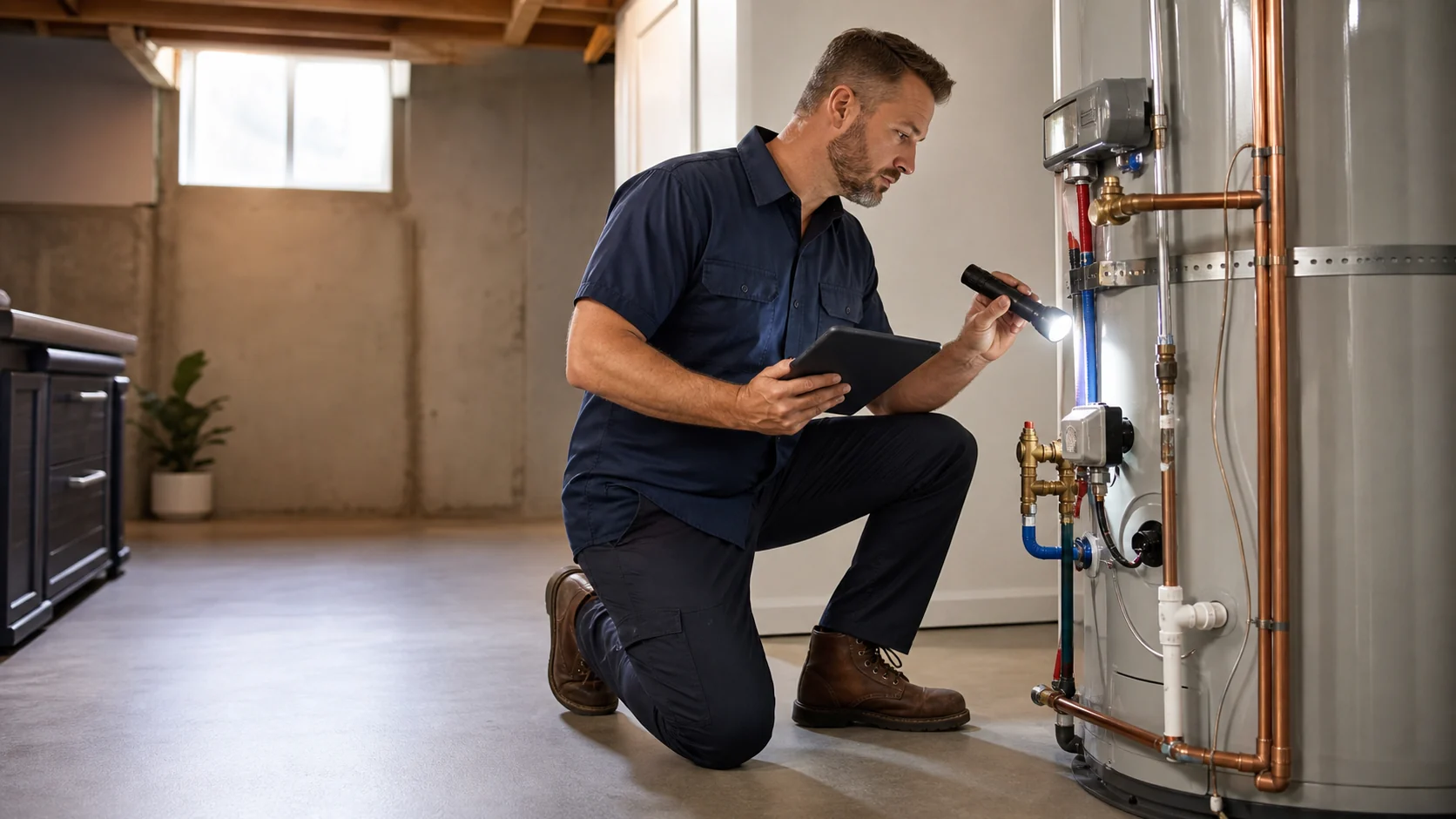
A gas tank with a plastic vent pipe and a small blower on top is easy to mistake for a standard water heater with an extra part. The blower is not optional. It moves combustion exhaust outdoors and must prove that the venting system is working before the burner can run.
Stop if you smell gas or a carbon monoxide alarm sounds
Leave the area and follow the instructions from the gas utility, fire department, or alarm manufacturer. Do not unplug and restart the heater, remove the blower, tape a vent joint, or keep resetting a fault. Carbon monoxide has no color or odor, so a room that smells normal is not proof that combustion equipment is venting safely.
How to tell whether you have a power vent model
Start with the rating plate. It lists the exact model, fuel, and venting instructions. Then look for these visible clues without removing a cover:
- A blower assembly sits on top of the tank.
- The heater plugs into a nearby electrical outlet.
- A plastic exhaust pipe leaves the blower and runs outdoors. The approved material and pipe size depend on the exact model.
- The control may have a status light or display that reports a fault when the burner cannot start.
A sidewall vent does not identify the system by itself. Direct vent and power direct vent models use outside air differently. Photograph the full heater and rating plate instead of guessing from the pipe. The water heater identification guide shows which photos are useful.
What a normal heating cycle may sound like
When the tank calls for heat, the blower commonly starts before the burner. You may hear a steady fan or rushing-air sound, followed by burner ignition. The blower may continue briefly after the burner stops. The exact order and timing come from the manufacturer's controls, not a universal timer.
Pay attention to a change from the heater's usual sound. A new rattle, scraping noise, repeated start-stop cycle, unusually loud vibration, or blower that runs without producing hot water deserves a closer look. Record a short video from a safe distance. Do not open the blower housing while the unit is plugged in.
Why the heater also needs electricity
A power vent unit burns gas, but the blower and controls need electricity. During a power outage, it normally cannot heat water. The tank may keep stored water warm for a while, which can make the first shower seem normal even though the burner is unavailable.
After power returns, check only the ordinary items you can see safely: whether the outlet has power, whether a wall switch was turned off, whether the control shows a code, and whether the heater is leaking. Do not use an extension cord, bypass a switch, or repeatedly cycle the plug. If the outlet, plug, or cord is hot, wet, scorched, or damaged, leave it alone and request qualified help. For a broader post-outage check, see no hot water after a power outage.
Four symptoms worth documenting
These observations do not diagnose the failure. They help a qualified technician distinguish a power, control, blower, pressure-switch, combustion, venting, or water-intrusion problem without asking you to disassemble the heater.
Utah winter and replacement questions
Snow, ice, windblown debris, and exterior work can affect the area around a sidewall termination. From ground level, check whether the outside opening is visibly blocked or damaged. Do not climb an icy ladder, push tools into the vent, or change the termination. A repeated shutdown during a storm still needs model-specific diagnosis.
If you are replacing the tank, do not assume the new heater can reuse every part of the old vent. Ask the installer to put the exact model, vent material, pipe diameter, total equivalent length, termination clearances, electrical needs, condensate provisions if applicable, permit, and inspection in the quote. Manufacturer instructions and local requirements control the final layout.
A power vent model can offer more routing flexibility than a standard atmospheric vent, but it brings a blower, electrical dependence, and model-specific vent rules. Compare the full installed scope with the Utah water heater quote checklist, not just the tank price.
Send a useful service packet
Five photos
- • Full heater from floor to ceiling
- • Model and serial label
- • Blower, plug, and outlet
- • Indoor vent route and joints
- • Outdoor vent termination from a safe position
Five notes
- • City and ZIP
- • Status light or exact error code
- • What the blower sounds like
- • Whether an outage happened first
- • Any gas odor, CO alarm, leak, or wet wiring
Sources and further reading
- A. O. Smith: water heater venting - an overview of atmospheric, power vent, direct vent, and power direct vent arrangements.
- A. O. Smith product literature - model-specific manuals and installation documents. Use the literature for the exact heater rather than a generic video.
- U.S. EPA: carbon monoxide and indoor air - health effects, sources, and alarm guidance.
Power vent heater acting differently?
Send the model label, city, error code, and a short description of the blower sound. Mention any outage, leak, gas odor, or carbon monoxide alarm first so the request can be handled safely.
Request water heater help